A Nostalgic Collaboration With a Digital Twist
McDonald’s has once again tapped into the power of pop culture, this time teaming up with Netflix to launch a limited-edition “Stranger Things: Tales From ’85” Happy Meal—a campaign that blends nostalgia, entertainment, and digital engagement into one cohesive experience.
The collaboration marks a significant evolution of the traditional Happy Meal concept. No longer just a children’s menu with a toy, the new offering reflects how global brands are rethinking customer engagement in an increasingly digital and competitive landscape.
The promotion arrives at a strategic moment for the fast-food giant, as it navigates shifting consumer behavior, rising costs, and growing competition across the quick-service restaurant industry.
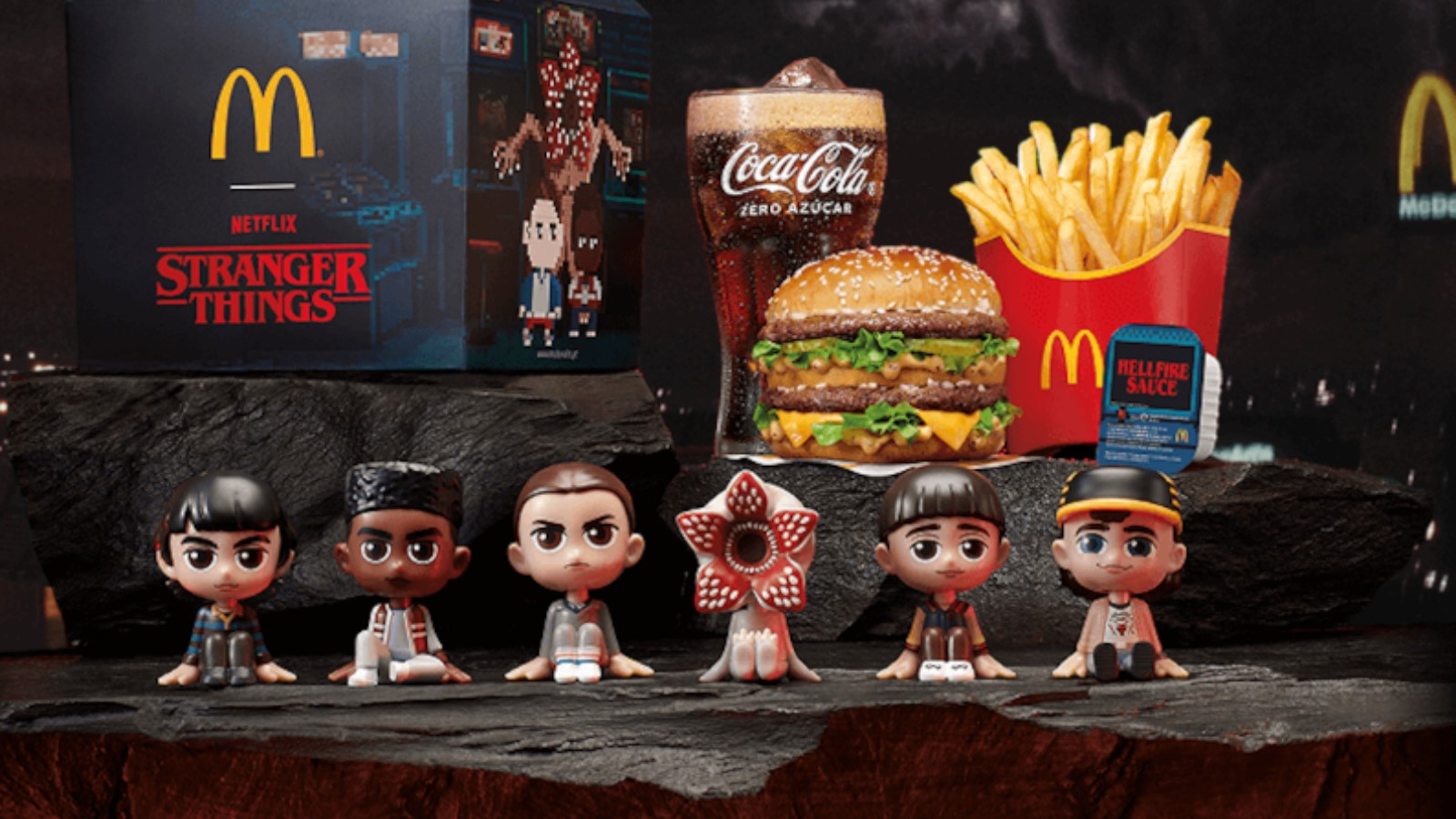
Inside the Stranger Things Happy Meal
At its core, the “Stranger Things” Happy Meal is designed to immerse fans in the fictional world of Hawkins, Indiana—a setting central to the hit Netflix franchise.
Each meal includes:
- A custom-designed “Stranger Things: Tales From ’85” Happy Meal box
- One of 12 collectible character toys
- A themed activity book
- A QR code unlocking an interactive digital game
The collectible toys feature fan-favorite characters such as Eleven, Dustin, Will, Max, Lucas, and Mike, each paired with iconic locations from the series. Two new characters are introduced weekly, encouraging repeat visits and ongoing engagement.
The narrative element extends beyond the packaging. In the storyline tied to the promotion, mysterious monsters invade Hawkins—including a McDonald’s restaurant—prompting the characters to form the Hawkins Investigators Club to fight back.
The Role of the Digital Experience
What truly distinguishes this Happy Meal from past promotions is the integration of digital gameplay through QR technology.
By scanning the QR code included in the meal, customers gain access to an interactive game where they can join the characters in battling supernatural threats. This feature transforms a simple purchase into an ongoing digital experience.
This approach reflects a broader shift in McDonald’s strategy. Rather than treating promotions as one-time events, the company is increasingly using them as entry points into a larger digital ecosystem that includes:
- Mobile app engagement
- Loyalty programs
- Personalized promotions
- Repeat visit incentives
As one industry analysis noted, “That QR code is not decoration. It pulls customers into McDonald’s app ecosystem, where loyalty rewards, personalized deals, and repeat visit incentives all live together.”
Launch Timeline and Global Rollout
The “Stranger Things: Tales From ’85” Happy Meal is being released in phases across global markets.
- Initial rollout began April 28 in countries including Canada, Brazil, Mexico, and several European markets
- The United States launch is scheduled for May 5
- Additional regions will receive the promotion throughout spring and summer, extending into August in some markets
This staggered rollout strategy allows McDonald’s to maintain momentum and sustain global interest over several months.
Why McDonald’s Is Betting on Entertainment Partnerships
The collaboration is not just about marketing—it is part of a larger strategic pivot.
Since introducing the Happy Meal in 1977, McDonald’s has relied on toys and pop culture tie-ins to attract families. Today, those partnerships are becoming more sophisticated, designed to integrate with digital platforms and drive long-term engagement.
This shift is happening against a challenging economic backdrop:
- Prices for dining out increased 3.8% year-over-year as of March 2026
- Foodservice traffic declined 1% in mid-2025
- Consumers are becoming more cautious with discretionary spending
In this environment, collaborations like the Netflix partnership serve multiple purposes:
- Drive foot traffic through limited-time offerings
- Increase app adoption and engagement
- Encourage repeat visits via collectible items and weekly reveals
- Strengthen brand relevance among younger audiences
The Financial Impact of Digital Engagement
McDonald’s investment in digital transformation is already showing measurable results.
According to company data:
- Digital platforms reach nearly 210 million active users across 70 markets
- Loyalty programs generated about $37 billion in systemwide sales in 2025
- Global comparable sales rose 5.7% in Q4 2025, with U.S. sales up 6.8%
CEO Chris Kempczinski emphasized the importance of customer engagement in driving these gains:
“By listening to customers and taking action, we have improved traffic and strengthened our value and affordability scores.”
These figures highlight how initiatives like the Stranger Things Happy Meal are not just marketing campaigns—they are part of a broader revenue strategy.
A Cultural Moment: Nostalgia Meets Modern Marketing
The collaboration also taps into the enduring appeal of 1980s nostalgia, a defining element of the Stranger Things franchise.
Netflix has positioned the partnership as a natural fit, noting that both brands evoke strong childhood memories and shared experiences.
By combining:
- Retro storytelling
- Familiar characters
- Interactive gameplay
the campaign creates a multi-generational appeal—attracting both children and adults who grew up with the original series.
What Comes Next for McDonald’s Promotions?
The Stranger Things Happy Meal follows closely on the heels of another Netflix-themed campaign—the “KPop Demon Hunters” promotion launched in March—suggesting a sustained collaboration between the two companies.
Looking ahead, analysts expect McDonald’s to continue investing in:
- Entertainment-driven marketing
- App-based customer experiences
- Loyalty program expansion
However, they also caution that these strategies require ongoing investment, which could affect margins in the short term even as they support long-term growth.
Conclusion: More Than Just a Happy Meal
The McDonald’s “Stranger Things” Happy Meal represents a clear evolution of a decades-old concept.
What was once a simple meal with a toy has become a multi-layered engagement platform, combining physical collectibles, storytelling, and digital interactivity.
In a market where consumer attention is harder to capture—and even harder to retain—this approach signals how major brands are adapting. By merging entertainment with technology, McDonald’s is not just selling meals; it is creating experiences designed to keep customers coming back.


