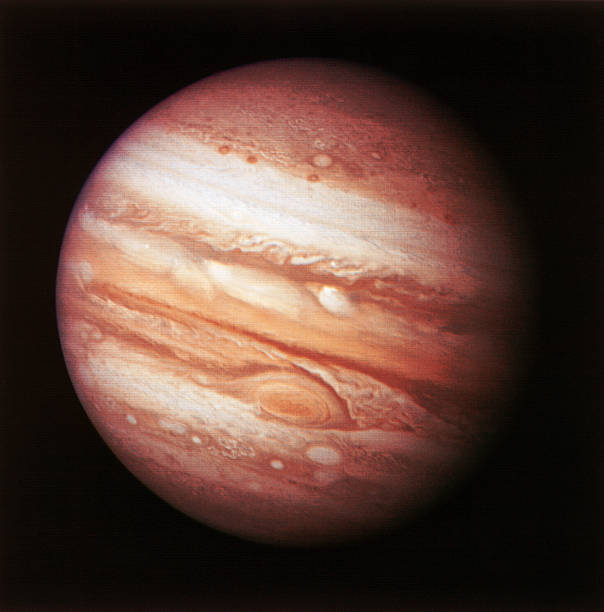
Jupiter: A Giant of the Solar System and a Star of the Night Sky
A Planet That Captivates Both Science and Stargazers
Jupiter, the largest planet in our solar system, continues to fascinate scientists and skywatchers alike. From its immense size and complex atmosphere to its visibility in the night sky, this gas giant plays a central role in both astronomical research and everyday observation.
Recent imagery captured from Earth orbit has highlighted Jupiter alongside its major moons—an iconic view that underscores its significance not just as a distant planet, but as a dynamic system of worlds. These four major moons, known as the Galilean moons, are visible even with basic telescopes, offering a rare opportunity for amateur astronomers to witness celestial mechanics firsthand.
But beyond its scientific importance, Jupiter has also been making headlines for its striking appearances in the night sky, where it regularly becomes one of the brightest objects visible from Earth.
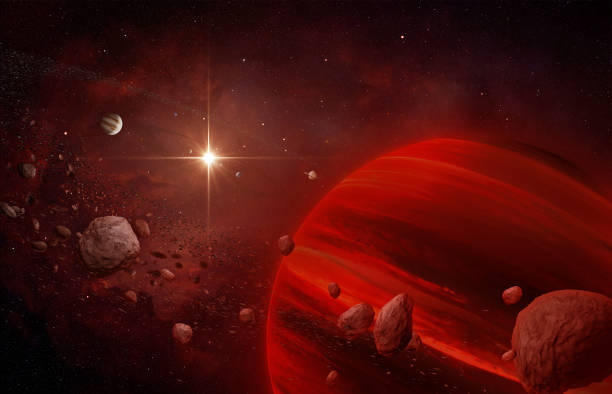
Jupiter in the Night Sky: A Reliable Beacon
Jupiter’s brilliance makes it one of the easiest planets to spot without specialized equipment. It shines steadily—unlike stars that twinkle—and often dominates the evening sky.
In April 2026, Jupiter became the centerpiece of several celestial events. Notably, it appeared in close alignment with the moon, a phenomenon known as a conjunction. During such events, Jupiter and the moon appear only a few degrees apart from Earth’s perspective, creating a visually stunning pairing.
Observers were able to see the planet near the constellation Gemini, close to its well-known twin stars, Castor and Pollux. Even simple binoculars revealed more detail, including Jupiter’s largest moons appearing as tiny points of light beside the planet.
Astronomers note that Jupiter’s brightness—measured at around magnitude -2.1—makes it one of the most luminous objects in the night sky, surpassed only by Venus and the moon.
Understanding Jupiter’s Motion
Unlike stars, which appear fixed in constellations, Jupiter moves independently across the sky. This motion is a result of its orbit around the Sun, combined with Earth’s own movement.
Currently positioned in the constellation Gemini, Jupiter has been gradually shifting westward. Over time, it sets earlier each night, a subtle but noticeable change for regular observers.
This apparent motion is part of a broader cosmic dance. As Earth orbits the Sun, the positions of planets and constellations shift in the sky, giving the illusion that celestial objects are moving relative to one another.
A Planet of Immense Scale and Complexity
Jupiter’s status as the largest planet in the solar system is not just a matter of size—it defines its entire nature. As a gas giant, it lacks a solid surface and is composed primarily of hydrogen and helium.
Its atmosphere is characterized by swirling cloud bands, powerful storms, and complex chemical interactions. The presence of ammonia clouds in Jupiter’s upper atmosphere has long been a defining feature, contributing to its distinctive appearance.
Observations of Jupiter-like planets beyond our solar system have reinforced the importance of studying this gas giant. For example, research using the James Webb Space Telescope has revealed that similar planets may also contain unexpected cloud formations, including water-ice clouds—adding new layers of complexity to atmospheric models.
The Galilean Moons: A Mini Solar System
One of Jupiter’s most remarkable features is its system of moons, particularly the four largest: Io, Europa, Ganymede, and Callisto.
These moons are not just satellites—they are worlds in their own right. Through small telescopes or even steady binoculars, observers can see them shifting positions night by night. In some cases, events such as eclipses or transits can be observed, where a moon passes behind Jupiter or emerges from its shadow.
This dynamic system has often been described as a “mini solar system,” offering valuable insights into planetary formation and gravitational interactions.
Jupiter’s Role in Modern Astronomy
Jupiter is more than a visual spectacle—it serves as a cornerstone for understanding planetary science.
Its composition, atmospheric dynamics, and magnetic field provide a baseline for studying gas giants both within and beyond our solar system. Observations of Jupiter-like exoplanets, for instance, are helping astronomers refine their models and prepare for the eventual detection of Earth-like worlds.
Scientists emphasize that studying Jupiter analogues is a crucial step toward broader goals, such as identifying planets that may support life.
A Planet for Everyone: From Scientists to Casual Observers
What makes Jupiter unique is its accessibility. Unlike many astronomical phenomena that require advanced equipment, Jupiter can be appreciated with the naked eye.
For casual observers, it offers a reliable and rewarding target in the night sky. For scientists, it remains a subject of ongoing research, revealing new complexities with each observation.
Whether viewed through a telescope or simply spotted shining brightly above, Jupiter bridges the gap between professional astronomy and everyday curiosity.
Conclusion: A Timeless Giant in a Changing Sky
Jupiter continues to stand as one of the most compelling objects in our solar system. Its immense scale, dynamic atmosphere, and captivating moons make it a focal point of both scientific study and public fascination.
As new technologies deepen our understanding of Jupiter and its distant counterparts, this gas giant remains a constant reminder of the vast and intricate universe beyond Earth.
From its steady glow in the evening sky to its role in cutting-edge research, Jupiter is not just a planet—it is a gateway to exploration, discovery, and wonder.