

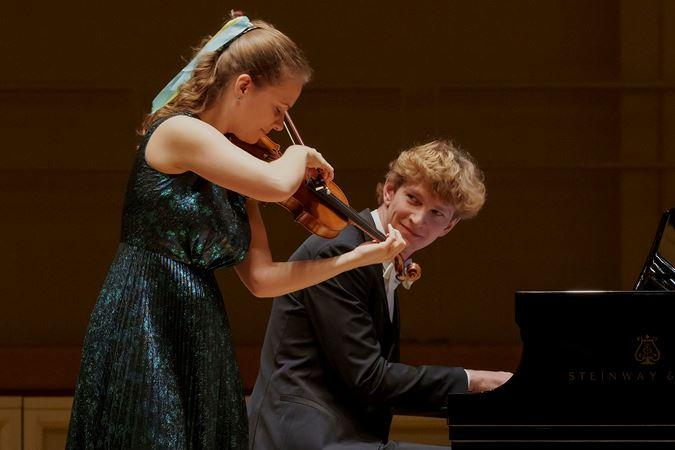
Julia Fischer and Daniel Hope: A Dual Portrait of Modern Classical Excellence
When Virtuosity Meets Versatility
In the contemporary classical music landscape, few names carry the weight and recognition of Julia Fischer and Daniel Hope. Their recent joint appearance on the television quiz program Wer weiß denn sowas? placed them outside their usual concert hall environment, offering a rare glimpse into the personalities behind two of the most accomplished violinists of their generation.
While the setting shifted from orchestral stages to a studio filled with questions and quick thinking, their presence underscored a broader reality: both artists have built careers defined by technical mastery, intellectual depth, and an ability to connect classical music with wider audiences.
This article examines their trajectories, their artistic philosophies, and the cultural relevance of their work in a changing musical landscape.
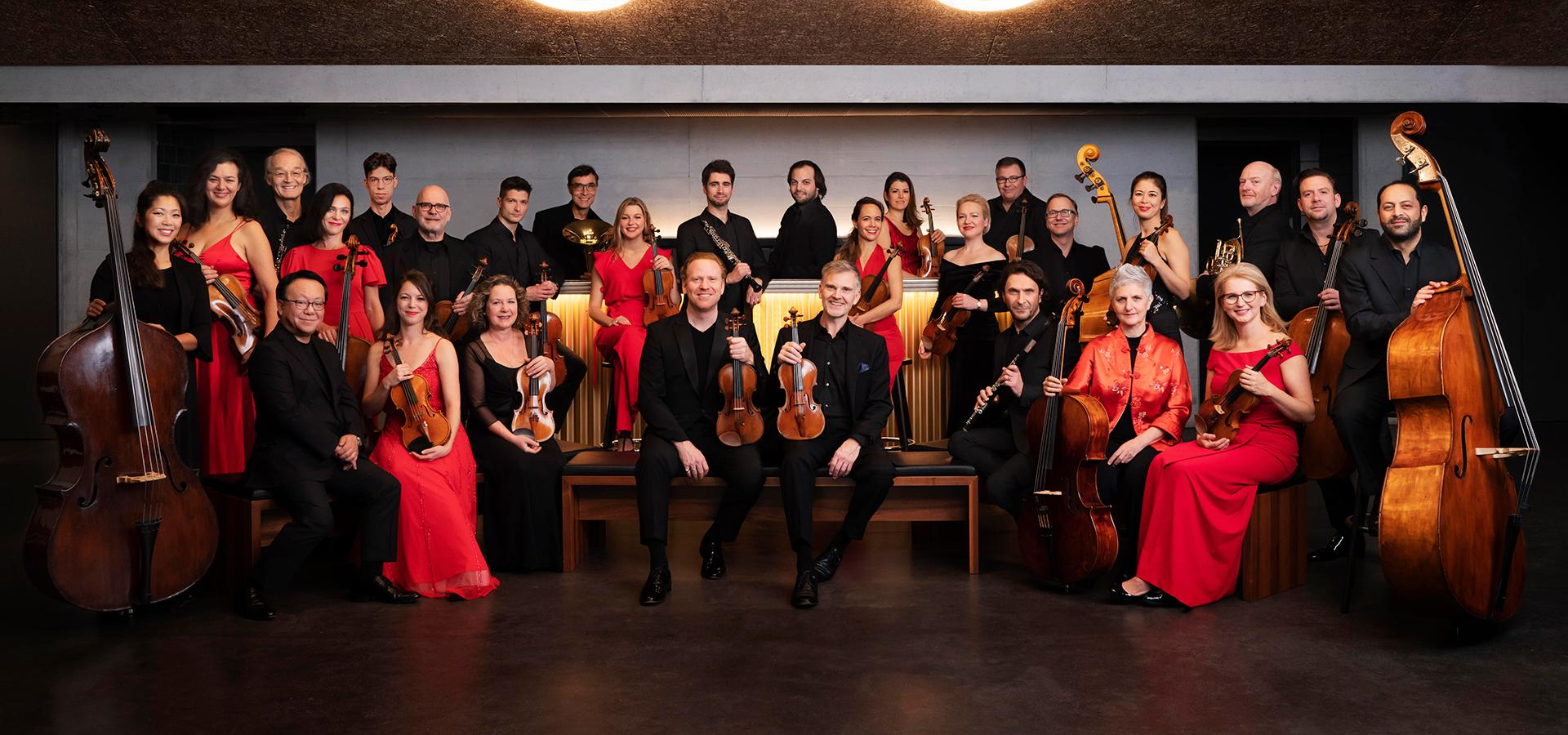
Julia Fischer: Precision, Discipline, and Musical Depth
Early Talent and Rapid Ascent
Julia Fischer represents a model of early brilliance refined through discipline. Born in Munich, her musical journey began before the age of four, when she started learning the violin, soon complemented by piano studies.
Her trajectory accelerated quickly. By eight, she had already performed with an orchestra, signaling a level of technical maturity uncommon at such an age. Over time, this early promise translated into a sustained international career marked by high-profile collaborations and extensive touring.
Her professional rhythm remains intense. She performs dozens of concerts annually and maintains a repertoire that spans a wide range of classical works, from canonical composers such as Bach and Beethoven to more expansive orchestral and chamber compositions.
Academic Authority and Dual Instrument Mastery
Fischer’s influence extends beyond performance. In 2006, she became a professor at the Frankfurt University of Music and Performing Arts—at the time, the youngest professor in Germany. Her academic role reinforces her position not just as a performer but as a custodian of classical tradition.
What distinguishes Fischer further is her dual identity as both violinist and pianist. This duality is not superficial; it informs her interpretive approach. By understanding both melodic and harmonic structures intimately, she brings analytical clarity to her performances.
Her philosophy toward music is direct and uncompromising. She emphasizes that a musical career must be rooted in artistic necessity rather than ambition. This perspective shapes her disciplined stage presence, often described as focused, controlled, and deeply immersive.
Daniel Hope: Global Perspective and Cultural Connectivity
A Cosmopolitan Musical Identity
Daniel Hope offers a contrasting yet complementary narrative. Born in South Africa and raised in London, his career reflects a distinctly international identity. From an early age, he demonstrated commitment to the violin, beginning his studies at four.
His breakthrough came through close collaboration with Yehudi Menuhin, one of the most influential figures in 20th-century classical music. This mentorship provided both technical grounding and global exposure, positioning Hope within an elite circle of musicians early in his career.
He later expanded his profile through his involvement with the Beaux Arts Trio and collaborations with major orchestras worldwide.
Beyond Performance: Leadership and Media Innovation
Hope’s career extends beyond traditional performance roles. Since 2016, he has served as music director of the Zurich Chamber Orchestra, shaping programming and artistic direction.
His work also intersects with media and public engagement. During the COVID-19 pandemic, his “Hope@Home” initiative brought live classical performances into domestic spaces via streaming. This approach significantly broadened his audience and demonstrated how classical music can adapt to digital formats without losing artistic integrity.
In addition to performing, Hope operates as a presenter and author, actively participating in cultural discourse. His career model reflects a shift in classical music toward multidimensional engagement.
A Shared Platform: Television and Cultural Accessibility
From Concert Hall to Quiz Studio
Their joint appearance on Wer weiß denn sowas? highlights a strategic shift in how classical musicians engage with the public. Instead of performing, Fischer and Hope participated in a format centered on knowledge, humor, and interaction.
Hosted by Kai Pflaume, the show paired them with team captains Bernhard Hoëcker and Wotan Wilke Möhring. The episode aired on April 20 on ARD, with additional access via the ARD Mediathek.
This appearance is not incidental. It reflects a broader effort within classical music to reduce perceived barriers between artists and audiences. By participating in mainstream television, both musicians extend their reach beyond traditional concertgoers.
Artistic Philosophies: Convergence and Contrast
Discipline vs. Expansion
Fischer’s approach centers on precision, structure, and fidelity to the score. Her performances are characterized by technical clarity and interpretive rigor.
Hope, by contrast, integrates performance with storytelling, media presence, and cultural commentary. His work emphasizes accessibility and innovation.
Yet both share a fundamental commitment: preserving the emotional and intellectual depth of classical music while adapting to contemporary contexts.
Cultural Relevance in a Changing Landscape
Classical Music Beyond the Stage
The careers of Fischer and Hope illustrate how classical music continues to evolve. Several trends emerge:
- Cross-platform visibility: Television, streaming, and digital media are now essential tools.
- Educational influence: Teaching roles and public engagement reinforce long-term cultural impact.
- Global collaboration: International careers are no longer optional but foundational.
Both artists operate at the intersection of tradition and transformation, maintaining technical excellence while expanding the reach of classical music.
What Comes Next?
Looking forward, the trajectories of Julia Fischer and Daniel Hope suggest continued diversification.
Fischer is likely to deepen her dual role as performer and educator, refining her already extensive repertoire and academic influence.
Hope is expected to expand his leadership and media initiatives, continuing to redefine how classical music interacts with modern audiences.
Their occasional intersections—such as televised appearances—serve as reminders that classical music is not static. It adapts, evolves, and finds new platforms without abandoning its core principles.
Conclusion: Two Paths, One Enduring Impact
Julia Fischer and Daniel Hope represent distinct but complementary models of success in classical music. One embodies precision and structural mastery; the other emphasizes global outreach and innovation.
Together, they demonstrate that the future of classical music depends not only on technical excellence but also on visibility, adaptability, and cultural relevance. Their presence—whether on stage or television—reinforces the enduring power of music to connect, inform, and inspire.


