

When Diplomacy Meets Television: The Jesse Watters–Queen Camilla Moment Explained
A State Dinner Designed for Diplomacy
State dinners are choreographed exercises in diplomacy—highly structured, meticulously planned, and symbolically significant. When King Charles III and Queen Camilla arrived in Washington, D.C., for their official visit in late April 2026, the stakes were high. The visit aimed to reinforce the enduring “special relationship” between the United States and the United Kingdom following a period of political tension.
Hosted by President Donald Trump and First Lady Melania Trump, the White House event was a rare white-tie affair, underscoring its importance in diplomatic protocol. Against this backdrop of formal diplomacy, an unexpected and awkward moment involving Fox News host Jesse Watters briefly disrupted the evening’s polished tone.
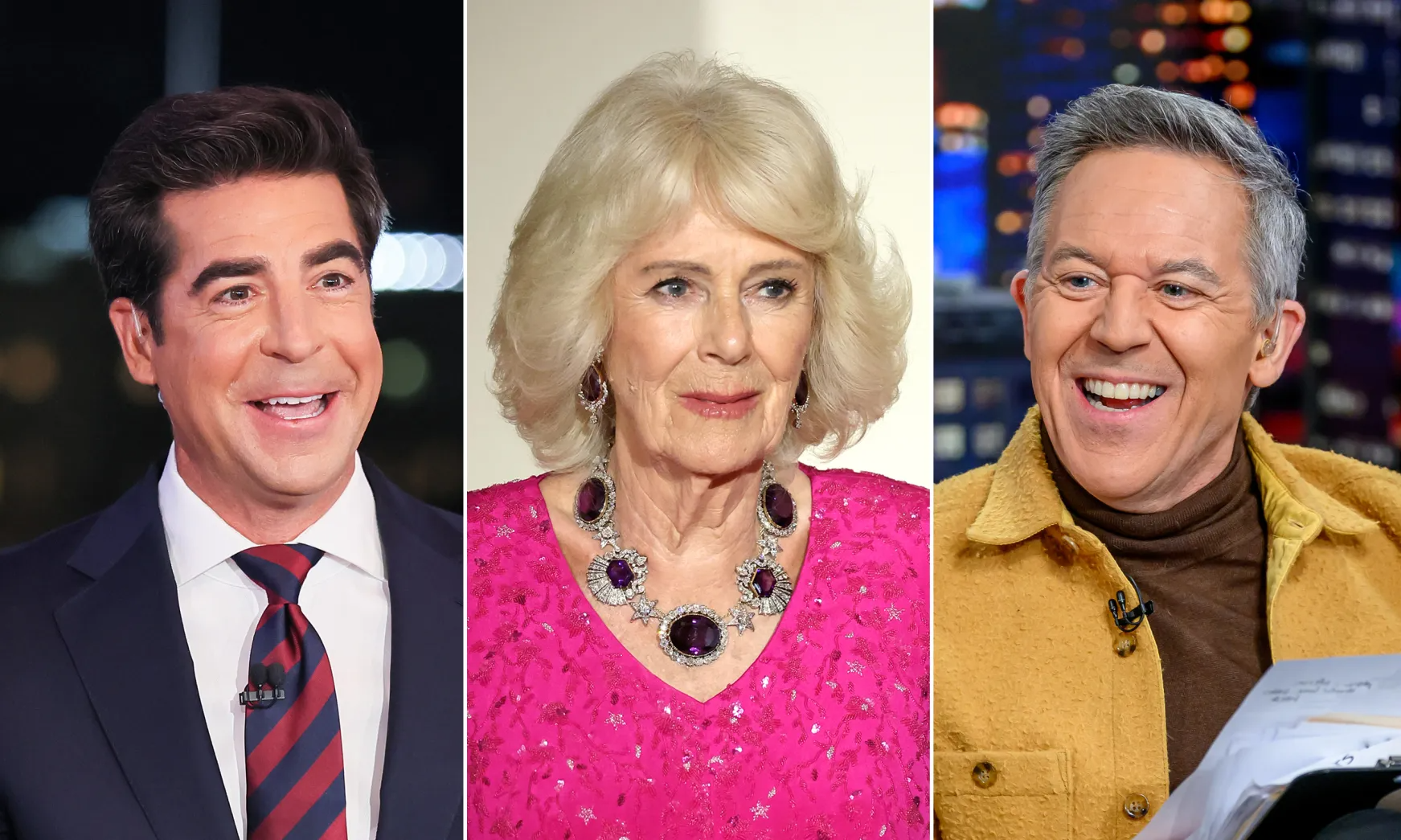
The Conversation That Went Off Script
The incident unfolded during a pre-dinner introduction, where guests were formally presented to the royal couple. Jesse Watters, a prominent Fox News personality and co-host of The Five, found himself in conversation with Queen Camilla after an earlier exchange with King Charles III.
Watters later recounted that King Charles appeared unfamiliar with him. “I’m on Fox and I have two shows,” Watters said, to which the king reportedly replied, “Well, they must really love you here.”
The exchange was light, even mildly humorous—until Watters turned his attention to Queen Camilla.
Attempting to extend the conversation, he referenced her visit to the White House beehives, a feature of the royal itinerary tied to the monarchy’s long-standing interest in beekeeping traditions. Camilla responded politely: “It was very good. No one got stung.”
Watters then delivered a remark that would quickly derail the interaction:
“Well, you know, it was Washington D.C., you know. If the bees don’t get you, the guns will.”
The joke, intended as humor, landed poorly. Within moments, a royal handler intervened and guided Queen Camilla away, effectively ending the exchange.
Immediate Aftermath: A Public Admission
Watters later reflected on the incident during a broadcast of The Five, openly acknowledging the misstep.
“I don’t know what I was saying,” he admitted. “Ugh. I started mumbling.”
The candid admission underscored the discomfort of the moment and highlighted the stark contrast between the informal tone of television commentary and the rigid expectations of diplomatic etiquette.
Context Matters: Timing and Sensitivity
The remark’s impact was heightened by its timing. Just days earlier, a gunman had attempted to breach security at the White House Correspondents’ Association dinner, reportedly with intentions to attack government officials.
Against this backdrop, references to gun violence—especially in a formal diplomatic setting—were particularly sensitive. While Watters’ comment may have been intended as a casual quip, it intersected with real-world concerns and recent events, amplifying its awkwardness.
Additionally, political discourse around crime in Washington, D.C., had been contentious. President Trump had previously described the city as “lawless,” even deploying the National Guard to address security concerns.
In such an environment, humor touching on violence was unlikely to be well received—especially in the presence of visiting heads of state.
Royal Protocol vs. Media Culture
The episode highlights a broader tension between two very different cultures: the strict decorum of royal protocol and the informal, often provocative style of modern media personalities.
Royal engagements operate within a framework of carefully observed etiquette. Conversations are expected to remain neutral, respectful, and free of controversy. Even minor deviations can be interpreted as breaches of protocol.
By contrast, figures like Watters operate in a media ecosystem that often rewards spontaneity, humor, and sharp commentary. The skills that define success in television—quick wit, bold remarks—can become liabilities in formal diplomatic contexts.
Watters’ experience illustrates how easily these worlds can collide, particularly when individuals accustomed to one environment enter another with vastly different expectations.
A High-Profile Visit Overshadowed
Despite the awkward moment, the state visit itself remained significant. King Charles III’s itinerary included engagements on Capitol Hill, cultural appearances, and diplomatic meetings aimed at strengthening bilateral ties.
The White House dinner, the centerpiece of the visit, symbolized continuity in U.S.-U.K. relations. Such events are designed to project unity, stability, and mutual respect.
While the Watters incident attracted media attention, it ultimately represented a brief disruption rather than a defining feature of the visit.
The Broader Implications
Incidents like this, though seemingly minor, offer insight into the evolving nature of public discourse and diplomacy.
They reveal how:
- Media personalities increasingly intersect with political and diplomatic spaces
- Informal communication styles can clash with traditional institutions
- Public figures are expected to navigate multiple cultural expectations simultaneously
In an era where moments are instantly amplified across digital platforms, even a fleeting exchange can become a widely discussed episode.
Conclusion: A Lesson in Context and Communication
The Jesse Watters–Queen Camilla encounter serves as a reminder that context is everything—especially in diplomacy. What might pass as humor in one setting can be perceived as inappropriate in another.
For Watters, the moment became a public lesson in the importance of tone, timing, and audience. For observers, it offered a rare glimpse into the human side of formal diplomacy—where even carefully staged events can produce unscripted, revealing moments.


