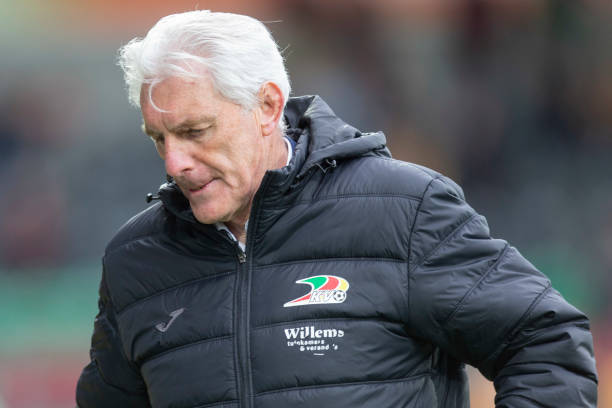
Hugo Broos Biography: The Pragmatic Architect of African Football Success
Hugo Broos stands as one of football’s most enduring and quietly influential figures—a Belgian tactician whose career spans more than four decades across elite European football and the demanding landscapes of African international competition. Known for his disciplined approach, tactical pragmatism, and ability to extract results under pressure, Broos has built a legacy that blends understated leadership with tangible success.
From his decorated playing days at Anderlecht and Club Brugge to his transformative coaching roles in Cameroon and South Africa, Broos has consistently demonstrated an ability to adapt, rebuild, and win. His crowning achievement—guiding Cameroon to the 2017 Africa Cup of Nations title—cemented his reputation as a tournament specialist. In recent years, his work with South Africa has revitalized a once-struggling national team, returning it to continental relevance and global qualification contention.
Hugo Broos Quick Facts: Age, Net Worth, Family & Career Snapshot
| Category |
Details |
| Full Name |
Hugo Henri Broos |
| Date of Birth / Age |
April 10, 1952 (73 years old) |
| Place of Birth |
Humbeek, Belgium |
| Nationality |
Belgian |
| Profession |
Football Manager, Former Professional Player |
| Current Status |
Head Coach of South Africa National Team |
| Net Worth |
Estimated $1 million – $4 million |
| Income Sources |
Coaching salary, bonuses, football-related engagements |
| Relationship Status |
Married |
| Spouse/Partner(s) |
Not publicly detailed |
| Children |
Yes (with grandchildren) |
| Major Achievements |
Africa Cup of Nations Winner (Cameroon, 2017); AFCON Third Place (South Africa, 2023); Multiple Belgian League Titles (as player and coach); 4× Belgian Coach of the Year |
From Humbeek to European Glory: Early Life and Foundations
Hugo Broos was born in the quiet Belgian town of Humbeek, where his football journey began at a grassroots level. Like many European footballers of his era, his early years were shaped by local club football, where discipline and tactical awareness were emphasized from a young age. His potential was quickly recognized, leading to a pivotal moment when he was discovered by scouts from RSC Anderlecht at just 18 years old.
His transition to Anderlecht marked the beginning of a remarkable playing career. As a central defender, Broos was not known for flair but for consistency, intelligence, and composure—traits that would later define his coaching philosophy. During his time at Anderlecht, he contributed to multiple domestic and European triumphs, embedding himself in one of Belgium’s most successful football dynasties.
Internationally, Broos represented Belgium between 1974 and 1986, earning 24 caps and playing a role in the team that finished fourth at the 1986 FIFA World Cup. This period exposed him to high-level competition and tactical evolution, shaping his understanding of football beyond domestic boundaries.
A Coaching Career Built on Structure and Reinvention
After retiring as a player in 1988, Broos transitioned seamlessly into coaching, beginning with RWD Molenbeek. His early managerial years laid the groundwork for a career defined by steady progression and adaptability. His first major breakthrough came with Club Brugge, where he led the team to multiple league titles and domestic cup victories during the 1990s.
His tenure at Anderlecht further solidified his reputation, culminating in a league title during the 2003–04 season. Across Belgium, Broos became synonymous with disciplined teams capable of delivering results in high-stakes environments. His success earned him four Belgian Coach of the Year awards—an indicator of both consistency and excellence.
A turning point came when he expanded his career beyond Belgium, taking roles in Greece, Turkey, and later North Africa. These international experiences exposed him to diverse football cultures, ultimately preparing him for his most defining chapter: African football.
Defining Moments: AFCON Triumph and African Football Impact
Hugo Broos reached the pinnacle of his coaching career in 2017 when he led Cameroon to victory in the Africa Cup of Nations. The triumph was widely regarded as one of the tournament’s greatest upsets, achieved with a squad missing several high-profile players. Broos’ ability to build cohesion and resilience within a limited-resource environment showcased his core strengths as a manager.
Following his success with Cameroon, Broos became a highly sought-after figure across African football. His name frequently surfaced in connection with major footballing nations such as Morocco, Algeria, and Nigeria—countries known for their competitive expectations and talented player pools. These associations reflected both his credibility and the demand for experienced, tournament-proven leadership.
In 2021, Broos took charge of South Africa’s national team during a period of transition. Initially met with skepticism, he quickly imposed a structured system focused on discipline, youth integration, and tactical clarity. His efforts paid off with a third-place finish at the 2023 AFCON and a successful push toward qualification for the 2026 FIFA World Cup.
Career Achievements and Tactical Identity
Broos’ career is marked by a blend of club and international success. As a player, he won multiple Belgian league titles, domestic cups, and European trophies. As a coach, he replicated that success with major Belgian clubs and later on the international stage.
What distinguishes Broos is not an innovative or flamboyant tactical system, but a pragmatic approach centered on efficiency. His teams are known for defensive organization, compact midfield structures, and quick transitions—an approach particularly effective in tournament football.
This philosophy has earned both praise and criticism. Supporters highlight his ability to win under pressure, while critics argue that his style can limit attacking creativity. Nevertheless, his results-driven methodology has consistently delivered success where it matters most.
Hugo Broos Net Worth, Salary and Lifestyle
Hugo Broos’ net worth is estimated between $1 million and $4 million, reflecting a long and stable career in professional football. His primary income source is his coaching salary, particularly from his role with the South African national team, where he reportedly earns close to $50,000 per month, with increases tied to performance and achievements.
Despite his success, Broos maintains a relatively modest and disciplined lifestyle. He is known for focusing on his work rather than public visibility, avoiding the celebrity-driven persona often associated with modern football managers. His professional priorities remain centered on team development, tactical preparation, and competitive performance.
Personal Life and Relationships
Off the pitch, Hugo Broos leads a private life. He is married and has children and grandchildren, though he rarely discusses his family publicly. This discretion reflects his broader personality—reserved, focused, and grounded in professionalism rather than media attention.
His personal philosophy emphasizes discipline, consistency, and humility, values that have shaped both his career and his leadership style. Those close to him often describe him as a “father figure” within teams, particularly for younger players navigating the pressures of international football.
Current Relevance: South Africa, AFCON and Retirement Plans
As of 2026, Hugo Broos remains at the helm of South Africa’s national team, overseeing a period of renewed competitiveness. His tenure has already delivered historic milestones, including a top-three AFCON finish and qualification momentum for the 2026 FIFA World Cup.
However, Broos has confirmed that he plans to retire after the 2026 World Cup, bringing an end to a career that spans more than 40 years. His final chapter is focused on leaving South African football in a stronger position, with a clear identity and a new generation of players ready to compete at the highest level.
Lesser-Known Facts and Unique Insights
Hugo Broos is not a coach driven by media presence, yet his name frequently trends across football discussions, including social media platforms such as Instagram where fans engage with his career highlights and coaching philosophy.
Interestingly, his reputation extends beyond teams he has managed. His tactical profile and tournament success have led to recurring speculation linking him with national teams like Morocco, Algeria, and Nigeria. These discussions highlight his status as a trusted problem-solver in high-pressure football environments.
Another lesser-known aspect of Broos’ career is his ability to succeed with unconventional squads. He often selects lesser-known players and transforms them into cohesive units, prioritizing teamwork over individual stardom.
Legacy and Influence in Global Football
Hugo Broos’ influence is most strongly felt in African football, where he has helped redefine expectations for tactical discipline and tournament performance. His success with Cameroon and South Africa demonstrates that structured systems and belief can overcome resource limitations and external skepticism.
Beyond trophies, his legacy lies in his ability to rebuild teams, restore confidence, and instill a winning mentality. He represents a generation of coaches who value substance over spectacle—delivering results through preparation, organization, and resilience.
As he approaches retirement, Broos leaves behind a blueprint for success that continues to influence coaches and players across continents.
Final Reflection on Hugo Broos’ Enduring Career
Hugo Broos’ journey from a Belgian defender to a celebrated international coach is a testament to longevity, adaptability, and quiet excellence. He has navigated the evolving world of football with a consistent philosophy rooted in discipline and results.
His story is not one of constant spotlight, but of sustained impact—transforming teams, winning tournaments, and earning respect across continents. As his career nears its conclusion, Broos stands as one of football’s most accomplished and respected figures, leaving behind a legacy defined by resilience, pragmatism, and success.