

Hugo Broos and the Art of Defying Expectations: Inside Bafana Bafana’s World Cup Journey
The Veteran Strategist Steering South Africa Forward
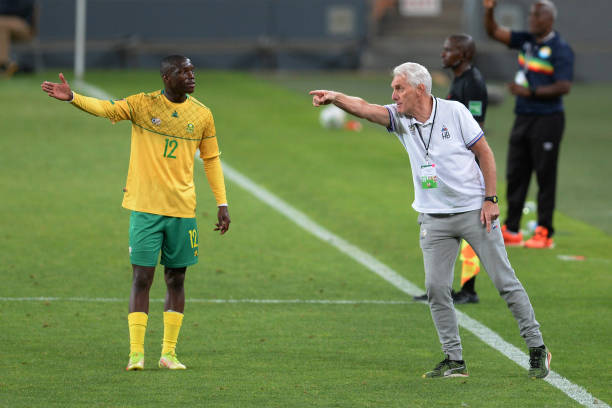
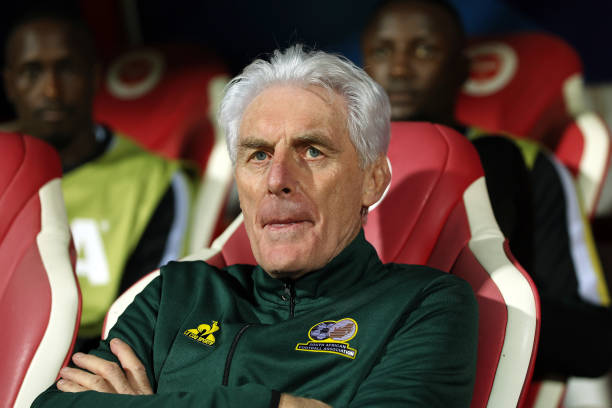
At 74, Hugo Broos is no stranger to pressure, scrutiny, or reinvention. The Belgian tactician, who took charge of South Africa’s national team in 2021, has quietly engineered one of the continent’s most compelling football turnarounds. Now, as Bafana Bafana prepare for the 2026 FIFA World Cup, Broos finds himself at the center of a familiar narrative—leading a team that many believe is outmatched, yet capable of surprising the world.
The conversation surrounding Broos today is not just about tactics or squad selection. It is about belief, resilience, and whether South Africa can once again rise above expectation on football’s biggest stage.
Underdogs in Group A: A Familiar Role
South Africa’s placement in Group A has sparked intense debate among analysts and fans alike. Drawn alongside co-hosts Mexico, South Korea, and the Czech Republic, Bafana Bafana face a formidable challenge from the outset.
International observers have not been kind in their early assessments. A report by The Korea Times labeled South Africa as “the weakest team in the group,” pointing directly to FIFA rankings—Bafana sitting at 60th, trailing South Korea (25th), Mexico (15th), and Czechia (41st).
On paper, the conclusion appears straightforward. But football rarely unfolds on paper.
Broos and his squad have grown accustomed to this underdog tag. If anything, it has become part of their identity.
Building Momentum Since 2021
When Broos arrived in South Africa, expectations were modest. The national team was struggling for consistency, lacking both direction and confidence. What followed was a methodical rebuild—less flashy than some had hoped, but undeniably effective.
At one stage, Bafana Bafana went on a run of over 10 matches unbeaten across all competitions, a streak that played a crucial role in securing qualification for the World Cup. That period was not just about results; it was about instilling structure, discipline, and belief.
Victories against stronger African sides like Morocco and Nigeria reinforced a key trait under Broos: resilience under pressure.
This is a team that thrives when underestimated.
Selection Headaches: A Coach with Options—and Dilemmas
As the World Cup approaches, Broos faces perhaps his most complex task yet—finalizing a squad capable of competing at the highest level.
He has already indicated that about 70% of his squad is decided, but the remaining places are fiercely contested.
Defensive Concerns
One of the most pressing issues lies in defense. Despite a pool of available players, questions remain about the solidity of the central defensive pairing.
Golden Arrows head coach Manqoba Mngqithi did not mince words:
“I ask myself serious questions about the central defence of that national team… whether it’s resolute enough to sustain the pressure of what the opponents can bring.”
At the same time, there are calls to introduce fresh options. TS Galaxy chairman Tim Sukazi has strongly advocated for Orlando Pirates defender Lebone Seema:
“He’s got the athleticism; he’s fast and strong, and he has the never-say-die attitude… he deserves at least a look-in.”
For Broos, balancing experience with emerging talent will be critical—especially against world-class opposition.
The Striker Debate: Goals Will Define the Campaign
If defense is one concern, scoring goals is another.
South Africa’s attacking options have sparked intense debate, particularly the ongoing comparison between Lyle Foster and Iqraam Rayners.
Despite Rayners’ impressive performances for Mamelodi Sundowns, he has often been overlooked in favor of Foster and Evidence Makgopa.
Mngqithi has offered a tactical perspective on the dilemma:
“When we play with Iqraam, we can be stronger also against the bigger nations.”
He further clarified the situational role of Foster:
“Against nations that we think we can dominate… we can have a Lyle Foster as our nine.”
The implication is clear: Broos may need to adopt a flexible attacking strategy, tailoring his forward line depending on the opponent.
At the World Cup, such tactical nuance could be the difference between progression and elimination.
Challenges Beyond Tactics
The concerns surrounding Bafana Bafana are not limited to rankings or squad selection. Fitness issues and recent results also loom large.
Key defender Siyabonga Ngezana has reportedly struggled with fitness, raising doubts about defensive stability. Meanwhile, recent defeats to Cameroon and Panama have exposed vulnerabilities that opponents will surely seek to exploit.
These setbacks, however, must be viewed in context. They form part of a broader preparation phase rather than a definitive measure of the team’s capabilities.
The Psychology of Being Overlooked
Perhaps the most intriguing aspect of Broos’ tenure is how effectively he has harnessed the psychology of being underestimated.
In African competitions, Bafana Bafana have repeatedly upset higher-ranked opponents, particularly when expectations were low. This pattern could prove crucial on the global stage.
With Mexico, South Korea, and Czechia likely to command the spotlight, South Africa may once again operate under the radar—free from the pressure that often burdens favorites.
For Broos, this is not a disadvantage. It is an opportunity.
What Lies Ahead for Hugo Broos and Bafana Bafana
The 2026 FIFA World Cup represents both a challenge and a defining moment for Hugo Broos. It is a chance to validate years of steady progress and to demonstrate that South Africa belongs among the world’s elite.
The path forward is far from easy. Questions remain about squad depth, defensive reliability, and attacking efficiency. Yet, within those uncertainties lies potential.
Broos has built a team that is organized, disciplined, and mentally resilient. If those qualities align with tactical precision and key individual performances, Bafana Bafana could once again defy expectations.
In a tournament where narratives shift quickly, being labeled the “weakest team” might just become their greatest advantage.


