

Tax Extension 2026 Explained: How to File Online, Deadlines, and Penalties
As the tax filing deadline arrives each year, millions of taxpayers face the same question: What happens if I’m not ready to file? In 2026, the answer remains clear—there are structured options available, but they come with strict rules.
The federal tax deadline is April 15, 2026, and while many returns are filed on time, a significant portion of taxpayers request extensions or file late. Understanding how to file a tax extension online, what it actually covers, and the consequences of missing deadlines is essential to avoid unnecessary penalties.
Tax Day 2026: What You Need to Know
The IRS deadline to file your income tax return is April 15, 2026. By early April, nearly 100 million tax returns had already been filed, with an average refund of about $3,462.
If you cannot meet this deadline, you still have options—but timing is critical.
A properly filed extension gives taxpayers an additional six months, pushing the deadline to October 15, 2026.
What a Tax Extension Actually Means
A tax extension is often misunderstood. It does not delay your tax payment—it only extends the time to submit your paperwork.
- You get extra time to file your return
- You do not get extra time to pay taxes owed
- You must still estimate and pay your taxes by April 15
Failing to pay on time can result in penalties and interest, even if you filed for an extension.
How to File a Tax Extension Online (IRS Extension 2026)
Filing an IRS extension online is the fastest and most reliable method. The process is designed to be straightforward and accessible.
Option 1: IRS Free File (Most Common Method)
You can use the IRS Free File system to request an extension electronically. This method is:
- Free for eligible users (AGI under $89,000 for full software use)
- Available to all taxpayers for extension filing
- Automatically processed when submitted
Option 2: Pay Online and Select “Extension”
If you owe taxes, you can:
- Make an online payment through IRS systems
- Select “extension” as the payment type
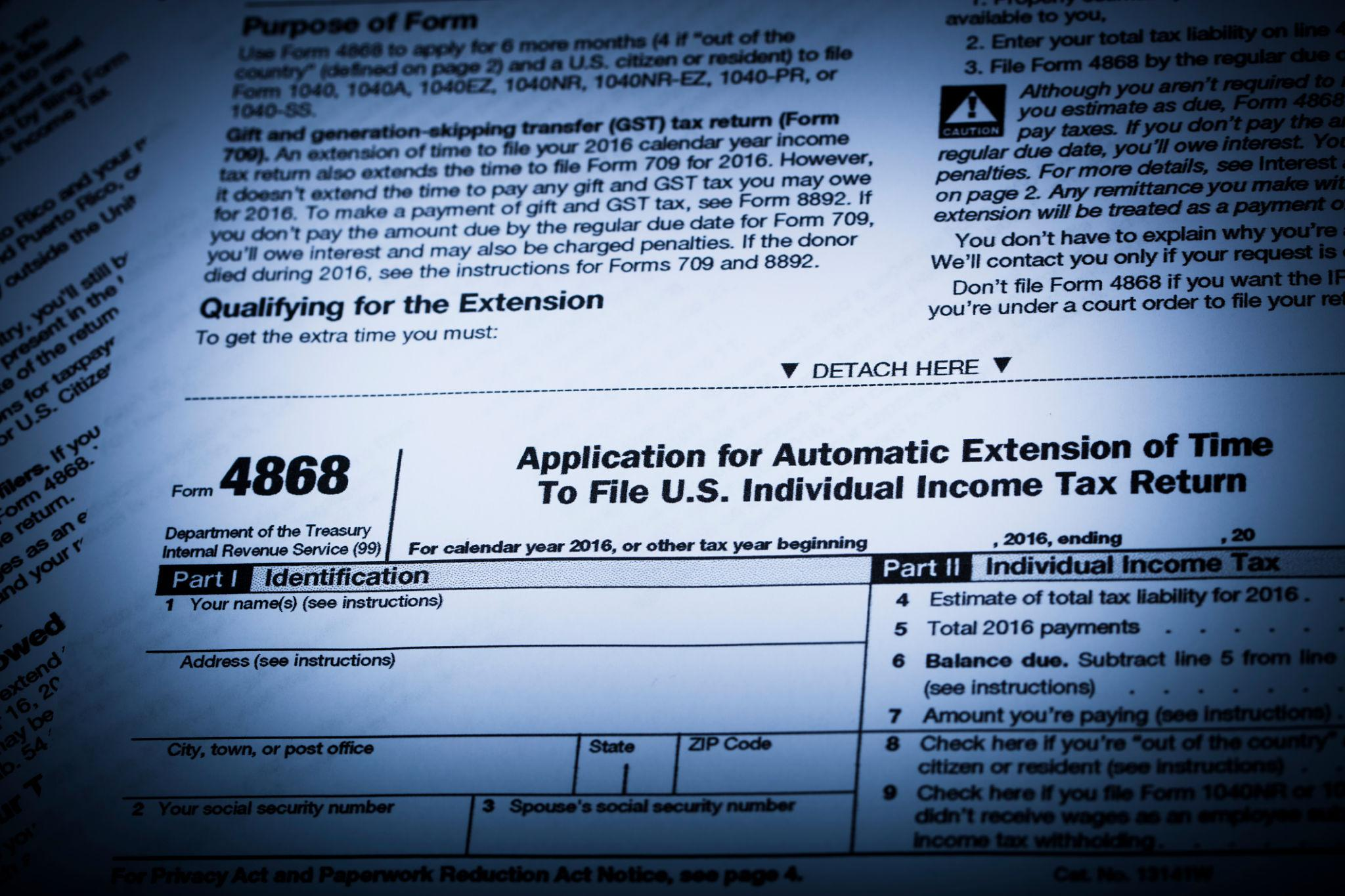
This automatically files Form 4868, meaning no separate form is required.
Option 3: File Form 4868 (Online or by Mail)
Form 4868, officially called Application for Automatic Extension of Time to File, is the standard IRS extension form.
You can:
- Submit it electronically via tax software or IRS partners
- Mail it to the IRS (must be postmarked by April 15)
If mailing, consider certified mail or a hand-stamped postmark to avoid delays that could make your submission appear late.
Filing a Tax Extension by Mail or Post Office
Some taxpayers still prefer physical filing. This involves:
- Completing Form 4868
- Mailing it through the post office
- Ensuring it is postmarked by April 15
However, postal delays can be risky. If the form is not postmarked on time, the IRS may treat it as late.
What Happens If You File Taxes Late?
Failing to file or request an extension by April 15 triggers penalties.
Failure-to-File Penalty
- Typically 5% of unpaid taxes per month
- Capped at 25% of total unpaid taxes
Failure-to-Pay Penalty
- Around 0.5% per month on unpaid balances
- Also capped at 25%
Additional Consequences
- Interest accumulates daily on unpaid taxes
- IRS notices and enforcement actions may follow
- Minimum penalties may apply after 60 days of delay
Filing an extension avoids the failure-to-file penalty, but not the failure-to-pay penalty.
Can You File Taxes After April 15?
Yes—but only under specific conditions:
- If you file an extension, you have until October 15
- If you miss both the deadline and extension, penalties apply immediately
- Filing late is still better than not filing at all
IRS Payment Plans: If You Can’t Pay on Time
If you cannot pay your full tax bill, the IRS provides structured payment options.
Short-Term Payment Plan
- Pay within 180 days
- Available if you owe less than $100,000
Long-Term Payment Plan (Installment Agreement)
- Monthly payments over time
- Available if you owe $50,000 or less
You can apply online through an IRS account without calling or visiting in person.
Step-by-Step: How to File a Tax Extension
This process ensures compliance while giving you more time to prepare your return.
Step 1: Estimate Your Taxes
Calculate your income, deductions, and credits to determine if you owe money.
Step 2: Submit Extension Request
Choose one of the following:
- IRS Free File
- Online payment with extension selection
- Form 4868 (online or mail)
Step 3: Pay What You Can
Even partial payment reduces penalties.
Step 4: Track Your Extension
Keep confirmation records and ensure your request is accepted.
Key Forms and Tools You May Need
When preparing taxes or filing extensions, common forms include:
- Form 4868 – Extension request
- Form 1040 – Individual tax return
- W-2 – Wage statement
- 1099 forms – Freelance or investment income
- 1098-T / 1098-E – Education and loan interest
Who Automatically Gets More Time?
Some taxpayers receive automatic extensions without filing:
- U.S. citizens living abroad
- Military members serving overseas
- Individuals in disaster areas
However, payments are still generally due by April 15.
Why Filing an Extension Can Be the Smarter Choice
Tax professionals often recommend filing an extension if your return is incomplete.
Submitting inaccurate returns can lead to:
- Lengthy processing delays
- Amendments that take months to resolve
- Delayed refunds (often averaging five months or more for corrections)
In many cases, filing an extension is more efficient than filing and correcting later.
Conclusion: Timing Matters More Than Speed
The 2026 tax season highlights a consistent reality: filing on time is important, but filing correctly is critical.
A tax extension offers flexibility—but only for paperwork. Financial obligations remain fixed to the original deadline. For taxpayers facing incomplete documentation or uncertainty, filing an extension online is often the most practical path.
However, ignoring deadlines entirely can trigger compounding penalties that escalate quickly. The safest approach is to act before April 15—either by filing, requesting an extension, or setting up a payment plan.


