




FNB CEO Lytania Johnson: Inside FirstRand’s Strategic Leadership Shift
A significant leadership transition is underway at FirstRand Ltd., as the group moves to reinforce its position as Africa’s most profitable retail and commercial banking powerhouse. At the center of this shift is the appointment of Lytania Johnson as chief executive officer of First National Bank (FNB), effective April 1, 2026.
This transition is not an isolated executive change. It is part of a broader structural realignment designed to simplify operations, improve agility, and enhance customer delivery across one of South Africa’s most influential banking institutions.
Johnson steps into the role after a long tenure within the organization, replacing Harry Kellan, who will take early retirement at the end of 2026 after just two years in the top position.
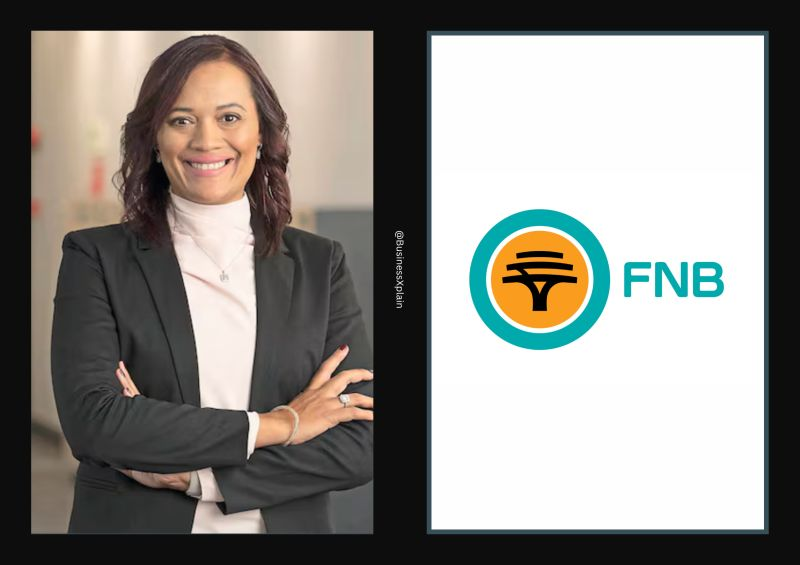
From Internal Leadership to CEO: Johnson’s Rise Within FNB
Johnson’s appointment reflects a deliberate internal succession strategy. She has been with FNB for approximately 25 years, most recently serving as CEO of the personal banking segment for the past three years.
Her progression through the ranks positions her as a leader deeply familiar with the bank’s operational structure, customer base, and innovation-driven culture. This internal continuity is critical as FirstRand executes a complex restructuring strategy.
Unlike external appointments that often signal disruption, Johnson’s elevation suggests stability with targeted transformation—maintaining institutional knowledge while accelerating strategic priorities.
Why FirstRand Is Restructuring Its Banking Model
The leadership change coincides with a fundamental shift in how FirstRand organizes its banking segments.
The Old Model: Retail and Commercial Segmentation
Historically, FNB operated with a retail and commercial structure, serving:
- Entry-level to middle-income individuals
- Small and medium-sized enterprises (SMEs)
- Corporate clients through layered subsegments
While effective for scaling, the model grew increasingly complex as the bank expanded.
The New Model: Retail and Business Banking (RBB)
The restructuring introduces a simplified framework:
- A unified retail and business banking (RBB) segment
- A separate private banking and wealth management division
- Reallocation of enterprise and public sector clients into a corporate-focused bank
This redesign aims to eliminate operational silos and align services more closely with modern customer needs.
As the group explained, the size and scale of subsegments made simplification necessary to maintain responsiveness and efficiency.
What Johnson’s Role Now Encompasses
Johnson will take on a dual leadership responsibility:
- CEO of FNB
- CEO of the newly formed retail and business banking segment
This consolidation of leadership authority is intended to:
- Improve decision-making speed
- Enhance accountability at the segment level
- Deliver integrated solutions for customers with both personal and business needs
Her mandate extends beyond operational oversight—it includes driving a more unified banking experience across customer categories.
Strategic Vision: Serving a Converging Customer Base
One of the central ideas behind the restructuring is that customers no longer fit neatly into traditional banking categories.
Johnson highlighted this shift clearly:
“By bringing together retail and business banking, we can better serve entrepreneurs, small businesses and households who require solutions that can cover their personal and business needs.”
This reflects a broader trend in global banking:
- Individuals increasingly operate side businesses
- SMEs require integrated financial tools
- Digital platforms blur the line between personal and commercial finance
The new structure positions FNB to respond to these converging needs more effectively.
The Legacy of Harry Kellan and the Path to Transition
Johnson’s appointment builds directly on the strategic groundwork laid by Harry Kellan.
During his tenure, Kellan focused on:
- Reducing structural complexity
- Improving agility and decision-making
- Unlocking operational efficiencies
He described the restructuring as a natural next step:
“The reconfiguration of the retail and commercial segment model is the next step required for the business to be even more agile and responsive to customer needs.”
His early retirement marks the conclusion of a transformation phase that Johnson is now tasked with executing and scaling.
Broader Leadership Changes Across FirstRand
The restructuring extends beyond FNB, affecting multiple leadership roles across the group:
- Gert Kruger appointed as group chief operating officer
- Emma Mer becomes group chief risk officer
- Sizwe Nxedlana continues leading private banking and wealth management
- Muneer Ismail oversees the commercial and corporate banking segment
These coordinated changes indicate a comprehensive redesign of leadership accountability and operational alignment.
Performance Context: Why the Timing Matters
The leadership shift comes at a time when FNB is already performing strongly.
According to group leadership:
- South African operations delivered 10% growth in pre-tax profits
- The FNB franchise achieved a return on equity (ROE) of 41%
This is a critical detail. The restructuring is not a response to underperformance—it is a proactive move to sustain growth and maintain competitive advantage.
As FirstRand CEO Mary Vilakazi noted, the business is “in a good place,” allowing the group to implement structural changes from a position of strength.
What This Means for South Africa’s Banking Sector
Johnson’s appointment carries broader implications beyond FNB:
1. Acceleration of Digital and Customer-Centric Banking
FNB has long been recognized for its innovation-led approach. A simplified structure enables:
- Faster product rollout
- Better integration of digital services
- More responsive customer engagement
2. Increased Competition Among Major Banks
Rival institutions such as Standard Bank and Investec are also restructuring and targeting specific market segments.
FNB’s move may intensify competition, particularly in:
- SME banking
- Digital financial services
- Integrated personal-business solutions
3. A New Generation of Leadership
Johnson represents a shift toward long-tenured, internally developed executives taking top roles. This reflects:
- Strong succession planning
- Institutional continuity
- Reduced disruption during transformation
Future Outlook: What Comes Next Under Johnson’s Leadership
Looking ahead, several developments are likely under Johnson’s leadership:
Structural Execution
The immediate priority will be implementing the new RBB model effectively without disrupting customer experience.
Customer Integration
Expect deeper integration of services across:
- Personal banking
- Small business solutions
- Entrepreneurial finance
Innovation Expansion
FNB’s “culture of innovation” is expected to remain central, with potential focus on:
- Digital platforms
- Payment ecosystems
- Financial inclusion initiatives
Growth Strategy Continuity
With strong financial performance already in place, Johnson’s role is less about turnaround and more about scaling success.
Conclusion: A Calculated Shift Toward Simplicity and Growth
The appointment of Lytania Johnson as FNB CEO marks a pivotal moment in FirstRand’s evolution. It reflects a deliberate strategy: simplify the organization, empower leadership, and align more closely with changing customer realities.
Rather than reacting to pressure, the group is repositioning itself proactively—leveraging strong performance to drive the next phase of growth.
Johnson’s deep institutional experience, combined with a clear structural mandate, places her at the center of one of the most significant banking transformations in South Africa today.