


The Life and Legacy of Desmond Morris: The Man Who Reframed Humanity
Introduction: A Life That Changed How We See Ourselves
The death of Desmond Morris at the age of 98 marks the close of a remarkable intellectual journey—one that reshaped how millions understand human behavior. A zoologist, broadcaster, author, and surrealist artist, Morris spent more than six decades exploring a provocative idea: that humans are not separate from the animal world, but deeply rooted within it.
His 1967 book, The Naked Ape, became a global phenomenon, selling over 20 million copies and challenging conventional beliefs about human nature. Across more than 50 books, hundreds of hours of television, and a parallel career in art, Morris consistently blurred the boundaries between science, culture, and creativity.
His life was not merely a scientific career—it was a sustained attempt to reinterpret humanity itself.
Early Foundations: War, Curiosity, and the Origins of Observation
Born in 1928 in Wiltshire, England, Morris’s early life was shaped by personal and historical forces. As a child, he witnessed his father’s prolonged death from World War I injuries—an experience that left a lasting psychological imprint and deepened his curiosity about human behavior.
After completing two years of national service in the British Army in 1946, he turned toward both art and science. He studied zoology at the University of Birmingham and later completed a doctorate in animal behavior at Oxford University, focusing on the reproductive patterns of birds.
From the outset, Morris resisted conventional scientific methods. Rather than performing invasive experiments, he embraced ethology—the observation of animals in natural settings. This approach would later define his work and distinguish his interpretations of human behavior.
Television Breakthrough: Bringing Zoology into the Living Room
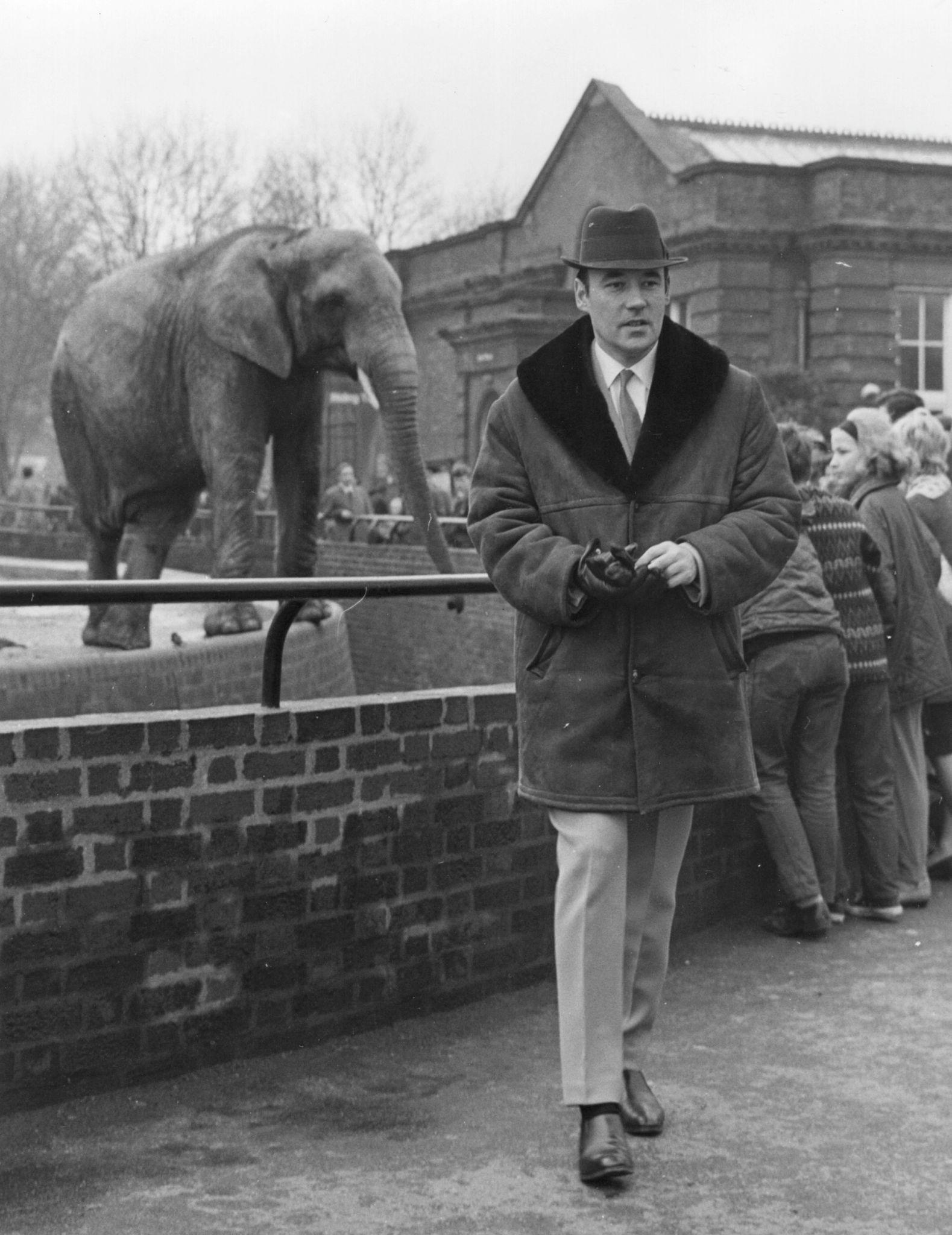
Morris’s ability to communicate science to the public became evident in 1956 when he began hosting the Granada television program Zoo Time. Broadcast from a specially constructed studio within the grounds of London Zoo, the show ran until 1967 and introduced audiences to the complexities of animal behavior.
This marked the beginning of a prolific broadcasting career. He later presented programs such as:
- Life in the Animal World
- The Human Animal
- The Animal Contract
Through television, Morris translated academic zoology into accessible storytelling. He became a recognizable public figure, often compared to contemporaries like David Attenborough, though his approach was more interpretive and controversial.
The Naked Ape: A Radical Reinterpretation of Humanity
A Book That Shook Cultural Assumptions
In 1967, Morris published The Naked Ape, a work that would define his legacy. Written in just four weeks, the book proposed that humans should be studied as animals—specifically, as highly evolved primates whose behaviors are rooted in evolutionary biology.
The argument was simple but disruptive:
- Human rituals—courtship, aggression, parenting—mirror animal behavior
- Modern society does not erase biological instincts
- Civilization overlays, but does not replace, evolutionary drives
At a time when many still viewed humanity as fundamentally separate from nature, this perspective was widely seen as radical.
The book’s success was unprecedented. It sold more than 20 million copies, was translated into over 20 languages, and became a defining text of the late 20th century.
Controversy and Debate: Science Meets Society
Morris’s work sparked intense debate. Critics—particularly feminists and some scientists—challenged his interpretations of gender roles and evolutionary behavior.
He argued that:
- Men evolved as hunters, favoring risk-taking traits
- Women evolved in domestic roles, emphasizing nurturing behavior
These claims were widely criticized as reductive and reflective of outdated assumptions.
Despite this, Morris maintained that his conclusions were based on observation rather than ideology. He later acknowledged that modern social structures had amplified inequalities, noting that urban environments favored competitive traits associated with men.
The controversy did not diminish his influence. Instead, it reinforced his role as a provocateur within popular science—someone willing to challenge established narratives.
Beyond Books: Expanding the Study of Human Behavior
Following The Naked Ape, Morris continued to explore human behavior through a series of influential works, including:
- The Human Zoo
- Manwatching
- The Naked Man
These works extended his central thesis: that human behavior, even in complex urban environments, reflects underlying biological patterns.
He applied his methods to diverse topics, including:
- Body language and gestures
- Social rituals and crowd behavior
- Sports fandom and collective identity
- Reality television dynamics
In later years, he even analyzed contestants on Big Brother, treating the show as a large-scale experiment in human interaction.
The Artist Within: A Parallel Creative Identity
While widely known as a scientist, Morris consistently identified as an artist. He exhibited surrealist paintings internationally and even showcased works alongside renowned artist Joan Miró.
His artistic experiments extended into zoology. One of his most unusual projects involved giving a chimpanzee named Congo a paintbrush to test whether artistic expression was uniquely human. The resulting works gained attention in the art world and were later sold at auction.
Morris viewed art and science as interconnected disciplines—both attempts to interpret the natural world. His paintings often depicted abstract, biomorphic forms, reflecting his fascination with evolutionary processes and instinctive behavior.
A Life of Movement: From London to Malta to Ireland
Success brought both opportunity and upheaval. After the commercial triumph of The Naked Ape, Morris relocated to Malta in 1968, partly due to financial pressures in the UK. There, he continued writing and developing new ideas about urban human behavior.
Later, he returned to England and took up a fellowship at Oxford University. In his later years, he moved to Ireland, where he remained active as both a writer and artist.
Even into his nineties, Morris continued to paint, write, and engage with public discourse—an unusual level of productivity for someone of his age.
Final Years and Passing: A Lifetime of Curiosity
Desmond Morris died on 20 April 2026 at the age of 98. His son Jason described his life succinctly:
“A zoologist, manwatcher, author and artist, he was still writing and painting right up until his death. He was a great man and an even better father and grandfather.”
Tributes emphasized not only his intellectual contributions but also his personal curiosity—a defining characteristic that shaped his entire career.
Cultural Impact: Why Desmond Morris Still Matters
Morris’s influence extends far beyond zoology. His work intersected with multiple domains:
1. Science Communication
He helped transform complex biological ideas into accessible narratives, influencing generations of science communicators.
2. Cultural Thought
By framing humans as animals, he contributed to broader debates about identity, behavior, and society.
3. Media and Entertainment
His television work helped establish nature programming as a mainstream genre.
4. Interdisciplinary Thinking
Morris demonstrated that science, art, and philosophy could coexist—and inform one another.
Even his critics acknowledge his role in expanding public engagement with evolutionary theory and behavioral science.
Looking Forward: The Continuing Relevance of His Ideas
Although some of Morris’s conclusions are now debated or outdated, his central premise—that human behavior must be understood in biological context—remains influential.
Modern fields such as:
- Evolutionary psychology
- Behavioral neuroscience
- Anthropology
continue to explore questions he helped popularize.
His work also raises enduring questions:
- How much of human behavior is biologically determined?
- To what extent can culture override instinct?
- What does it mean to be human in an increasingly technological world?
These questions remain unresolved—and continue to shape scientific inquiry.
Conclusion: A Legacy Defined by Observation and Imagination
Desmond Morris leaves behind a complex and enduring legacy. He was not simply a zoologist or a writer; he was a thinker who challenged fundamental assumptions about human identity.
By insisting that humans are part of the animal kingdom, he forced a reconsideration of behavior, culture, and evolution. His ideas sparked debate, inspired research, and reached a global audience.
In the end, Morris’s greatest contribution may not be any single book or theory, but his method: observe carefully, question deeply, and connect disciplines without hesitation.
That approach continues to resonate—and ensures that his work remains relevant long after his passing.


