

David Tlale’s Gautrain Fashion Show Redefined South African Runway Culture
South African fashion designer David Tlale turned an ordinary night in Johannesburg into one of the most talked-about moments in African fashion when he transformed the Gautrain into a live runway experience for his Autumn/Winter 2026/27 showcase.
What began as a fashion event quickly evolved into a cultural statement about creativity, African identity, urban renewal, and the future of immersive fashion experiences. Hosted at the Sandton Gautrain Station on a cold evening in May, the show broke convention in nearly every possible way — from the venue itself to the theatrical arrival of models stepping directly out of moving trains.
The event immediately captured attention because it marked the first time a designer had ever staged a fashion show inside the Gautrain system. More importantly, it demonstrated how fashion can interact with public spaces in ways that feel cinematic, emotional, and deeply connected to the identity of a city.
The showcase positioned Johannesburg not merely as a commercial hub, but as a creative capital capable of producing globally relevant fashion experiences.
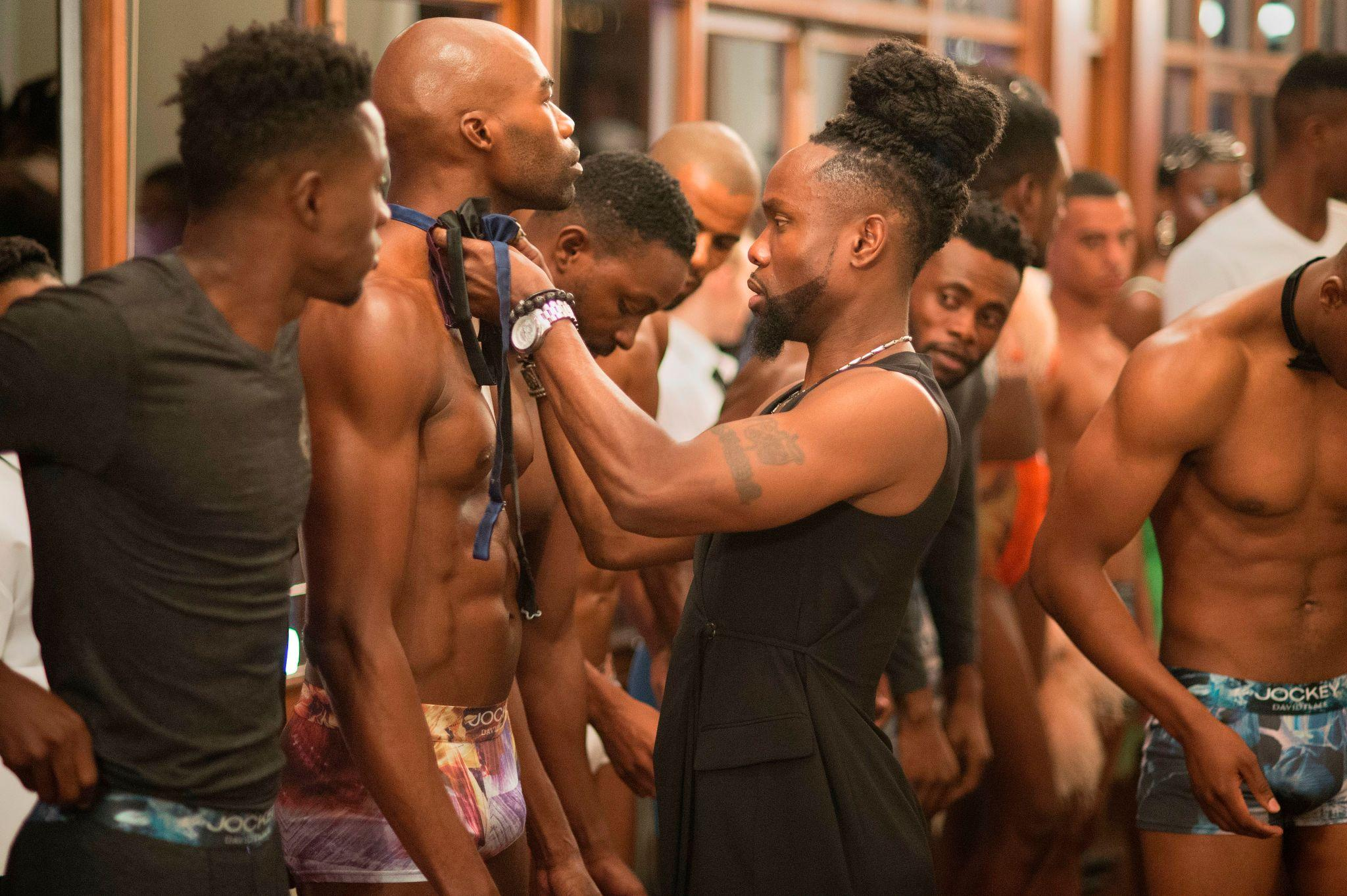
A Fashion Show Built Around Movement and Atmosphere
Unlike traditional runway presentations held in luxury venues or hotel ballrooms, Tlale chose the Sandton Gautrain Station as the heart of the experience.
The choice of venue was deliberate and symbolic.
Guests arrived before the station closed to the public at 21:30, creating an atmosphere filled with anticipation. Rather than frustration over the late-night logistics, attendees turned the waiting period into a networking and social moment. Fashion insiders, creatives, celebrities, and industry figures mingled while preparing for an experience few fully understood in advance.
Around 22:00, attendees boarded trains that transported them directly to the show venue. The train ride itself became part of the performance, blurring the lines between transportation, storytelling, and fashion presentation.
When the trains stopped, guests stepped onto platforms that had been transformed into a dramatic runway environment. Seating lined both sides of the platform while models emerged directly from the train before walking the runway in front of spectators.
The immersive staging immediately distinguished the showcase from conventional South African fashion presentations.
Inspired by Global Fashion Theatre
Observers noted similarities between Tlale’s concept and Chanel’s 2026 Métiers d’art presentation, which famously took place inside an abandoned New York subway station in December 2025.
But while international fashion houses often use unconventional venues to create spectacle, Tlale’s showcase carried a distinctly African identity and urban message.
Instead of imitating European luxury aesthetics, the Gautrain show reflected Johannesburg itself — energetic, fast-moving, ambitious, and layered with contrasts.
The station became more than a backdrop. It symbolized movement, transformation, and the rhythm of modern African cities.
That symbolism became even more powerful through the collection’s official theme:
“I am Africa, not African.”
The phrase framed the show as more than a fashion event. It became a statement about identity, ownership, and creative confidence rooted in the continent itself.
David Tlale’s Collection Blended Couture With Wearability
The garments themselves were central to the impact of the evening.
According to attendees, the collection showcased exceptional craftsmanship, movement, and texture. Every look appeared designed to tell its own story while avoiding repetition from Tlale’s previous work.
One of the most discussed aspects of the collection was its balance between maximalist African couture and practical wearability.
Tlale experimented freely with:
- structured denim designs
- dramatic layered silhouettes
- flowing white garments
- textured fabrics
- bold contrasts in shape and movement
The designer reportedly refused to confine himself creatively, approaching the collection with the mindset that limitations simply did not exist.
The result was a showcase that many attendees described as refreshing in an industry increasingly pressured by commercial trends and fast-moving fashion cycles.
Rather than chasing predictability, Tlale leaned into artistry and imagination.
Diversity Became One of the Show’s Strongest Statements
The casting of the show also received widespread praise.
Models of different body types, skin tones, and personal aesthetics walked the runway, reinforcing the idea that fashion should celebrate individuality rather than narrow beauty standards.
Well-known personalities who appeared in the showcase included:
- Sonia Booth
- Sabelo Mathonsi
- Libo Njomba
- Beekay
- Musa Ndaba
The diverse casting helped demonstrate how different fabrics, colours, and silhouettes could complement a broad range of people, making the collection feel inclusive rather than exclusive.
In a fashion landscape often criticized for uniformity, the Gautrain showcase embraced representation as part of its visual storytelling.
“Fashion in Transit” and the Rise of Experiential Runways
The Gautrain presentation was not only about clothes — it reflected a larger global shift toward experiential fashion.
Traditional runway formats are increasingly being replaced by immersive productions where audiences become participants rather than passive viewers.
Tlale’s earlier “Fashion in Transit” concept, which debuted his first denim collection aboard the Gautrain, already hinted at this direction.
But the Autumn/Winter 2026/27 showcase elevated the idea into something far more ambitious.
By integrating transportation, architecture, performance, and couture into one coordinated event, Tlale demonstrated how fashion presentations can become cultural experiences that extend beyond the runway itself.
The journey became part of the narrative.
The city became part of the collection.
The audience became part of the performance.
Johannesburg Was Central to the Message
Perhaps the most important dimension of the evening was its celebration of Johannesburg.
During his closing remarks, Tlale urged South Africans to support local talent while reclaiming pride in the city’s creative potential.
He said:
“So it’s very important to start supporting local, and while we are showcasing at Gautrain, it’s to say we’ve got a beautiful city. We do have a beautiful city, we must just make it amazing again. And us as trailblazers and advocates of the city to say we can make it in Joburg because Joburg is a city of dreams and a city of gold.”
The statement resonated strongly because it connected fashion to urban identity and economic optimism.
Rather than positioning success as something that must happen overseas, Tlale presented Johannesburg itself as worthy of global attention.
Guests Left Feeling They Had Witnessed Fashion History
As the evening concluded, attendees boarded trains back to Sandton Station while reflecting on the experience.
Many reportedly described the event as unlike anything they had seen before.
Comments overheard after the showcase included:
- “I have never seen anything like that.”
- “David Tlale is the blueprint.”
- “Fashion is in good hands.”
Those reactions reflected more than excitement about a runway show. They suggested that Tlale had succeeded in creating a defining cultural moment for South African fashion.
The event demonstrated that African designers are increasingly capable of producing fashion experiences that compete creatively with major international luxury houses while still maintaining a strong local identity.
Why the Gautrain Show Matters for African Fashion
The significance of David Tlale’s Gautrain fashion show extends far beyond one evening in Johannesburg.
The showcase highlighted several important shifts happening across the fashion industry:
Fashion as Cultural Storytelling
Modern runway shows increasingly function as narrative experiences rather than simple product displays.
Public Spaces as Creative Venues
Using transport infrastructure as a fashion venue challenged assumptions about where luxury and creativity belong.
African Fashion’s Growing Global Confidence
The show demonstrated that African designers can innovate on their own terms rather than following Western industry formulas.
Immersive Experiences as the Future of Fashion
Audiences now expect emotional, interactive, and visually memorable experiences that go beyond traditional catwalks.
A Landmark Moment for David Tlale and South African Fashion
David Tlale’s Gautrain fashion show will likely be remembered as one of the boldest runway concepts in modern South African fashion history.
By transforming a working transport system into a couture stage, Tlale achieved more than spectacle. He created an event that merged fashion, identity, architecture, movement, and civic pride into a single unforgettable experience.
At a time when the global fashion industry is searching for originality, the Gautrain showcase proved that some of the most innovative ideas are emerging from African creatives willing to break every predictable rule.
For one historic night in Johannesburg, fashion did not simply occupy a runway.
It travelled through the city itself.


