




Crime 101: A Precision-Built Heist Thriller Where No One Walks Away Clean
In an era dominated by spectacle-heavy blockbusters, Crime 101 emerges as a deliberate, controlled crime drama—one that trades noise for tension and excess for precision. Set against the sun-bleached sprawl of Los Angeles, the film constructs a layered narrative around discipline, ambition, and the fragile illusion of control.
Directed by Bart Layton and adapted from Don Winslow’s novella, Crime 101 positions itself firmly within the lineage of classic L.A. noir while recalibrating the genre for modern audiences. The result is a film that is less about the crime itself—and more about the psychology of those who commit, chase, and survive it.
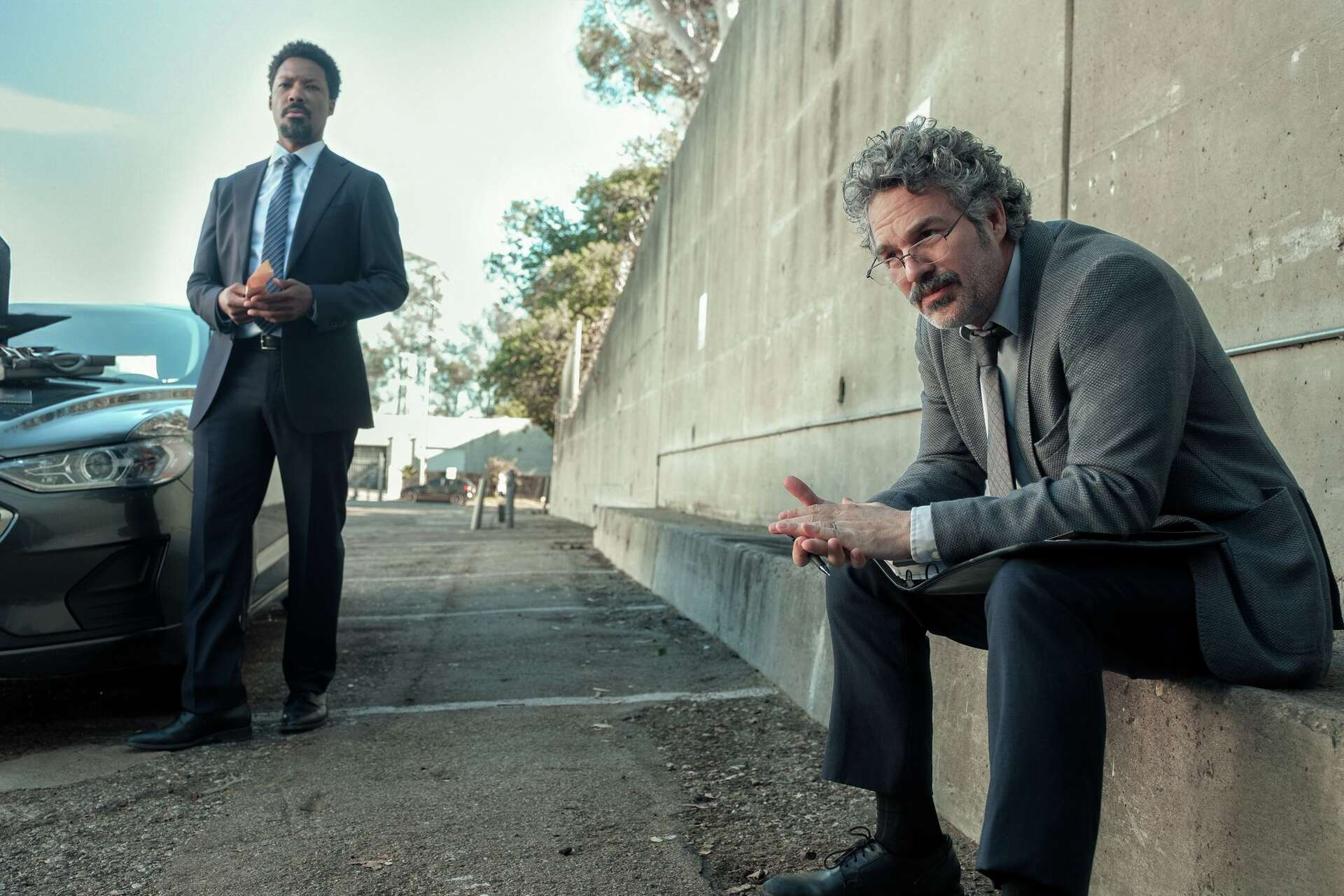
A Story Built on Patterns, Obsession, and Risk
At the center of Crime 101 is Mike Davis, an elusive and methodical jewel thief who operates with strict rules: no violence, no DNA, no mistakes. His crimes—executed along the 101 freeway—form a pattern so precise that it begins to draw attention.



His latest job, involving a diamond shipment carrying decoys, yields $3 million in real gems—but also introduces a critical disruption: an unexpected gunshot that nearly ends his career. From this moment, the film pivots. The thief who once controlled every variable begins to lose his grip.
Parallel to Davis’s arc is Sharon, a high-end insurance broker whose professional stagnation mirrors Davis’s existential fatigue. Overlooked and undervalued, she becomes increasingly receptive to risk—eventually aligning herself with Davis in pursuit of a high-stakes opportunity.



Meanwhile, Detective Lou Lubesnick is the only one who sees the pattern clearly. His insistence that a single, disciplined operator is behind the heists is dismissed—yet he continues his pursuit, driven by instinct and personal conviction.
This triangular dynamic—thief, insider, and investigator—forms the structural core of the narrative.
The Heist as a Psychological Equation
The film’s central heist is not simply a plot device—it is a convergence point for competing motivations.
Here are the critical components that define the operation and its significance:



- Target: A $5.5 million illicit diamond purchase tied to a wealthy client’s wedding
- Access Point: Insider intelligence provided by Sharon
- Threat Variable: Ormon, a volatile biker introduced as an unpredictable disruptor
- Counterforce: Lou, operating both inside and outside official channels
This convergence transforms the heist into more than a criminal act—it becomes a test of identity. Each character approaches it with a different objective:
- Davis seeks an exit strategy—“walk-away money”
- Sharon seeks validation and autonomy
- Lou seeks resolution and truth
As one character states:
“Eleven million dollars. Isn’t that what you guys call ‘walk-away’ money?”
The response underscores the film’s central thesis:
“That’s the thing about walk-away money. You have to be able to actually walk away with it.”
When Control Breaks: The Collapse of Order
The final act unfolds within the confined, high-pressure environment of a luxury hotel suite. What begins as a calculated operation devolves into a multi-sided confrontation.
- Davis infiltrates the security chain
- Lou embeds himself as the courier
- Ormon arrives as a wildcard, escalating violence
The result is a breakdown of the carefully constructed system. The rules that governed Davis’s operations no longer apply. Violence enters the equation, and the boundaries between hunter and hunted dissolve.
Yet the resolution subverts expectations.
Lou, rather than simply arresting Davis, manipulates the outcome—leveraging financial crimes to control the narrative and redistributing the stolen diamonds to Sharon. Davis escapes, but not with the reward he intended.
This outcome reframes the story: the heist was never just about money. It was about leverage, identity, and survival.
Cast Dynamics and Performance Weight
The film’s narrative complexity is reinforced by a cast that operates with restraint rather than excess:
- Chris Hemsworth (Davis) delivers a measured performance, emphasizing control and internal conflict
- Halle Berry (Sharon) provides a grounded counterbalance, embodying ambition shaped by frustration
- Mark Ruffalo (Lou) introduces a methodical, almost obsessive energy to the investigative arc
- Barry Keoghan (Ormon) functions as the destabilizing force, injecting volatility into an otherwise controlled system
Supporting performances from Monica Barbaro, Corey Hawkins, Jennifer Jason Leigh, and Nick Nolte add depth without diluting focus.
Production, Scale, and Market Performance
From a production standpoint, Crime 101 reflects significant investment and strategic positioning:
- Budget: $90 million
- Runtime: 140 minutes
- Release: Premiered January 28, 2026 (London), wide release February 13, 2026
- Distribution: Amazon MGM Studios (domestic), Sony Pictures Releasing International (global)
Despite generally favorable critical reception, the film underperformed commercially, earning approximately $71.9 million worldwide, falling short of its production budget.
This discrepancy highlights a recurring trend in the current market: critically solid, mid-paced adult thrillers struggle to compete with high-concept franchises.
Style, Tone, and Genre Positioning
Visually and structurally, Crime 101 aligns with classic crime cinema:
- Emphasis on procedural detail over spectacle
- A slow-burn narrative that prioritizes tension over action
- A Los Angeles setting that functions as both backdrop and character
The film has drawn comparisons to the works of directors like Michael Mann and Sidney Lumet—particularly in its focus on moral ambiguity and character-driven conflict.
Rather than reinventing the genre, it refines it—polishing familiar elements into a cohesive, controlled experience.
Cultural and Industry Implications
Crime 101 arrives at a moment when the industry is reassessing the viability of adult-oriented thrillers. Its reception suggests several key implications:
- Audience segmentation is narrowing
Films that require patience and attention compete in a market optimized for immediacy. - Streaming may be the long-term value driver
With its release on Prime Video, the film is positioned to reach a broader audience beyond theatrical limitations. - Star-driven mid-budget films face structural challenges
Even with a high-profile cast, success is no longer guaranteed without franchise alignment.
The Final Takeaway
Crime 101 is not a film about a perfect crime. It is a film about imperfect control.
Every character operates under the belief that they can manage risk, predict outcomes, and ultimately walk away. The narrative systematically dismantles that belief, replacing it with a more grounded reality: control is temporary, and every system eventually breaks.
In that sense, Crime 101 functions less as a heist film and more as a study of limits—professional, emotional, and moral.