


Ringo Starr and Paul McCartney: A Reunion That Redefines a Lifelong Musical Bond
A Familiar Partnership, Reimagined
Few musical partnerships carry the historical weight and emotional resonance of Paul McCartney and Ringo Starr. As the two surviving members of The Beatles, their creative relationship has long symbolized both the legacy of one of the most influential bands in history and the enduring personal connection forged through decades of collaboration.
In 2026, that relationship takes a new turn. McCartney’s forthcoming album The Boys of Dungeon Lane introduces a moment that stands out even in the vast history of Beatles-related projects: a true duet between McCartney and Starr.
The track, titled “Home to Us,” is not just another collaboration—it represents a structural and emotional first in their shared discography.
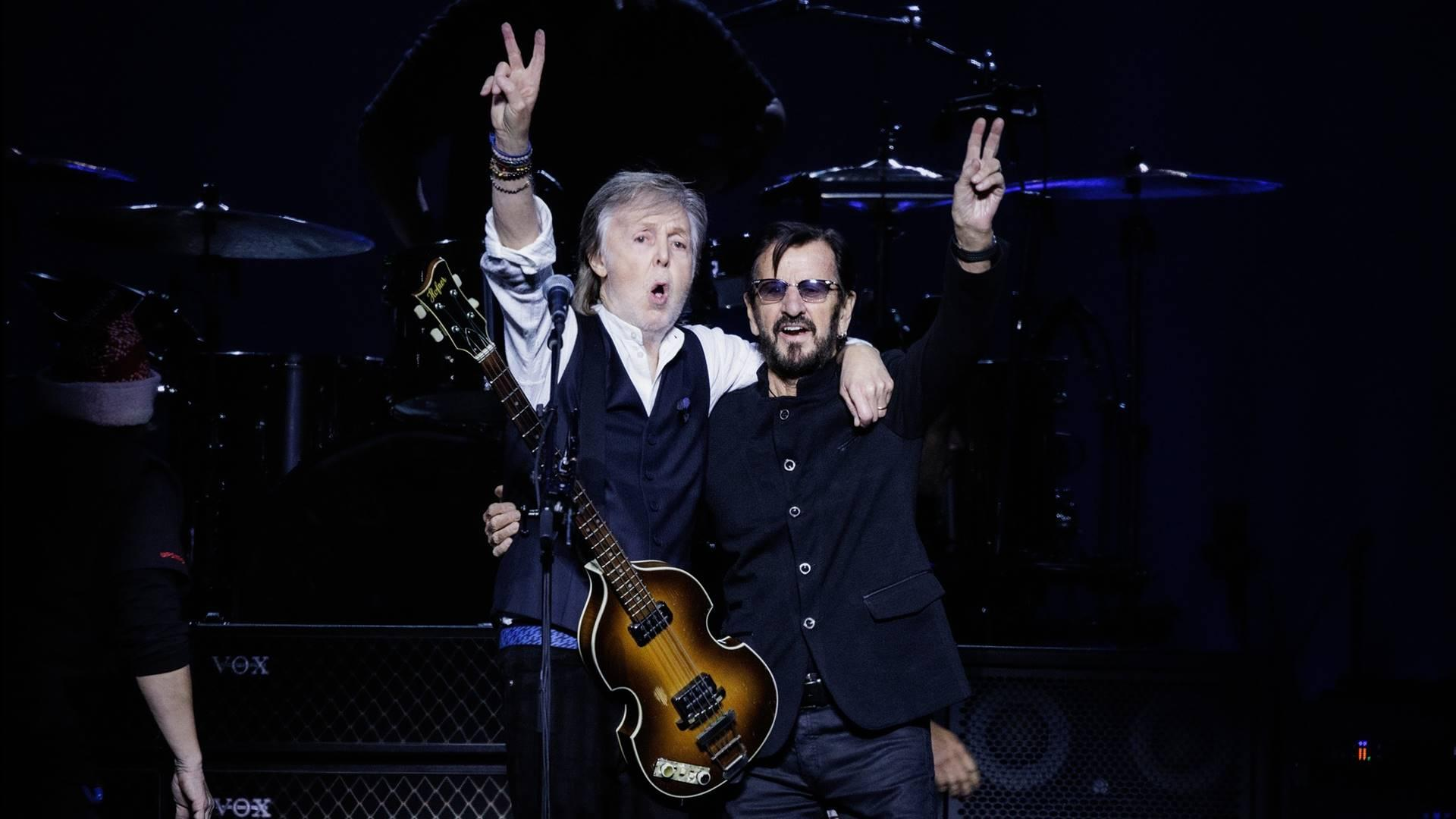
The Making of “Home to Us”
From Casual Session to Collaborative Centerpiece
The origins of “Home to Us” are deceptively simple. During the album’s development, McCartney invited Starr to contribute to a session with producer Andrew Watt. Initially, Starr’s role appeared limited.
McCartney explained:
“I saw Ringo and said I worked with this guy Andrew. Ringo came over to Andrew’s studio and played a little bit of drums. I think Ringo thought that all he had to do was play a little bit of drums, and Andrew would make some marvelous thing out of it.”
At that stage, Starr assumed his contribution was complete. However, McCartney saw untapped potential in what had been recorded.
“(Then I saw) what he did, out of curiosity…I thought, ‘Wow, that’s really good… We should make the track that Ringo hoped, and then get it over to him and complete the circle.’”
This moment marked a pivot—from a routine session contribution to a fully realized collaborative effort.
A Rare Milestone: The First True Beatles Duet
Why This Collaboration Matters
Despite decades of shared history, McCartney emphasized a surprising fact:
“It’s a duet. It was really nice, because we’ve never done that. Ringo’s never just taken a duet with one of the Beatles, you know? So, there you go. We had it.”
This distinction is significant. While Beatles members have collaborated in various forms post-breakup, a structured duet—where two members share vocal duties as equal partners—had not occurred in this way before.
On “Home to Us,” McCartney and Starr trade vocals line by line, creating a conversational narrative rooted in shared memory.
Themes and Musical Direction
A Return to Liverpool
The song’s lyrical foundation is deeply autobiographical. It reflects on the duo’s upbringing in Liverpool, grounding the track in personal history rather than abstract storytelling.
The sentiment is captured in McCartney’s reflection:
“Even though where we lived was a little rough, it was home to us.”
This line encapsulates the emotional core of the track—nostalgia without romanticization, grounded in lived experience.
A “Beatle-Esque” Composition
Musically, “Home to Us” has been described as “the most Beatle-esque track on the album,” incorporating:
- tempo shifts
- key changes
- layered vocal arrangements
Additional vocal contributions from artists like Chrissie Hynde and Sharleen Spiteri further enrich the composition, adding texture while maintaining its central identity.
Creative Friction and Resolution
Miscommunication in the Studio
The collaborative process was not without complications. After receiving McCartney’s demo, Starr misunderstood the scope of the request and initially recorded only a chorus vocal.
This led McCartney to question his bandmate’s enthusiasm for the track.
The situation was resolved through direct communication, leading Starr to return and expand his contribution—both vocally and instrumentally.
This episode highlights a key aspect of their relationship: even after decades, their creative process still involves negotiation, reinterpretation, and refinement.
The Album Context: “The Boys of Dungeon Lane”
A Project Rooted in Experimentation
“The Boys of Dungeon Lane,” scheduled for release on May 29, represents McCartney’s first solo album since 2020.
The project began five years earlier during an informal meeting with producer Andrew Watt. What started as a casual exchange evolved into a full-scale recording process spanning multiple locations, including England and Los Angeles.
The album reflects McCartney’s longstanding creative philosophy:
- experimentation with chord structures
- hands-on instrumentation (playing most instruments himself)
- a balance between nostalgia and forward-looking production
Cultural and Historical Implications
Extending the Beatles Legacy
The collaboration carries implications beyond the music itself. It reinforces the enduring cultural relevance of The Beatles, demonstrating that their influence is not confined to archival material or retrospective analysis.
Instead, it remains an active, evolving force.
For audiences, particularly those who experienced the Beatles’ original era, the duet represents continuity. For newer listeners, it offers a direct connection to that legacy in a contemporary context.
A Model for Legacy Artists
From an industry perspective, the project illustrates how legacy artists can remain relevant:
- by revisiting formative themes without relying solely on nostalgia
- by collaborating across generations (through producers like Andrew Watt)
- by creating new material that acknowledges history without replicating it
Looking Ahead: What This Collaboration Signals
The success of “Home to Us” may influence future projects involving surviving members of iconic bands. It demonstrates that even well-documented partnerships can still yield new creative territory.
For McCartney and Starr, the duet suggests:
- continued openness to collaboration
- willingness to reinterpret their shared past
- ongoing engagement with both old and new audiences
Conclusion
The reunion of Paul McCartney and Ringo Starr on “Home to Us” is not merely a nostalgic gesture. It is a carefully developed collaboration that introduces something genuinely new into their shared history—a true duet that bridges past and present.
By combining autobiographical storytelling, experimental production, and a renewed creative dialogue, the track stands as a meaningful addition to both artists’ legacies.
More broadly, it reinforces a central truth about enduring musical partnerships: even after decades, there are still unexplored possibilities.


