


Aryna Sabalenka: Dominance, Rivalries, and a Defining Clay-Court Chapter
A Season That Redefines Control on the WTA Tour
Aryna Sabalenka enters the 2026 clay-court season not simply as the world No. 1, but as the central force shaping women’s tennis. Her campaign so far has established a clear hierarchy at the top of the sport—built on consistency, power, and a sustained winning rhythm that few players have matched.
Her year includes back-to-back titles at Indian Wells and the Miami Open, completing the prestigious “Sunshine Double,” a feat achieved by only a handful of players in tennis history. That run pushed her season record to 23 wins and just one loss, underlining both dominance and reliability at the highest level .
This momentum has translated into a commanding ranking advantage. Sabalenka holds a lead of more than 2,300 points over her closest rival, Elena Rybakina, reinforcing her position as the benchmark player on the WTA Tour .
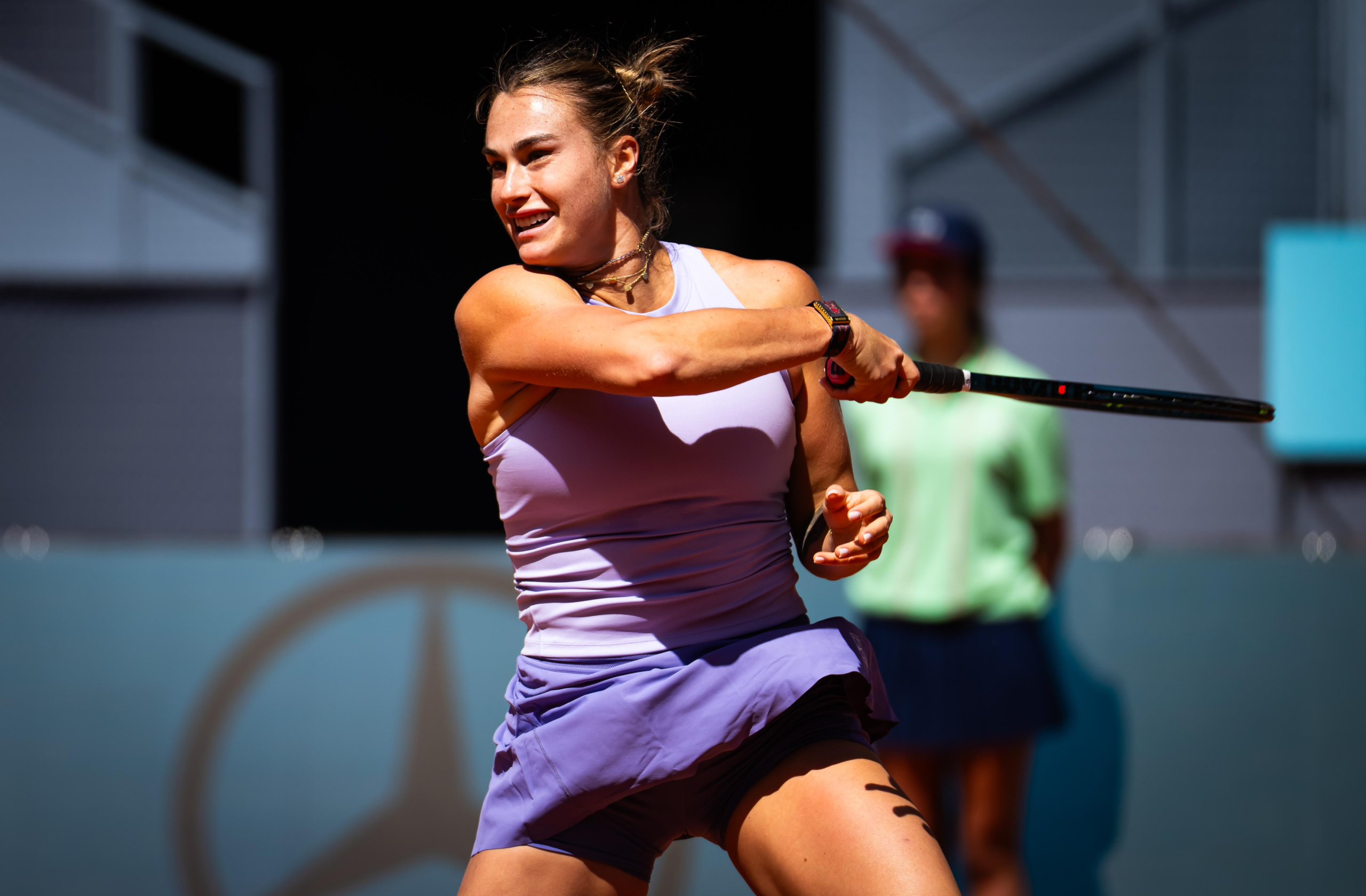
Madrid Open: A Tournament Built for Sabalenka’s Game
The transition to clay brings immediate focus to the Madrid Open, a tournament that aligns closely with Sabalenka’s strengths.
Unlike traditional slow clay courts, Madrid’s altitude and faster conditions reward aggressive, first-strike tennis—precisely the style that defines Sabalenka’s game. Her track record at the event reflects that alignment:
- Three Madrid titles (2021, 2023, 2025)
- A 23–4 win-loss record at the tournament
- Multiple finals appearances, matching historic benchmarks
She arrives in Madrid as the defending champion after defeating Coco Gauff in the 2025 final, and once again enters as the top seed .
The stakes in 2026 extend beyond another title. A fourth Madrid victory would place her alone at the top of the tournament’s all-time winners list, surpassing Petra Kvitova, while also securing the outright record for most finals appearances ahead of Simona Halep.
The Rivalries Defining the Era
Sabalenka vs Rybakina: Power vs Precision
The most significant competitive storyline revolves around her rivalry with Elena Rybakina. Their meetings have defined the highest level of competition on the tour in 2026.
Rybakina defeated Sabalenka in the Australian Open final earlier this year, but Sabalenka responded by winning their Indian Wells final encounter. The rivalry has become a recurring feature of major tournaments.
Sabalenka has openly acknowledged the intensity of these encounters:
“I really love playing finals against her… it’s going to be a fight, it’s going to be a battle.”
While Sabalenka maintains a significant rankings lead, the upcoming clay swing presents an opportunity for Rybakina to close the gap due to differing points defenses across tournaments .
The Wider Field: Swiatek and Gauff
Beyond Rybakina, two additional contenders shape the competitive landscape:
- Iga Swiatek — defeated Sabalenka in the 2024 Madrid final in a deciding tie-break (9–7), highlighting how narrow the margins can be at the top.
- Coco Gauff — a consistent presence in finals and a recent Grand Slam champion.
Despite these challengers, Sabalenka’s consistency has kept her at the center of the sport’s competitive structure.
Tactical Identity: Why Sabalenka Is So Effective
Sabalenka’s game is built on high-risk, high-reward execution—but refined through experience and discipline.
Key characteristics include:
- First-strike tennis: aggressive baseline play and early ball contact
- Serve power: a weapon that, despite past struggles, now underpins her dominance
- Mental recalibration: improved composure under pressure
Her evolution has been shaped by adversity. Reflecting on her earlier struggles with serve consistency, she admitted:
“I couldn’t put one serve in… I was double-faulting 40 times.”
That period forced technical and psychological adjustments, ultimately strengthening her competitive resilience.
She now frames pressure differently:
“Pressure is power.”
This shift in mindset has been instrumental in sustaining her current level.
Preparation and Mindset Ahead of Madrid
Sabalenka’s approach to Madrid reflects both intensity and balance. After withdrawing from the Stuttgart Open to manage workload, she entered the clay season fresh and physically prepared.
Her on-court demeanor during practice sessions—light, relaxed, and confident—contrasts with her aggressive match persona. During training in Madrid, she joked with Paula Badosa:
“Hola Madrid! I’m back, I’m super happy to be back, what a wonderful tournament.”
This duality—intense competitor during matches and composed individual off-court—has become a defining aspect of her professional identity.
The Road Ahead: Draw, Risks, and Opportunities
The Madrid draw presents both opportunity and complexity.
Potential pathway highlights include:
- Early-round clash with emerging talent Lois Boisson
- Possible round-of-16 meeting with Naomi Osaka
- Projected quarterfinal against Jasmine Paolini
- Later-stage battles with Rybakina, Swiatek, or Gauff
Despite the competitive field, Sabalenka enters with a significant advantage: she has not lost a match in nearly three months heading into the tournament .
What a Fourth Madrid Title Would Mean
A victory in Madrid would represent more than another trophy. It would confirm several key developments:
- Historical positioning – sole record holder for Madrid titles
- Sustained dominance – continued control of the WTA rankings
- Clay-court legitimacy – reinforcing her ability beyond hard courts
It would also strengthen her trajectory toward the season’s major clay events, particularly Roland Garros.
Conclusion: A Player at Peak Authority
Aryna Sabalenka’s current phase is defined by clarity—technical, mental, and competitive. She has transitioned from a powerful but inconsistent player into a structured, dominant force capable of sustaining success across surfaces.
The Madrid Open now serves as a pivotal checkpoint. A fourth title would not only rewrite tournament records but further solidify her status as the central figure in women’s tennis.
Her trajectory is no longer about potential. It is about execution, continuity, and the consolidation of a legacy already in motion.


