
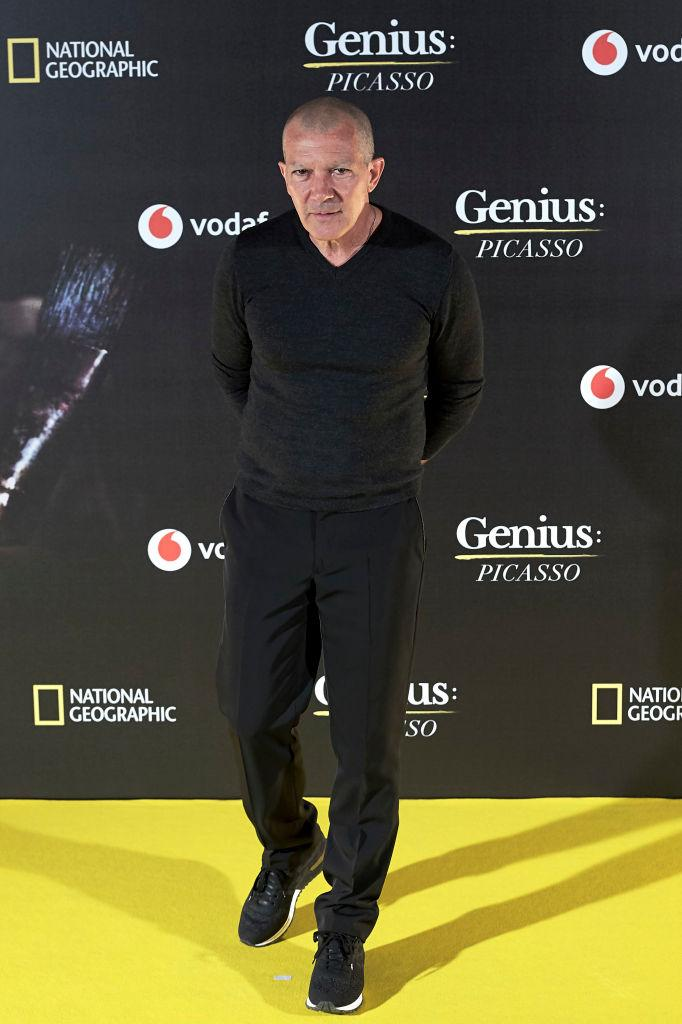
Antonio Banderas TV Shows: How a Global Film Star Built a Selective but Powerful Television Career
Antonio Banderas is widely known as one of Spain’s most internationally successful film actors, with a career that stretches from Pedro Almodóvar’s daring Spanish cinema to Hollywood franchises such as The Mask of Zorro, Spy Kids, Shrek, Puss in Boots, and Uncharted. Yet the topic of Antonio Banderas TV shows reveals a more selective, prestige-driven side of his career.
Unlike many stars who move regularly between television and film, Banderas has approached TV sparingly. When he has taken on television roles, they have usually been major character portraits, limited series, or high-profile dramatic projects built around historical figures. His most important television performances include And Starring Pancho Villa as Himself and Genius: Picasso, both of which earned him Primetime Emmy Award nominations.
That makes his television career especially interesting: it is not long in volume, but it is substantial in impact.

A Film Star Whose TV Work Carries Prestige
Banderas, born José Antonio Domínguez Bandera on 10 August 1960 in Málaga, Spain, built his reputation first through cinema. His early collaborations with Pedro Almodóvar introduced him to international audiences, while his move into American films in the 1990s made him a recognizable global star.
That background matters because his television appearances have often benefited from the same qualities that made him successful on film: physical presence, emotional intensity, charisma, and the ability to play complex men who are both magnetic and morally complicated.
Rather than becoming a regular sitcom or procedural actor, Banderas used television as a platform for ambitious biographical storytelling. His key TV roles are not casual appearances; they are dramatic turns centered on larger-than-life real figures.
And Starring Pancho Villa as Himself: Banderas Takes on Revolutionary Myth
One of the most important Antonio Banderas TV projects is the HBO television film And Starring Pancho Villa as Himself. Released in the early 2000s, the project cast Banderas as Mexican revolutionary Pancho Villa, placing him at the center of a story that blended politics, mythmaking, and early cinema.
The supplied material describes the production as a television film directed by Bruce Beresford and written by Larry Gelbart, with Banderas acting alongside Alan Arkin, Jim Broadbent, and Michael McKean. It also highlights the complexity of the role: Villa was not presented simply as a heroic figure, but as a man whose image was shaped by history, violence, performance, and media.
A notable assessment in the provided information says, “Villa was larger than life, and Banderas vibrantly captures his bravado. Everything in the telepic, though, is designed to make Villa a likable force, which pushes and pulls Banderas in a number of directions, only some of which play well. Eventually, ‘Villa’ exposes a dark side in the man, and Banderas forsakes crafting the image of a hero to allow the man’s ambiguity to shine.”
That observation helps explain why the performance stands out. Banderas did not simply play Pancho Villa as a historical icon. He played him as a man conscious of image, power, violence, charm, and legacy. The result brought Banderas one of the clearest signs of television recognition in his career: a Primetime Emmy Award nomination for Outstanding Lead Actor in a Limited or Anthology Series or Movie, along with a Golden Globe nomination for Best Actor – Miniseries or Television Film.
Why Pancho Villa Fit Banderas So Well
The role of Pancho Villa suited Banderas because it demanded theatrical force without losing psychological ambiguity. Throughout his career, Banderas has often played men with heightened identities: revolutionaries, artists, swordsmen, lovers, villains, fathers, and icons. Villa gave him a chance to combine many of those qualities in one television performance.
The project also connected with a broader theme in Banderas’ work: the performance of masculinity. In films such as Desperado and The Mask of Zorro, he played men whose public identities were tied to legend and spectacle. In And Starring Pancho Villa as Himself, that same question became historical and political. Villa was not merely fighting battles; he was also being filmed, interpreted, and transformed into a public image.
For viewers searching for Antonio Banderas TV shows, this is one of the essential entries because it shows him using television not as a smaller version of cinema, but as a place for serious biographical drama.
Genius: Picasso: Banderas as Pablo Picasso
If And Starring Pancho Villa as Himself showed Banderas as a revolutionary figure, Genius: Picasso placed him inside the mind and legacy of one of the most famous artists of the 20th century. In 2018, Banderas starred in the National Geographic limited series Genius: Picasso, portraying Pablo Picasso.
This was one of the most significant television moments of his career. The role earned him nominations for a Primetime Emmy Award, a Screen Actors Guild Award, and a Golden Globe Award.
The casting carried special resonance. Banderas was born in Málaga, the same Spanish city associated with Picasso’s origins. That cultural connection gave the performance an additional layer, even before considering the demands of the role itself. Playing Picasso required more than imitation. It required presenting a towering artist as a human being shaped by ego, creativity, relationships, ambition, and contradiction.
The Challenge of Playing Picasso on Television
Biographical television has a particular challenge: it asks actors to sustain a character over multiple chapters rather than compressing a life into a two-hour film. For Banderas, Genius: Picasso offered room to explore Picasso as an artist and as a man whose personal life remains inseparable from debates about genius, power, and legacy.
His performance arrived during a period when limited series were becoming one of television’s most respected formats. Major actors increasingly moved into prestige TV because limited series offered cinematic production values and deeper character arcs. Banderas’ turn as Picasso fit neatly into that trend.
For audiences, Genius: Picasso is arguably the most recognizable Antonio Banderas TV show because it is a series rather than a TV movie, and because it positioned him at the center of a widely distributed historical drama. It also reinforced his reputation as an actor able to portray cultural giants without flattening them into simple admiration.
Television as a Space for Historical Figures
Looking at Banderas’ most notable TV work, a clear pattern emerges: television has given him room to play historical figures whose public identities are already loaded with myth.
Pancho Villa was a revolutionary transformed by politics and early media. Pablo Picasso was an artist whose name became shorthand for modern genius. In both cases, Banderas entered stories where the central character was not only a person but also an image created by history.
That makes his television career distinct from his film career. In film, Banderas has often been associated with action, romance, voice acting, and auteur drama. In television, his work has leaned toward interpretation: how does an actor humanize a legend without diminishing the legend’s scale?
The Monster of Florence: A Return to TV Crime Drama
Another important development in the Antonio Banderas TV conversation is his connection to The Monster of Florence. The supplied information states that Banderas was set to return to TV to play Italian crime reporter Mario Spezi in a limited series adaptation of the 2008 best-selling true-crime novel The Monster of Florence: A True Story, co-written by Spezi and American writer Douglas Preston.
The project centers on an investigation into a notorious series of murders in Italy from the late 1960s to the mid-1980s. The supplied material notes that the two writers became part of the story when Italian prosecutors began to suspect them of being behind the killings.
The quoted description included in the material begins: “The book, and the series based on it, tell the true story of our search for — and identification …”
Even from the available details, the role of Mario Spezi appears well suited to Banderas’ later-career interests. It is not a conventional heroic role, but a character embedded in investigation, danger, suspicion, and moral tension. If Pancho Villa explored history through revolution and Genius: Picasso explored history through art, The Monster of Florence points toward history through crime reporting and institutional suspicion.
Beyond Traditional TV: Voice Work, TV Films, and Screen Presence
When people search for Antonio Banderas TV shows, they may also encounter confusion because much of his career exists outside traditional episodic television. His voice work as Puss in Boots, for example, is closely associated with family entertainment and animation, though it is primarily tied to film franchises rather than standard TV roles.
He has also appeared in many high-profile films that later found large audiences through streaming and television platforms. However, the strongest answer to the search intent “Antonio Banderas TV shows” remains focused on his major television performances: And Starring Pancho Villa as Himself, Genius: Picasso, and his reported role as Mario Spezi in The Monster of Florence.
His career shows that television has not been his main arena, but when he enters it, he tends to choose projects with weight.
Awards Recognition: Why His TV Roles Matter
Banderas’ television work matters partly because awards bodies recognized it. He received Primetime Emmy nominations for both And Starring Pancho Villa as Himself and Genius: Picasso.
That recognition places his TV work within a larger career of major nominations and wins. His broader accolades include a Cannes Film Festival Award, a Goya Award, nominations for an Academy Award, Golden Globe nominations, and a Tony Award nomination.
In other words, his television career is not a side note because it lacks quality. It is a side note only because it is selective. The performances themselves sit comfortably alongside his respected film and stage work.
How Antonio Banderas’ TV Career Reflects a Larger Industry Shift
Banderas’ movement into limited series and television films also reflects a broader industry trend. Major international actors have increasingly embraced TV because the medium now offers prestige, scale, and complex writing. Limited series, in particular, allow actors to take on historical or biographical roles without committing to long-running television schedules.
Banderas’ choices fit this model. He has not built his reputation through recurring network television roles. Instead, he has treated TV as a place for contained, ambitious performances. That approach mirrors the way many film stars now use television: not as a downgrade, but as a parallel stage for serious acting.
Conclusion: A Small TV Catalog With Lasting Impact
Antonio Banderas’ TV shows may not form the largest part of his career, but they reveal an important dimension of his artistry. His work in And Starring Pancho Villa as Himself and Genius: Picasso shows an actor drawn to complex historical figures whose lives sit at the intersection of myth, fame, and controversy.
For viewers looking to understand Banderas beyond his film stardom, his television work is essential. It demonstrates his ability to carry long-form drama, portray real people with intensity, and bring cinematic charisma into prestige TV formats. His television career is selective, but that selectiveness is exactly what gives it weight.
As interest grows in limited series, biographical drama, and true-crime storytelling, Banderas’ TV presence may become even more significant. His screen legacy was built largely in cinema, but his television performances prove that when he chooses the small screen, he brings the full force of a major international actor.


