

Antonio Banderas: The Enduring Screen Star Entering Another Bold Chapter
Antonio Banderas has spent decades moving between continents, languages, genres, and creative identities. He is the Spanish star who became a Hollywood leading man, the romantic swashbuckler who evolved into a mature dramatic actor, and the performer whose later career has increasingly favored character, risk, and artistic reinvention over simple celebrity visibility.
Now, Banderas is again entering a particularly active moment. His name is attached to two very different film projects: Tony, A24’s upcoming Anthony Bourdain biopic, and Unmerciful Good Fortune, a supernatural thriller with Rosario Dawson, Scott Eastwood, and Susan Sarandon. Together, the projects underline what has made Banderas such a durable figure in global cinema: he can bring warmth, authority, menace, elegance, and emotional depth to roles that might otherwise feel purely functional.
A Veteran Actor in a Young Anthony Bourdain Story
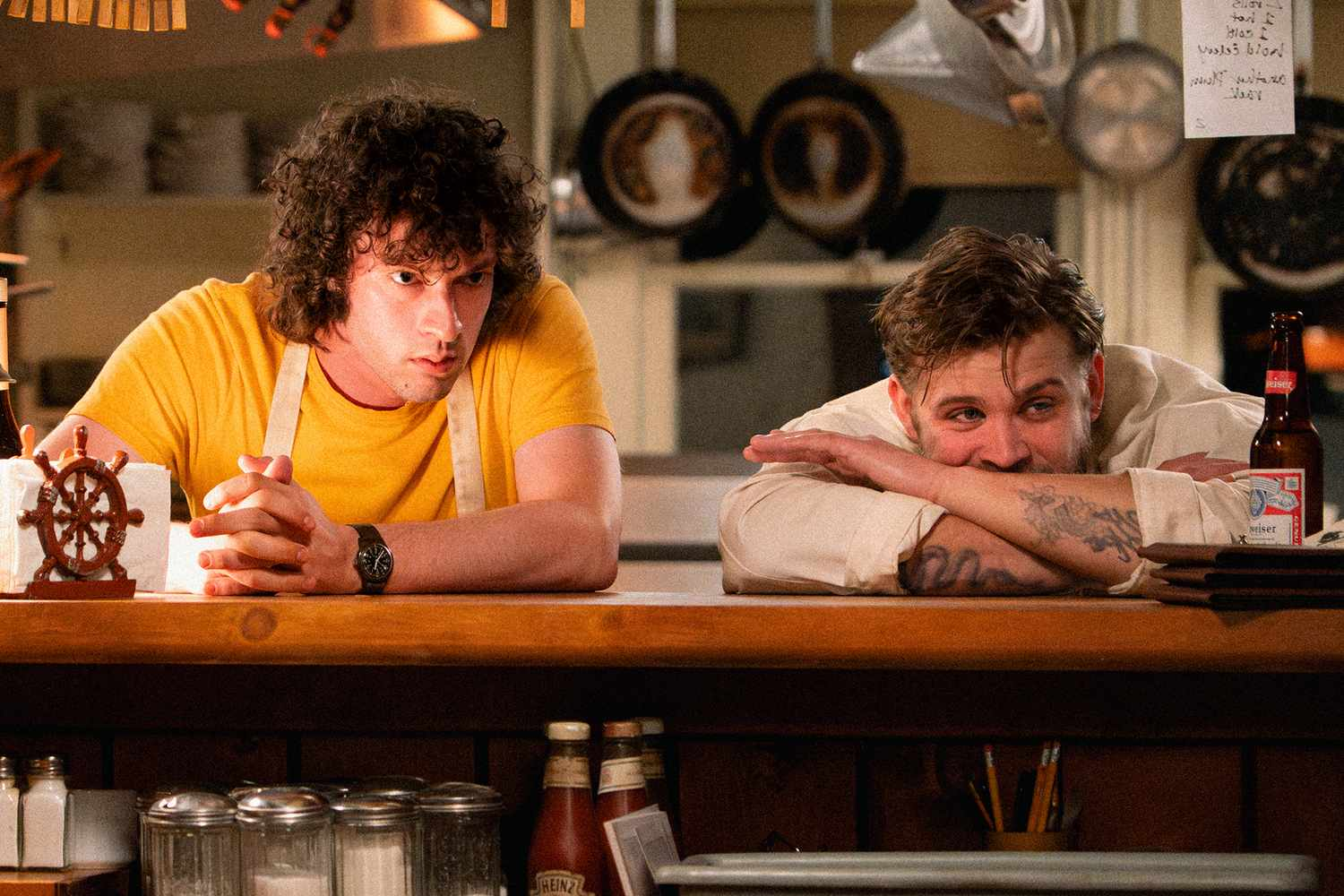
One of Banderas’ most closely watched upcoming appearances is in Tony, the authorized biopic centered on the early life of Anthony Bourdain. Rather than attempting to cover the entire life of the celebrated chef, author, and television host, the film focuses on a formative summer in 1975 in Provincetown, Massachusetts, when a 19-year-old Bourdain entered the chaotic world of restaurant work.
Dominic Sessa, known for The Holdovers, plays the young Bourdain. Banderas appears as the head chef who becomes an important figure in that kitchen environment, a character who helps introduce the young man to a world that will eventually shape his identity. The trailer presents Bourdain as someone caught between literary ambition and culinary reality. One of the defining lines from the footage captures that tension directly: “I’m actually not a fucking cook, I’m a writer.”
That line matters because Tony is not framed as a standard celebrity biography. It is an origin story about vocation, failure, ego, work, and discovery. The film’s official synopsis describes the premise this way: “A 19-year-old Anthony Bourdain travels to Provincetown and stumbles into the chaotic world of a restaurant kitchen, setting off a summer that will shape the course of his life.”
Why Banderas Fits the Role
Banderas’ presence in Tony is significant because the role appears to require more than surface-level charisma. The head chef in the trailer is not merely a mentor figure. He is demanding, unpredictable, skilled, and intimidating enough to challenge Bourdain’s self-image.
For an actor like Banderas, that kind of part sits comfortably within his later-career strengths. He no longer needs to dominate a film in conventional leading-man fashion. Instead, he can alter the emotional temperature of a scene through authority and restraint. In Tony, that authority helps create the kitchen as a place of initiation — a workplace, a battleground, and a classroom all at once.
The film is directed by Matt Johnson, whose previous work includes BlackBerry, an unconventional dramatization of the rise and fall of the once-dominant mobile phone. Johnson’s approach suggests Tony may avoid the predictable cradle-to-grave biopic structure and instead focus on a specific turning point. That direction is reinforced by the statement from Bourdain’s estate, which reads: “We chose to support Tony because it is not a standard biopic and doesn’t attempt to summarise a life.”
The estate’s statement continues: “Guided by the vision of director Matt Johnson, the film depicts one transformative summer in 1975 in Provincetown, Massachusetts. It is an interpretation, as that part of Tony’s life will always remain somewhat unknown.”
The Bourdain Legacy and the Weight of Interpretation
Any film about Anthony Bourdain carries emotional weight. Bourdain became a global cultural figure not only because he cooked and wrote, but because he changed how audiences thought about food, travel, class, labor, and curiosity. His death by suicide in 2018 at age 61 remains an important and painful part of his public story.
That is why the estate’s support for Tony is central to how the film is being received. The statement emphasizes that the movie is not claiming to define Bourdain completely. Instead, it is attempting to portray the early beginnings of a complex person whose path later widened into global influence.
The estate said: “We appreciate the portrayal of Tony’s complexity, his intellectual appetite and his conviction — qualities that eventually took him around the globe and endeared him to so many. We hope this film serves as a reminder that every journey has a start, and that audiences see the beginnings of the man who taught us how to be better explorers on our own paths.”
For Banderas, participation in this kind of film aligns with a career increasingly defined by projects that explore identity, memory, and transformation.
Another Dark Turn: Unmerciful Good Fortune
While Tony places Banderas in a coming-of-age kitchen drama, Unmerciful Good Fortune moves him into darker genre territory. The supernatural thriller brings him into an ensemble led by Rosario Dawson, Scott Eastwood, and Susan Sarandon, with director Tirsa Hackshaw making her feature debut.
The film is adapted from Edwin Sánchez’s stage play and centers on Maritza Cruz, a high-end celebrity attorney played by Dawson. She becomes involved in a disturbing case involving a young woman accused of multiple murders who claims to have psychic abilities. The accused says she kills to prevent worse fates, placing the story inside what is described as a moral and spiritual labyrinth.
Banderas plays Pito Cruz, described as integral to the film’s twisted narrative. That detail alone suggests a role that may rely on ambiguity and psychological tension rather than straightforward heroism or villainy.
Hackshaw praised Banderas’ influence on the project, stating: “Meeting Antonio and seeing what he’s built in Spain unlocked the potential of this movie.”
A Career Built on Reinvention
The striking thing about Banderas’ current slate is not simply that he remains busy. It is that he remains creatively flexible. He has moved from mainstream adventure and family entertainment to prestige drama, thrillers, animation, and international film without being trapped by one screen identity.
The provided material notes that he earned a Best Actor Oscar nomination for Pain and Glory, and his recent work includes Paddington in Peru, Babygirl, and Indiana Jones and the Dial of Destiny. That range shows an actor still willing to move between commercial projects and more auteur-driven or character-focused work.
His older work also reflects that versatility. In Autómata, for example, Banderas played an insurance agent for the Roc robotics corporation in a 2044 world where robots coexist with humans but are forbidden from manipulating or upgrading themselves. The sci-fi film positioned him inside a story about technology, control, survival, and human dependence on artificial beings.
That ability to cross genre borders has helped Banderas remain relevant long after many actors from his era became fixed in nostalgia.
The Personal Dimension: Family, Memory, and Public Grace
Beyond the screen, Banderas’ public image has also been shaped by his personal warmth and sense of continuity. Recent reports describe him spending time in Los Angeles with his former wife Melanie Griffith, their daughter Stella Banderas, and Stella’s husband Alex Gruszynski.
Banderas referred to Griffith as “my ex-wife and lifelong friend” in a family post, a phrase that attracted attention because it projected affection rather than bitterness. The pair were together for two decades and share one daughter.
In another reflection after visiting California, Banderas wrote: “After this visit to California, I’ve decided to share these snapshots—capturing a brief pause in time, two small fragments of life.”
That personal openness contributes to the broader appeal of Banderas. He is not only viewed as a film star, but as a figure who has aged publicly with a degree of elegance, emotional intelligence, and cultural rootedness.
Why Antonio Banderas Still Matters
Banderas’ longevity is not accidental. He has survived industry shifts because he has repeatedly adjusted to them. He rose during an era when European actors could still become major Hollywood stars through charisma and distinctive screen presence. He later transitioned into family-friendly recognition through voice work and franchise roles. Then, in his mature period, he reasserted himself as a serious dramatic actor through projects that foreground vulnerability and reflection.
His new projects suggest that the next phase of his career will continue that pattern. In Tony, he appears as a force shaping the early path of a future cultural icon. In Unmerciful Good Fortune, he joins a morally complex supernatural thriller that blends legal drama, psychological horror, and spiritual uncertainty. These are not passive legacy roles. They are parts that use his accumulated screen authority.
Conclusion: A Star Still Moving Forward
Antonio Banderas remains compelling because he has never belonged to only one category. He is Spanish and international, commercial and artistic, romantic and severe, familiar and still capable of surprise. His presence in Tony connects him to a story about beginnings, vocation, and transformation. His role in Unmerciful Good Fortune points toward darker, more psychologically charged material.
At this stage of his career, Banderas does not need to prove that he is a star. The more interesting development is that he continues to choose roles that suggest curiosity. That curiosity — the willingness to keep moving, keep changing, and keep entering new creative rooms — may be the real reason Antonio Banderas remains one of cinema’s most enduring performers.


