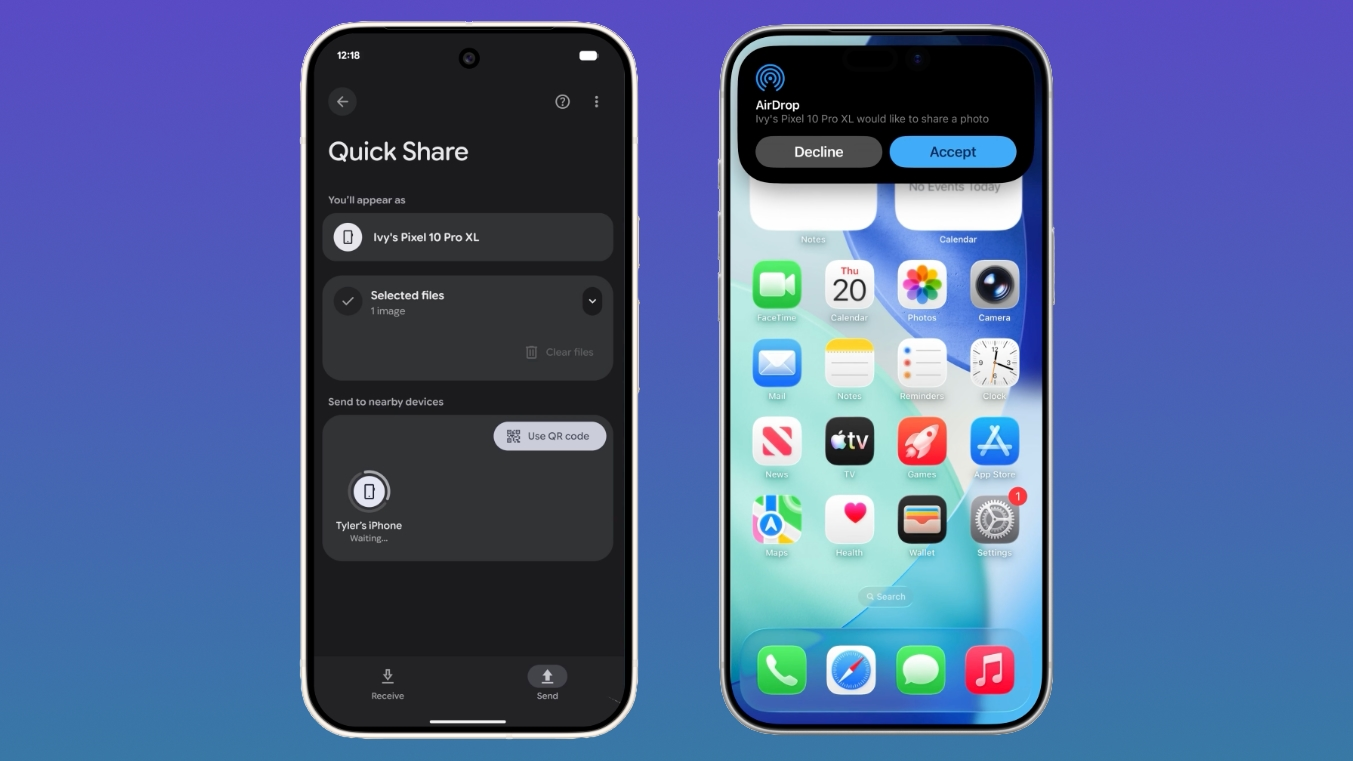
Android Phones Getting AirDrop Support in Quick Share

9 Min Read

These Android Phones Will Soon Receive AirDrop Support in Quick Share

The long-standing divide between Android and iPhone file sharing is beginning to shrink in a major way. Google is rapidly expanding Quick Share’s interoperability with Apple’s AirDrop, bringing seamless cross-platform sharing to a growing list of Android smartphones from brands including Samsung, OnePlus, Oppo, Honor, and more.

For years, sharing files between Android and iPhone users often meant relying on third-party apps, messaging platforms, email attachments, or cloud storage links. Apple users enjoyed the simplicity of AirDrop within the iOS ecosystem, while Android users had Quick Share and similar alternatives limited mostly to Android devices. That separation is now changing.

Google first introduced AirDrop interoperability through Quick Share with the Pixel 10 series in 2025, marking one of the biggest shifts in mobile file-sharing compatibility in years. Since then, support has gradually expanded across several premium Android devices, and Google has now confirmed another major rollout wave during “The Android Show: I/O Edition.”

The latest announcement means millions more Android users will soon be able to send files directly to iPhones and receive files from Apple devices with a much smoother experience.

Google is bringing AirDrop support in Quick Share to Samsung, OnePlus, Oppo, and Honor phones. Here’s the full list of supported devices.

Why This Matters for Android and iPhone Users

Cross-platform sharing has historically been one of the most frustrating parts of living in a mixed-device world. While AirDrop became a defining convenience feature for Apple users, Android owners often struggled to send high-quality photos, videos, or large files to friends and colleagues using iPhones.

Google’s Quick Share interoperability changes that dynamic significantly.

Instead of relying on messaging apps that compress media quality or requiring users to upload files to cloud storage, supported Android devices can now communicate directly with Apple’s AirDrop ecosystem. The goal is simple: make sharing as fast and frictionless as possible regardless of which smartphone platform someone uses.

This move also reflects a broader industry trend toward reducing ecosystem lock-in and improving interoperability between competing platforms.

Android Phones That Already Support AirDrop Through Quick Share

Google’s rollout started slowly, initially focusing on Pixel devices before expanding to selected flagship phones from other manufacturers.

According to the latest confirmed list, these Android devices currently support AirDrop interoperability through Quick Share:

Google Pixel Devices

  • Pixel 10
  • Pixel 10 Pro
  • Pixel 10 Pro XL
  • Pixel 10 Pro Fold
  • Pixel 10a
  • Pixel 9
  • Pixel 9 Pro
  • Pixel 9 Pro XL
  • Pixel 9 Pro Fold
  • Pixel 8a

Samsung Devices

  • Galaxy S26
  • Galaxy S26+
  • Galaxy S26 Ultra

Oppo and Vivo Devices

  • Oppo Find X9 series
  • Oppo Find N6
  • vivo X300 Ultra

Google has gradually expanded compatibility over the past several months as more manufacturers integrate the feature into their software ecosystems.

The Next Android Phones Getting AirDrop Support

During the Android Show 2026 presentation, Google confirmed that another wave of flagship Android devices will soon gain the feature.

Samsung Phones Receiving Support

Samsung will see one of the largest expansions of compatibility.

The following Galaxy devices are confirmed to receive Quick Share AirDrop interoperability:

  • Galaxy S25
  • Galaxy S25+
  • Galaxy S25 Ultra
  • Galaxy S24
  • Galaxy S24+
  • Galaxy S24 Ultra
  • Galaxy Z Fold 7
  • Galaxy Z Flip 7
  • Galaxy Z Fold 6
  • Galaxy Z Flip 6
  • Galaxy Z TriFold

The addition of Samsung’s foldable lineup is especially notable because it expands compatibility beyond traditional flagship slabs into premium foldable devices.

Oppo and OnePlus Devices

Google also confirmed upcoming support for:

  • Oppo Find X8
  • Oppo Find X8 Pro
  • OnePlus 15

This represents another important expansion because OnePlus and Oppo share underlying software technologies and ecosystems, potentially accelerating future rollout speeds.

Honor Devices

Honor’s flagship phones are also joining the compatibility list:

  • Honor Magic V6
  • Honor Magic 8 Pro

The inclusion of Honor demonstrates how Google is extending the feature beyond its closest Android partners into a broader premium Android ecosystem.

Android 17 Appears to Play a Major Role

Google indicated that Android 17 will help expand AirDrop interoperability further across compatible devices.

According to information shared during the Android Show 2026, the company plans to push the feature to additional eligible smartphones running Android 17. This suggests that operating system-level support may become increasingly important for enabling seamless cross-platform transfers.

The move aligns with Google’s broader strategy of making Android more unified and competitive in areas where Apple historically held a strong advantage.

What Users Will Be Able to Transfer

The feature goes beyond simple photo sharing.

According to details shared alongside the rollout, supported devices will be capable of transferring a wide range of content types, including:

  • Photos and videos
  • Documents and files
  • Messages
  • WhatsApp data
  • Call history
  • Contacts
  • Notes
  • Calendar entries
  • Wallpapers
  • Home screen layouts
  • Alarm settings
  • eSIM information
  • Email accounts
  • Saved passwords
  • Free apps and app data

That level of compatibility suggests Google is aiming for a much deeper integration between Android migration tools and Apple ecosystems.

For users switching from iPhone to Android — or vice versa — this could substantially simplify the migration process.

Google’s Backup Plan for Unsupported Android Phones

Not every Android phone will receive native AirDrop interoperability immediately. However, Google is introducing another solution for unsupported devices.

Quick Share is gaining a QR code-based sharing system that enables Android users to send files to iPhone users through cloud-assisted transfers. Instead of direct peer-to-peer communication, files are uploaded temporarily and accessed via a generated QR code.

This system will not be as seamless as direct AirDrop compatibility, but it offers a practical alternative for users with unsupported hardware.

Why Google Is Expanding This Feature Now

Several factors likely explain Google’s aggressive push toward cross-platform sharing.

1. Reducing Ecosystem Friction

Modern consumers increasingly use mixed-device environments. Many households include both Android and Apple devices, and businesses often operate across multiple ecosystems.

Improving interoperability reduces frustration and improves user satisfaction.

2. Competing With Apple’s Ecosystem Advantages

AirDrop has long been considered one of Apple’s strongest ecosystem features. By enabling Android support, Google weakens one of Apple’s exclusivity advantages.

3. Encouraging Easier Platform Switching

The easier it becomes to transfer files and data between ecosystems, the easier it becomes for users to switch platforms without losing convenience.

4. Regulatory Pressure and Open Ecosystems

Some industry observers have pointed to growing regulatory pressure — particularly in Europe — encouraging major tech companies to improve interoperability and reduce closed ecosystem practices.

No Official Rollout Timeline Yet

Despite the growing list of compatible devices, Google has not provided exact rollout dates for most newly announced phones.

That means availability could vary by:

  • region
  • manufacturer
  • carrier
  • software version
  • Android 17 deployment timing

As with many Android feature rollouts, some devices may receive support earlier than others depending on manufacturer update schedules.

The Bigger Picture for Mobile Ecosystems

Google’s expansion of AirDrop interoperability through Quick Share may ultimately represent one of the most meaningful usability improvements for Android users in recent years.

Cross-platform compatibility has become increasingly important as users move between ecosystems more frequently and rely on a wider range of devices.

What was once a rigid separation between iPhone and Android experiences is gradually becoming more flexible. If Google continues expanding support to additional manufacturers — including rumored Xiaomi compatibility — the gap between Apple and Android sharing experiences could narrow dramatically over the next year.

For consumers, the result is simple: fewer barriers, faster sharing, and a smoother experience regardless of which smartphone someone owns.

Share This Article