


Alex Garland Movies: A Career Defined by Ideas, Risk, and Reinvention
Few modern filmmakers have built a body of work as intellectually provocative and stylistically distinct as Alex Garland. From redefining zombie cinema to exploring artificial intelligence, environmental horror, and political collapse, Garland’s films consistently operate at the intersection of genre storytelling and philosophical inquiry.
This article examines the evolution of Alex Garland’s movies—both as a screenwriter and director—tracing how his work has shaped contemporary science fiction, horror, and speculative cinema.
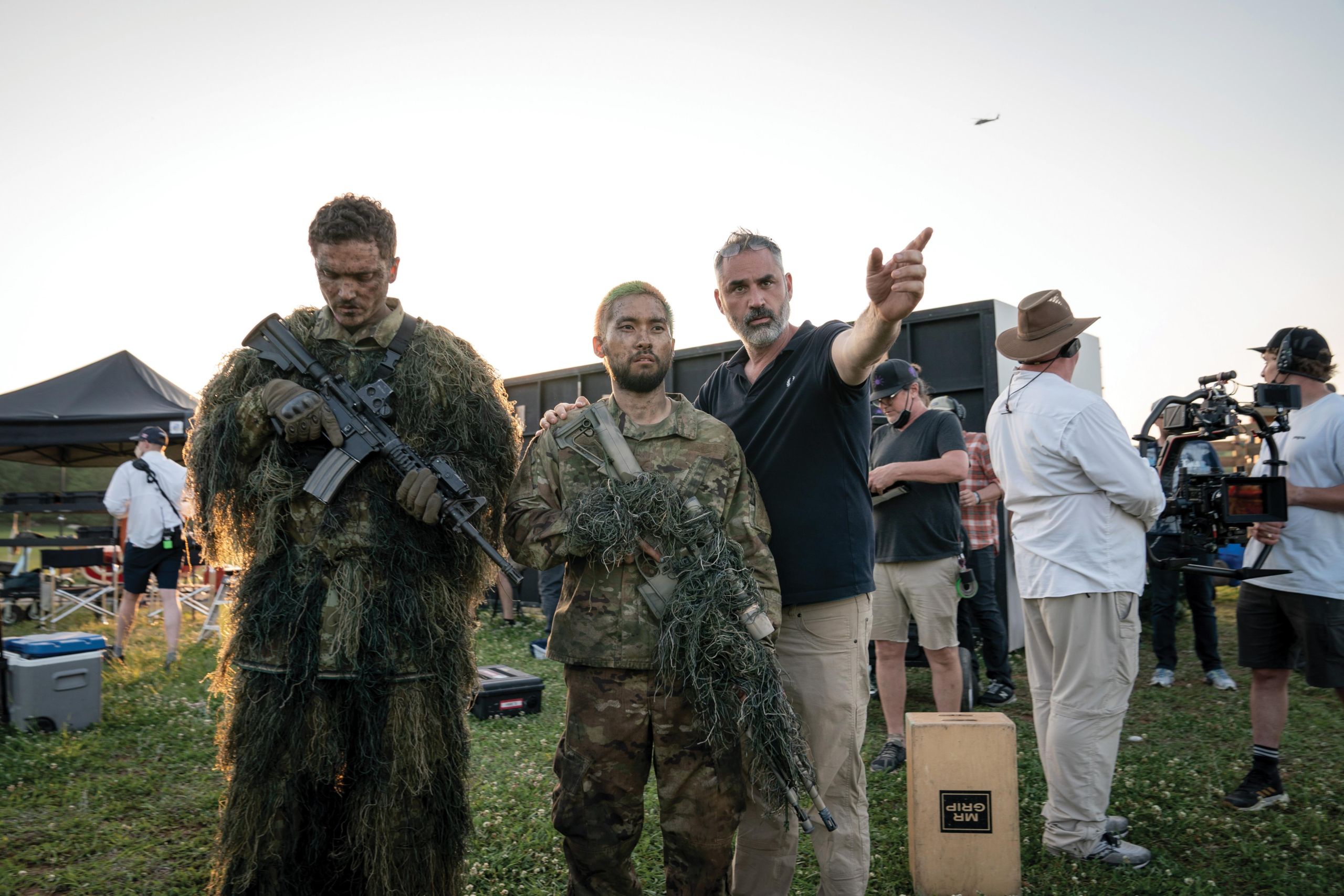
From Novelist to Screenwriter: The Foundations of a Film Career
Before becoming a filmmaker, Garland established himself as a novelist with The Beach (1996), a work that gained global attention and later became a film adaptation. His transition into cinema began with screenwriting, most notably with 28 Days Later (2002)—a film that would permanently alter the zombie genre.
The Breakthrough: Reinventing Horror
- 28 Days Later (2002) introduced fast-moving infected and a bleak, post-apocalyptic tone.
- The script drew inspiration from classic science fiction and real-world disease outbreaks.
- The film remains one of Garland’s most influential works, credited with revitalizing zombie cinema.
Garland followed this with:
- Sunshine (2007) – a philosophical sci-fi about saving a dying sun.
- Never Let Me Go (2010) – a quiet, emotional story centered on cloning and mortality.
- Dredd (2012) – a gritty adaptation of the Judge Dredd universe.
These early projects reveal a consistent pattern: Garland gravitates toward high-concept premises grounded in human psychology and ethical dilemmas.
The Directorial Shift: Control Over Vision
Garland’s move into directing marked a turning point in his career. Rather than interpreting others’ visions, he began fully controlling narrative, tone, and thematic depth.
1. Ex Machina (2015): Artificial Intelligence and Power
Garland’s directorial debut, Ex Machina, is widely considered his defining film.
- Focus: Artificial intelligence, consciousness, and manipulation
- Achievement: Academy Award nomination for Best Original Screenplay
- Reception: 92% critical score on Rotten Tomatoes
The film’s minimalist setting and psychological tension demonstrate Garland’s ability to build complex ideas with limited resources. It also established his signature style—clean visuals, slow pacing, and intellectually driven narratives.
2. Annihilation (2018): Science Fiction as Psychological Horror
With Annihilation, Garland expanded his scope.
- Based on a novel but adapted loosely to capture its “dreamlike nature”
- Themes: Identity, self-destruction, environmental transformation
- Critical reception: Strong acclaim, 88% rating
The film stands out for its abstract storytelling and unsettling imagery. It represents Garland’s willingness to challenge audiences rather than provide straightforward narratives.
3. Men (2022): Symbolism and Division
Garland’s Men marked a departure into experimental horror.
- Focus: Trauma, gender dynamics, psychological fear
- Reception: Mixed to positive, with debate over its symbolism
The film illustrates a recurring pattern in Garland’s work—bold conceptual ambition paired with divisive audience reactions.
4. Civil War (2024): Political Anxiety on Screen
Garland’s Civil War pushed his storytelling into overtly political territory.
- Premise: A fractured United States in internal conflict
- Narrative style: Follows journalists documenting war
- Themes: Media, violence, and societal collapse
The film avoids explicit political explanations, instead focusing on the experience of witnessing conflict. This ambiguity has made it one of Garland’s most debated works.
5. Warfare (2025): Realism and Collaboration
Warfare, co-directed with Ray Mendoza, represents a shift toward realism.
- Based on military experiences
- Focus: Tactical accuracy and immersive war storytelling
- Reception: Strong critical response (93% rating)
This project demonstrates Garland’s adaptability, moving from speculative fiction to grounded, real-world narratives.
Expanding Universes: Sequels and Future Projects
Garland continues to contribute to major franchises and new adaptations.
The “28 Years Later” Continuation
- 28 Years Later (2025) – sequel to the original zombie film
- 28 Years Later: The Bone Temple (2026) – continuation of the trilogy
- Garland returns as screenwriter and producer
These films extend one of his most influential creations into a modern cinematic landscape.
Upcoming: Elden Ring Adaptation
Garland is also attached to direct a film adaptation of Elden Ring, signaling a move into large-scale fantasy storytelling.
Thematic Patterns Across Garland’s Movies
Despite working across genres, Garland’s films share consistent thematic concerns:
1. Human vs. Technology
- Ex Machina explores AI ethics
- Devs (TV) examines determinism and quantum computing
2. Survival and Collapse
- 28 Days Later and its sequels focus on societal breakdown
- Civil War expands this into political fragmentation
3. Identity and Transformation
- Annihilation presents physical and psychological mutation
- Men explores trauma through symbolic horror
4. Moral Ambiguity
Garland rarely provides clear answers. His narratives are structured to provoke interpretation rather than deliver conclusions.
Critical Reception and Industry Impact
Garland’s films consistently receive strong critical attention:
- Ex Machina – 92%
- Annihilation – 88%
- Civil War – 81%
- Warfare – 93%
While audience reactions can be divided, critics often praise his originality and ambition.
Industry-wide, Garland is recognized for:
- Elevating science fiction into philosophical cinema
- Blending horror with intellectual themes
- Challenging conventional storytelling structures
A Filmmaker Who Invites Debate
Garland’s work is often described as polarizing. His films generate discussion precisely because they resist simplicity.
- His scripts prioritize ideas over exposition
- Characters often function as vehicles for themes
- Endings are frequently ambiguous
This approach ensures his films remain subjects of ongoing analysis long after release.
What Comes Next?
Garland has indicated that he may step back from directing in the near future, though his continued involvement in writing and producing suggests his influence will persist.
With projects like Elden Ring and the ongoing 28 Years Later trilogy, his creative trajectory remains active and evolving.
Conclusion: The Significance of Alex Garland’s Movies
Alex Garland’s filmography is defined by intellectual ambition and stylistic precision. Whether examining artificial intelligence, ecological collapse, or political instability, his movies consistently challenge audiences to engage with complex ideas.
His transition from novelist to screenwriter to director reflects a broader evolution toward creative control and thematic depth. While not all his films resonate universally, each contributes to a body of work that prioritizes originality over convention.
In a film industry often driven by formula, Garland’s movies stand out for their willingness to take risks—and for their insistence that cinema can still be a medium for serious thought.


