

NYT Connections Hints May 2: A Complete Guide to Puzzle #1056
Inside One of the Most Accessible — Yet Clever — Connections Puzzles
The New York Times’ Connections puzzle for May 2, 2026 (Puzzle #1,056) offered a relatively approachable challenge for players, while still showcasing the layered wordplay and misdirection that have made the game a daily ritual for thousands.
Unlike some notoriously difficult editions, this puzzle struck a balance between accessibility and clever construction. Many players described it as one of the easier grids in recent memory, though subtle traps still required careful thinking.
This guide walks through the hints, categories, answers, and solving strategy behind the May 2 puzzle—helping both newcomers and experienced players understand how the pieces fit together.
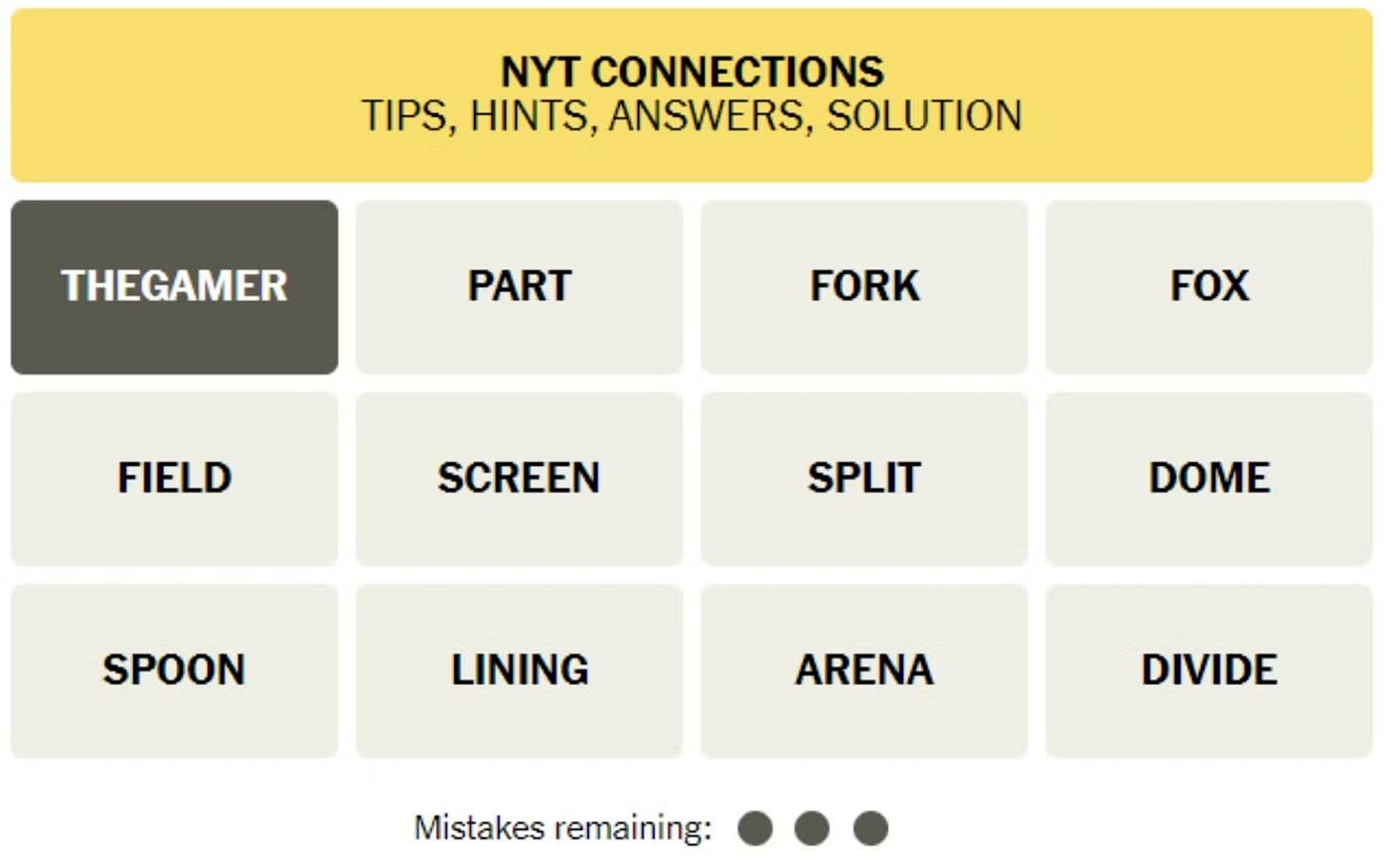
What Is NYT Connections and Why It’s So Popular
Connections is a daily word puzzle developed by the New York Times. Each puzzle presents 16 seemingly unrelated words arranged in a 4×4 grid. The objective is to group them into four sets of four based on a shared theme.
Key mechanics include:
- Four categories per puzzle
- Difficulty levels coded by color (Yellow → Green → Blue → Purple)
- Only four mistakes allowed before failure
- One correct solution per puzzle
The game’s appeal lies in its blend of logic, vocabulary, and lateral thinking—often requiring players to look beyond obvious associations.
May 2 Puzzle Overview: Words and Initial Impressions
The May 2 grid included the following words:
POST-IT, TREASURY, HERALDRY, PLAY, INTERIOR, MUSICAL, MENTAL, STATE, TIMES TABLES, EDUCATION, OPERA, PSYCHIC, EXTRASENSORY, GLOBETROTTER, TELEPATHIC, BALLET
At first glance, the puzzle appeared straightforward, with clusters like “opera,” “ballet,” and “play” hinting at theatrical connections. However, more abstract groupings—particularly those involving wordplay—introduced complexity.
Step-by-Step Hints: Breaking Down Each Category
To guide players, the puzzle provided layered hints, gradually revealing the nature of each group.
Yellow Group Hint: “Mind reader, seeing the future”
This pointed toward words associated with supernatural or psychic abilities.
Green Group Hint: “Where you go for entertainment shows”
A clear indicator of performance-based activities.
Blue Group Hint: “Parts of the United States government”
This suggested institutional or administrative entities.
Purple Group Hint: “Where you can read articles”
The most abstract clue, hinting at embedded newspaper references.
These hints aligned with the typical difficulty gradient, with yellow being the easiest and purple requiring the most abstract reasoning.
The Four Categories Explained
🟨 Yellow: Clairvoyant
This category grouped words associated with extrasensory perception:
- EXTRASENSORY
- MENTAL
- PSYCHIC
- TELEPATHIC
These terms all relate to abilities beyond normal human senses—classic descriptors of clairvoyance.
🟩 Green: Staged Performances
A more concrete grouping, this category included forms of live entertainment:
- BALLET
- MUSICAL
- OPERA
- PLAY
These are all types of performances typically seen in theaters or cultural venues.
🟦 Blue: U.S. Cabinet Departments
This category required some general knowledge of government structure:
- EDUCATION
- INTERIOR
- STATE
- TREASURY
Each represents a major department within the U.S. executive branch.
🟪 Purple: Starting With Newspaper Names
The most challenging group relied on wordplay:
- GLOBETROTTER (Globe)
- HERALDRY (Herald)
- POST-IT (Post)
- TIMES TABLES (Times)
Each word begins with the name of a well-known newspaper, making this a classic “hidden prefix” puzzle.
Why the Puzzle Felt Easier Than Usual
Several factors contributed to the relative ease of this puzzle:
- Clear thematic clusters: The performance and government categories were quickly identifiable
- Minimal overlap confusion: Few words convincingly fit multiple categories
- Straightforward vocabulary: Most words were familiar and widely used
Even experienced players noted that three groups could often be solved rapidly, leaving the trickier purple group as the final step.
Hidden Challenges and Common Pitfalls
Despite its accessibility, the puzzle still included subtle traps:
- “Times tables” distraction: Many players initially associated it with mathematics rather than newspapers
- “Mental” ambiguity: It could easily be mistaken as unrelated to psychic abilities
- Word overlap illusions: Words like “play” could suggest multiple interpretations
These elements highlight the game’s core design philosophy: misleading simplicity.
Strategy Lessons from the May 2 Puzzle
This puzzle reinforces several key strategies for solving Connections:
1. Start With the Obvious
Identify the most visually connected words (e.g., “ballet,” “opera,” “play”).
2. Watch for Wordplay
If a group feels random, look for prefixes, suffixes, or hidden meanings.
3. Eliminate to Simplify
Solving three categories often reveals the fourth automatically.
4. Question First Impressions
Words like “times tables” may not mean what they seem.
The Broader Appeal of NYT Connections
The May 2 puzzle reflects why Connections has become one of the New York Times’ most popular games after Wordle.
- It blends logic with creativity
- It rewards both knowledge and intuition
- It offers a daily mental challenge with limited time investment
Players can only attempt one puzzle per day, adding to its anticipation and habit-forming appeal.
Conclusion: A Well-Balanced Puzzle with Smart Design
The NYT Connections puzzle for May 2, 2026, stands out as a well-crafted example of accessible yet thoughtful game design. While many players found it easier than usual, its clever use of wordplay—especially in the purple category—ensured it remained engaging.
For newcomers, it served as an ideal introduction to the mechanics of the game. For seasoned players, it was a reminder that even simpler grids can contain subtle twists.
Ultimately, Puzzle #1,056 demonstrates that Connections doesn’t need extreme difficulty to be satisfying—it thrives on clever ideas, not just complexity.


