Hisense in Focus: How a Global TV Brand Is Redefining the Smart Entertainment Experience
A Changing Landscape for Smart TVs
Few consumer electronics categories have evolved as rapidly as televisions. What was once a simple display device is now a fully integrated entertainment hub—streaming platform, gaming screen, and even a gateway to free content. At the center of this transformation is Hisense, a brand that has steadily moved from budget-friendly reputation to a serious global contender in smart TV innovation.
- A Changing Landscape for Smart TVs
- From Budget Favorite to Global Contender
- Hardware Innovation: Brightness, Color, and Scale
- The Rise of RGB LED and Future Display Tech
- Software Ecosystems: VIDAA, Google TV, and Beyond
- The Advertising Debate: Revenue vs. User Experience
- Free Content Strategy: A Key Differentiator
- Consumer Experience: Customization and Control
- Pricing Strategy: Value Meets Innovation
- Market Impact and Global Reach
- The Bigger Picture: Where Hisense Fits in the Industry
- Conclusion: A Brand at a Strategic Crossroads
From advanced display technologies to evolving software ecosystems and shifting monetization models, Hisense’s strategy offers a revealing glimpse into where the TV industry is heading next.
From Budget Favorite to Global Contender
Hisense has long been recognized for delivering value-driven televisions, particularly in the budget and mid-range segments. In markets like South Africa, the company ranks among the top-selling TV manufacturers, with widespread adoption across households.

Its appeal lies in balancing affordability with increasingly sophisticated features—high brightness panels, gaming capabilities, and smart operating systems that rival premium competitors.
Today, that positioning is evolving. Devices like the Hisense U7SG demonstrate how the brand is pushing into higher-performance territory while maintaining competitive pricing.


Hardware Innovation: Brightness, Color, and Scale
Modern Hisense TVs are no longer defined purely by affordability—they are increasingly recognized for technical capability.
The Hisense U7SG, for instance, highlights several key advancements:
- Mini-LED backlighting delivers strong brightness and improved contrast
- Deep black levels reduce halo effects common in lower-end displays
- Support for HDR formats including HDR10, HDR10+, and Dolby Vision
- Gaming features such as variable refresh rates up to 165Hz at 4K
These features allow the TV to compete directly with higher-end models, offering vibrant colors and detailed image clarity in real-world viewing scenarios.
However, the device also illustrates the balancing act Hisense faces. While brightness and color performance are strong, issues like off-angle viewing limitations and occasional software quirks highlight the gap between mid-range and true premium displays.


The Rise of RGB LED and Future Display Tech
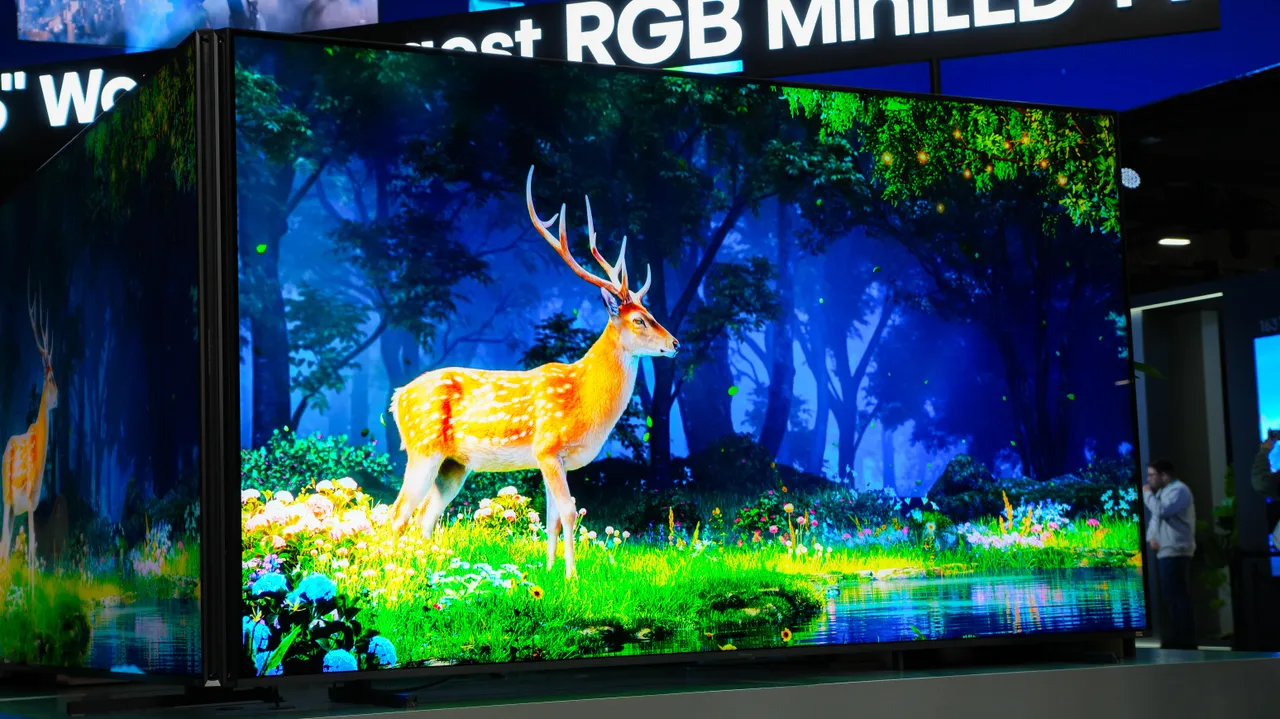
One of the most notable developments in Hisense’s roadmap is its move toward RGB LED backlighting, a next-generation approach that replaces traditional white or blue LED systems.
This shift promises:
- More accurate color reproduction
- Higher peak brightness
- Improved overall image performance
While still emerging, this technology signals Hisense’s ambition to compete not just on price, but on innovation—particularly as the industry enters a new phase of “brightness wars” and display refinement.
Software Ecosystems: VIDAA, Google TV, and Beyond
Hardware is only part of the story. Hisense’s software ecosystem is equally central to its strategy.
The company operates across two major platforms:
1. VIDAA (now Home OS)
Used across multiple brands, VIDAA powers a wide range of Hisense TVs and focuses on:
- Simplicity and speed
- Built-in access to streaming services
- Integration with free-to-watch channels
2. Google TV Integration
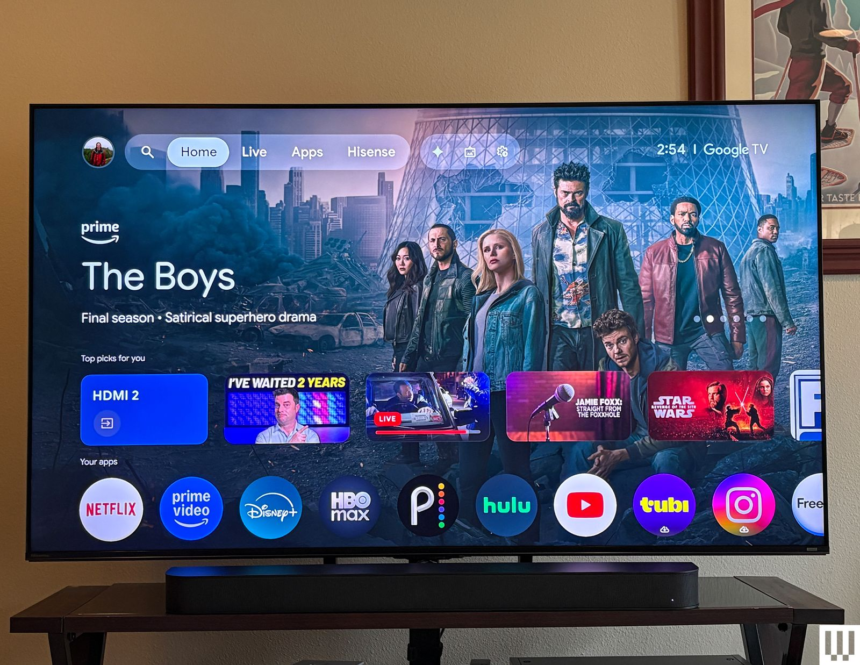
On select models like the U7SG, Hisense uses Google TV, offering:
- A familiar app ecosystem
- Personalized content recommendations
- Fast navigation and app management
Users benefit from flexibility, though experiences can vary. For example, while Google TV is described as “snappy” and efficient, occasional connectivity issues and ad-heavy interfaces have been noted.
The Advertising Debate: Revenue vs. User Experience
Perhaps the most controversial—and revealing—aspect of Hisense’s evolution is its approach to advertising on smart TVs.
Global Testing Sparks Concern
In markets such as the UK, Germany, and Spain, users reported non-skippable ads appearing during basic TV functions, including:
- Turning on the TV
- Switching inputs
- Navigating menus
These ads were part of experimental tests tied to content monetization strategies. Hisense later confirmed:
“This was a temporary and finalised market test… The aforementioned advertising format has now been removed from Spain.”
A Different Approach in South Africa
In contrast, Hisense has taken a more restrained approach in South Africa.
According to company representative Luna Nortje:
“In South Africa, there are no forced or full-screen advertisements when turning on the TV, switching inputs, changing channels, or during content playback.”
Instead, advertising is limited to home screen banners, designed to remain non-intrusive and focused on content discovery.
Free Content Strategy: A Key Differentiator
Hisense’s advertising model is not just about revenue—it directly supports a growing library of free content.
Through its VIDAA-powered platform, users gain access to:
- More than 20 local channels
- Over 30 international channels
- Content from major brands like Real Madrid, FIFA, Bloomberg, and France 24
This model reflects a broader industry trend: using advertising to subsidize free streaming services and expand user engagement.
Nortje explains the rationale:
“This careful approach and placement allow Hisense to continue expanding its free content offering.”
For consumers, the trade-off is clear—limited, unobtrusive ads in exchange for free access to content.
Consumer Experience: Customization and Control
Another strength of Hisense TVs lies in user customization.
Modern models offer:
- Multiple picture presets (Standard, Sports, Filmmaker, Vivid)
- Automatic content detection for optimized viewing
- Advanced calibration options for professionals
Users can fine-tune brightness, contrast, color space, and even run calibration tests for precision image control.
This flexibility allows TVs to adapt to different use cases:
- Streaming: cinematic quality with Filmmaker mode
- Gaming: high brightness and responsiveness
- Live TV: optimized clarity and motion handling
Such adaptability has become a defining feature of modern smart TVs—and a key selling point for Hisense.
Pricing Strategy: Value Meets Innovation
Hisense continues to leverage aggressive pricing as a competitive advantage.
For example:
- A 55-inch QLED CanvasTV recently dropped to $647.99, below its 30-day average
- Features include Dolby Vision HDR, 144Hz refresh rate, and Art Mode
This positioning makes advanced features accessible to a broader audience, particularly in markets where premium brands remain out of reach.
Market Impact and Global Reach
Hisense’s influence is growing rapidly:
- Over 600,000 households use Hisense TVs monthly in South Africa
- Around 1 million devices run the VIDAA OS in the region
These figures underscore the brand’s scale—and its importance in shaping the smart TV ecosystem globally.
The Bigger Picture: Where Hisense Fits in the Industry
Hisense’s trajectory reflects several broader industry trends:
- Convergence of hardware and software
- Shift toward ad-supported content ecosystems
- Increasing importance of display innovation
- Growing competition in mid-range premium TVs
By combining affordability with innovation, Hisense is positioning itself as a disruptor—challenging both traditional premium brands and emerging competitors.
Conclusion: A Brand at a Strategic Crossroads
Hisense stands at a pivotal moment.
On one hand, it continues to dominate the value segment with accessible, feature-rich TVs. On the other, it is pushing into higher-end territory with new technologies like RGB LED and improved software ecosystems.
At the same time, its experimentation with advertising and free content signals a shift toward platform-driven revenue models—an approach that could redefine how consumers interact with TVs in the years ahead.
Whether Hisense can fully bridge the gap between affordability and premium performance remains to be seen. But one thing is clear: the company is no longer just a budget option—it is an increasingly influential force shaping the future of home entertainment.