

NYT Connections April 28, 2026: A Complete Guide to Today’s Puzzle and Answers
Inside Today’s Brain-Teasing Challenge
The New York Times’ Connections puzzle for Tuesday, April 28, 2026 (Puzzle #1052), delivered another clever test of logic, vocabulary, and pattern recognition—hallmarks that have made the game one of the fastest-growing digital word challenges globally.
Unlike traditional crossword puzzles or even Wordle, Connections asks players to identify relationships between seemingly unrelated words. Each day, 16 words appear on the board, and the objective is deceptively simple: sort them into four groups of four based on a shared theme. But as many players discovered today, simplicity is often an illusion.
The April 28 puzzle stood out for its layered logic and subtle misdirection, requiring players to look beyond obvious meanings and focus on linguistic patterns and contextual relationships.
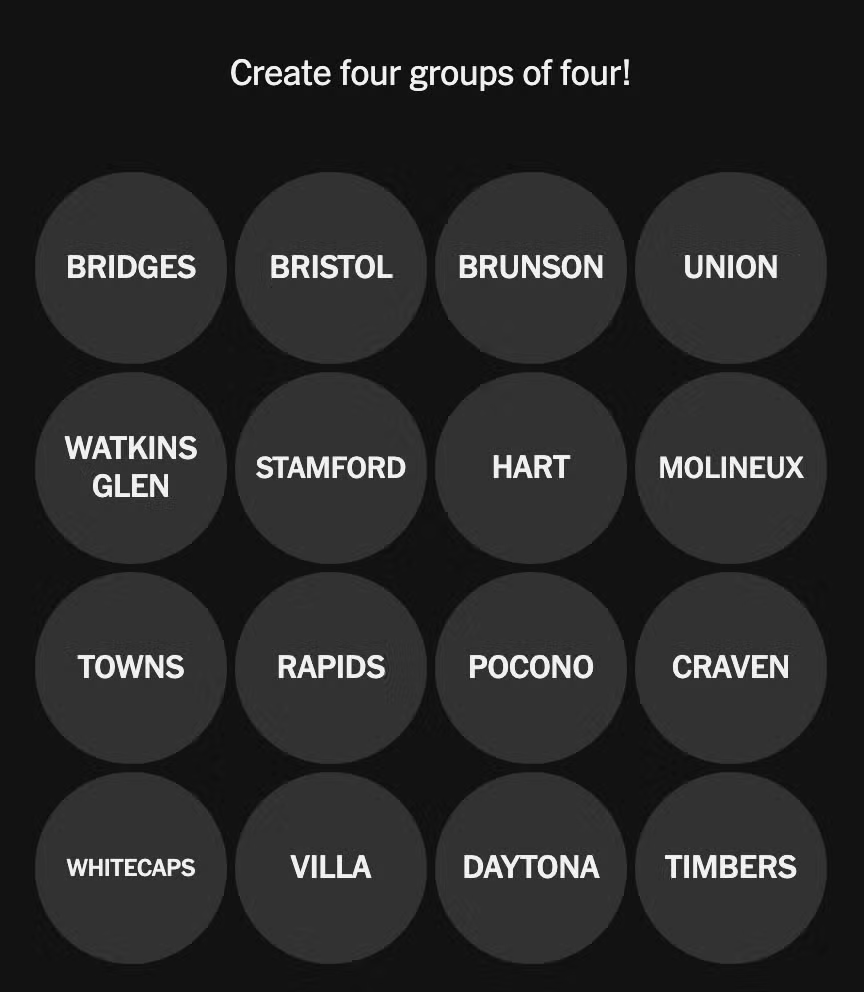
What Makes NYT Connections So Addictive?
At its core, Connections is less about definitions and more about associations. The game operates across four color-coded difficulty levels:
- Yellow (easiest)
- Green (moderate)
- Blue (challenging)
- Purple (most difficult, often involving wordplay)
Players are allowed only four mistakes, which adds tension and forces strategic thinking.
This structure encourages both analytical reasoning and creative interpretation—two skills that often clash under pressure.
April 28 Puzzle: Hints That Guided Players
For those who needed a nudge, today’s puzzle offered a set of carefully crafted hints. These clues pointed toward conceptual groupings rather than explicit answers:
- Yellow: Words used when urging or persuading someone
- Green: Tasks associated with handling clean clothes
- Blue: Words that commonly pair with “book”
- Purple: Words that follow “sun” to form familiar phrases
These hints highlight a key feature of Connections: the importance of thinking in terms of phrases and usage, not just standalone meanings.
Full Answers for NYT Connections #1052 (April 28, 2026)
After working through the puzzle—or exhausting all guesses—the correct groupings reveal the elegant logic behind the grid:
🟨 Yellow — ENTREATY
- APPEAL
- BID
- CALL
- REQUEST
🟩 Green — LAUNDRY DAY VERBS
- DRY
- FOLD
- SORT
- WASH
🟦 Blue — THINGS THAT COME IN “BOOKS”
- CHECK
- COUPON
- MATCH
- STAMP
🟪 Purple — SUN___
- DIAL
- FLOWER
- SCREEN
- TAN
Why Today’s Puzzle Felt Tricky
While some categories—like laundry-related actions—were relatively straightforward, others required deeper cognitive leaps.
1. Abstract Language Use
The “ENTREATY” category required players to recognize synonyms tied to persuasion, not just general communication.
2. Contextual Pairing
The “BOOK” category challenged players to think about compound phrases (e.g., “checkbook,” “coupon book”), rather than standalone definitions.
3. Wordplay Complexity
The purple category (“SUN___”) exemplified classic Connections difficulty: identifying words that form familiar expressions only when combined with a prefix.
4. Misdirection Through Overlap
Many words could plausibly fit multiple groups—a deliberate design choice that creates “red herrings” and increases difficulty.
How the Game Continues to Evolve
The April 28 edition reinforces a broader trend: Connections is becoming more nuanced and layered over time. While difficulty does not increase in a linear fashion, individual puzzles often emphasize different types of thinking—linguistic, cultural, or thematic.
The game’s popularity continues to grow alongside other New York Times offerings like Wordle, Strands, and the Mini Crossword, forming a daily ritual for millions of players worldwide.
Strategy Guide: How to Solve Puzzles Like Today’s
Today’s challenge offers a useful blueprint for improving performance:
Start with the Obvious
Identify the easiest category first (often yellow) to reduce the number of remaining possibilities.
Think in Phrases, Not Words
Many groups rely on how words are used together in real life.
Use Elimination
Once one group is locked in, the puzzle becomes significantly easier.
Beware of Traps
If a grouping feels too obvious, double-check—it may be a deliberate misdirection.
The Bigger Picture: Why Connections Matters
Beyond entertainment, Connections reflects a broader cultural shift toward cognitive gaming. It blends language skills with pattern recognition, making it both educational and engaging.
Its appeal lies in the balance between accessibility and depth: beginners can enjoy quick wins, while experienced players face increasingly subtle challenges.
Conclusion: A Puzzle That Rewards Curiosity
The NYT Connections puzzle for April 28, 2026, was a compelling mix of logic, language, and lateral thinking. From everyday tasks like laundry to nuanced linguistic constructions, it showcased the diversity of thinking required to succeed.
For players, the takeaway is clear: success in Connections is not about knowing more words—it’s about seeing how they connect.
Tomorrow’s puzzle will bring a new set of challenges, and for many, another opportunity to sharpen the mind.


