
Oilers vs Ducks: Momentum, Controversy, and a Series on the Brink
A Playoff Series Turning Dramatic
The 2026 Stanley Cup Playoffs first-round clash between the Edmonton Oilers and the Anaheim Ducks has evolved into one of the most compelling narratives of the postseason. What began as a matchup between a proven contender and a rising opponent has shifted into a high-stakes battle defined by momentum swings, tactical execution, and controversy.
After four games, the Ducks hold a commanding 3-1 series lead, leaving the Oilers facing elimination pressure. For a team that reached the Stanley Cup Finals in each of the past two seasons, the current position represents a stark departure from expectations.

Game 4: A Turning Point Wrapped in Controversy
Game 4 encapsulated the tension and unpredictability of the series. The Oilers and Ducks were locked at 2-2 after two periods in what was shaping up to be a tightly contested encounter.
Edmonton had come out aggressively, scoring just 38 seconds into the game through Kasperi Kapanen and extending their lead with a power-play goal from Ryan Nugent-Hopkins, assisted by Connor McDavid.
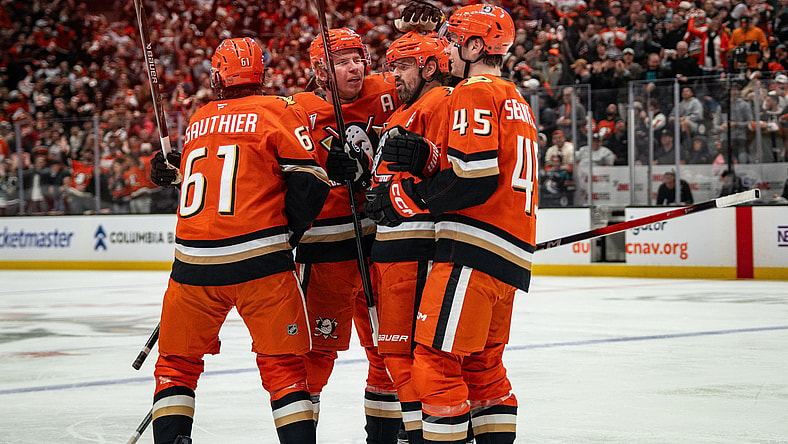
However, Anaheim responded with resilience. Cutter Gauthier and Mikael Granlund both capitalized on power-play opportunities to level the game, reflecting a recurring theme in the series: the Ducks’ ability to respond under pressure.
The decisive moment came in overtime. Ryan Poehling scored the game-winning goal at 2:29, but not without controversy. The puck’s position was unclear, leading to a lengthy video review before officials ruled it had crossed the goal line.
The aftermath sparked debate—not merely about whether the puck crossed the line, but about how the decision was reached without definitive visual proof. The controversy has since become a focal point of discussion around officiating standards in high-stakes playoff scenarios.
Ducks’ Tactical Edge: Speed, Special Teams, and Depth
Anaheim’s success in the series has not been accidental. The Ducks have consistently outperformed Edmonton in key areas, particularly through speed, power-play efficiency, and depth scoring.
Power Play Dominance
The Ducks’ power play has been one of the most decisive factors. Through four games, Anaheim has converted 6 of 12 opportunities—a striking 50% success rate.
This efficiency has not only kept them competitive but has actively shifted momentum in multiple games, including Game 4 where both Gauthier and Granlund scored with the man advantage.
Depth Contributions
While Edmonton relies heavily on its star players, Anaheim has benefited from contributions across all lines. The fourth line—featuring Jeffrey Viel, Tim Washe, and Ian Moore—has played a critical role both physically and offensively, even influencing key sequences leading to decisive goals.
Shot Control and Pressure
Anaheim has also controlled play territorially, outshooting Edmonton 38-27 in Game 4 and dominating stretches of overtime where the Oilers failed to register a single shot.
Oilers Under Pressure: Talent Without Execution
For the Oilers, the series has exposed underlying vulnerabilities despite their elite offensive capabilities.
McDavid’s Struggles and Team Dependency
Connor McDavid, widely regarded as the best player in the world, has been limited to just one goal and four points through four games.
There are indications he may be playing through an injury, but the broader issue extends beyond him. As McDavid himself admitted:
“We’re in a hole. We’re in a hole, no doubt about it. Gotta find a way to get a win at home.”
Lack of Secondary Scoring
Key players such as Zach Hyman, Jack Roslovic, and Darnell Nurse have not delivered at the level required for playoff success.
In postseason hockey, depth scoring often determines outcomes—and so far, Edmonton has fallen short in this department.
Goaltending Instability
The Oilers’ goaltending situation has also been a concern. Connor Ingram struggled early in the series, conceding 14 goals across three games with a .849 save percentage.
The switch to Tristan Jarry reflects both urgency and uncertainty, but stability in net remains elusive.
Statistical Snapshot: A Close Match on Paper
Interestingly, the broader season statistics suggest a relatively even matchup:
- Goals per game: Oilers (3.44, 6th) vs Ducks (3.23, 13th)
- Shots per game: Ducks (30.7, 3rd) vs Oilers (29.7, 4th)
- Power play: Oilers (30.63%, 1st) vs Ducks (18.56%, 23rd)
Yet playoff hockey often diverges from regular-season trends. Anaheim’s ability to elevate its power play and defensive pressure has effectively neutralized Edmonton’s statistical advantages.
The Stakes Heading Into Game 5
With the Ducks leading 3-1, Game 5 becomes a must-win scenario for the Oilers. The matchup is set for Tuesday, April 28, at Rogers Place in Edmonton.
Despite the series deficit, predictive models still give Edmonton a narrow edge for the next game, projecting a 4-3 victory. However, the margin is minimal, reflecting just how finely balanced the contest remains.
For Edmonton, the path forward is clear but demanding:
- Improve defensive structure
- Generate scoring beyond top stars
- Stabilize goaltending
- Match Anaheim’s intensity and discipline
Failure to do so could result in a stunning first-round exit.
Conclusion: A Series Redefining Expectations
The Oilers vs Ducks series has evolved into more than just a playoff matchup—it has become a study in execution versus expectation.
Anaheim’s disciplined, fast-paced, and collective approach has outmaneuvered a more star-driven Edmonton side. Meanwhile, controversy in Game 4 has added an extra layer of intrigue, raising questions about officiating in critical moments.
As the series shifts back to Edmonton, the Oilers face not only elimination but also scrutiny. For the Ducks, the opportunity is clear: close out a series that has already reshaped perceptions of both teams.


