

NYT Connections Hints Explained: How to Decode Today’s Puzzle and Improve Your Strategy
A Reader-Focused Practical Guide to “Connections Hints”
Every day, thousands of players open the New York Times’ Connections puzzle expecting a quick mental workout—only to find themselves staring at 16 seemingly unrelated words. What looks simple at first quickly becomes a test of logic, vocabulary, and pattern recognition.
That’s where Connections hints come in.
These hints are not just clues to solve a single puzzle—they are strategic tools that help players understand how the game works, identify patterns, and ultimately improve their performance over time. Using the April 26, 2026 puzzle as a case study, this guide breaks down how hints function, how to interpret them, and how to apply them effectively.
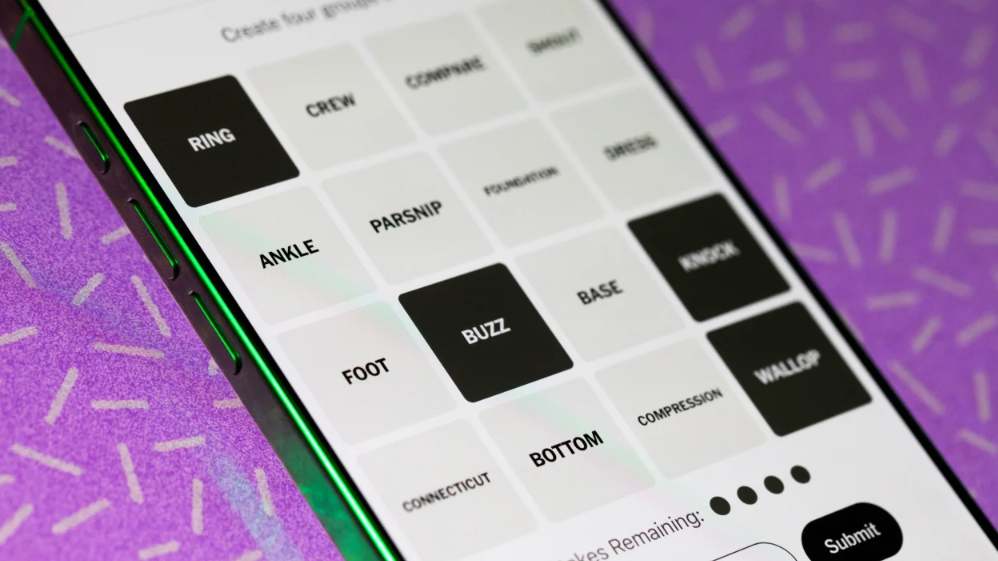
What Are “Connections Hints”?
Connections hints are short, category-based clues designed to guide players toward grouping 16 words into four correct sets of four.
Each puzzle revolves around identifying shared relationships between words—these could be:
- Synonyms
- Cultural references
- Functional similarities
- Abstract associations
The goal is to correctly organize all words into four themed categories.
Hints act as directional signals, nudging players toward the intended grouping logic without directly revealing the answer.
Understanding the Structure of the Game
Before diving into hints, it’s essential to understand the mechanics:
- You are given 16 words in a 4×4 grid
- You must group them into four sets of four words
- Each group shares a common theme or connection
- Groups are color-coded by difficulty:
- Yellow (easiest)
- Green
- Blue
- Purple (hardest)
Players get four attempts before the puzzle ends, making each guess critical.
April 26, 2026 Puzzle: Breaking Down the Hints
Let’s examine how hints work in practice using the April 26 puzzle (#1050).
The Provided Hints
- “A condition you could find in a contract”
- “How your voice can be characterized”
- “From a famous book”
- “They might not have eyes and a nose, but they have this”
At first glance, these clues appear abstract—but each one maps directly to a category.
Step-by-Step Interpretation of the Hints
1. Contract Language → “Stipulation”
The hint points toward legal or contractual terminology.
Correct grouping:
- catch
- caveat
- fine print
- strings
These are all forms of conditions or limitations in agreements.
2. Voice Attributes → “Vocal Characteristics”
This hint directs players toward music or speech-related terminology.
Correct grouping:
- pitch
- range
- register
- tone
These terms describe how a voice sounds or functions.
3. Classic Literature → “Characters in ‘Dick and Jane’”
A cultural reference hint—specifically to a well-known children’s book series from the 1930s.
Correct grouping:
- Dick
- Jane
- Mother
- Spot
Recognizing cultural references is often key to solving mid-level difficulty groups.
4. Abstract Objects → “Things with Faces”
This is the most challenging category because it relies on metaphorical thinking.
Correct grouping:
- building
- cliff
- clock
- polyhedron
These objects are described as having “faces,” even though they are not human.
Why Some Hints Are Harder Than Others
The progression from yellow to purple reflects increasing abstraction:
- Yellow (easy): Direct definitions or synonyms
- Green (moderate): Functional or descriptive traits
- Blue (challenging): Cultural or contextual knowledge
- Purple (difficult): Abstract or metaphorical reasoning
This layered difficulty is intentional—designed to test multiple cognitive skills in one puzzle.
Strategies for Using Connections Hints Effectively
1. Translate the Hint into a Category
Instead of focusing on individual words, identify the theme behind the hint.
Example:
“Contract condition” → think legal terms
2. Identify Obvious Matches First
Start with the easiest (yellow) group to reduce the complexity of remaining words.
3. Watch for Double Meanings
Many words can fit multiple categories—this is a common trap in Connections.
4. Use Elimination
Once one group is confirmed, remove those words mentally and focus on what remains.
5. Think Literally and Figuratively
Especially for harder groups, consider metaphorical meanings (e.g., “face” of a clock).
The Psychology Behind Connections Hints
What makes the game so compelling is its reliance on:
- Pattern recognition
- Lateral thinking
- Vocabulary depth
- Cultural awareness
Hints are carefully designed to activate these cognitive processes without giving away the solution outright.
Players often report that puzzles feel “easy” or “impossible” depending on whether they correctly interpret the hint’s perspective.
The Broader Appeal of Connections
Since its launch in June 2023, Connections has grown into one of the New York Times’ most popular word games, alongside Wordle and the Mini Crossword.
Its success lies in:
- Daily replayability
- Social sharing (color-coded results)
- Increasing difficulty levels
- Minimal instructions but deep complexity
Hints play a central role in maintaining this balance—helpful enough to guide, but subtle enough to challenge.
Conclusion: Turning Hints Into Mastery
Connections hints are more than simple clues—they are a framework for thinking.
By learning how to interpret hints:
- You reduce guesswork
- You improve pattern recognition
- You increase your success rate over time
The April 26, 2026 puzzle demonstrates how varied and layered these hints can be—from straightforward legal terms to abstract geometric concepts.
For regular players, the real goal isn’t just solving today’s puzzle—it’s developing the intuition to solve tomorrow’s faster.


