


Michael Jackson Biopic Review: Spectacle, Controversy, and a Divided Verdict
A Biopic Under the Spotlight
The 2026 release of Michael, directed by Antoine Fuqua, arrives with immense expectations. As a cinematic portrait of Michael Jackson—arguably the most influential pop artist in modern history—the film carries both cultural weight and commercial ambition.
Featuring Jaafar Jackson in the lead role, the biopic attempts to trace Jackson’s journey from his childhood with the Jackson 5 to his global dominance during the late 1980s. Yet despite its scale and visual ambition, the film has sparked sharply divided reactions among critics, audiences, and industry observers.
What emerges is not a unified consensus, but a layered debate about storytelling, legacy, and the limits of biographical cinema.
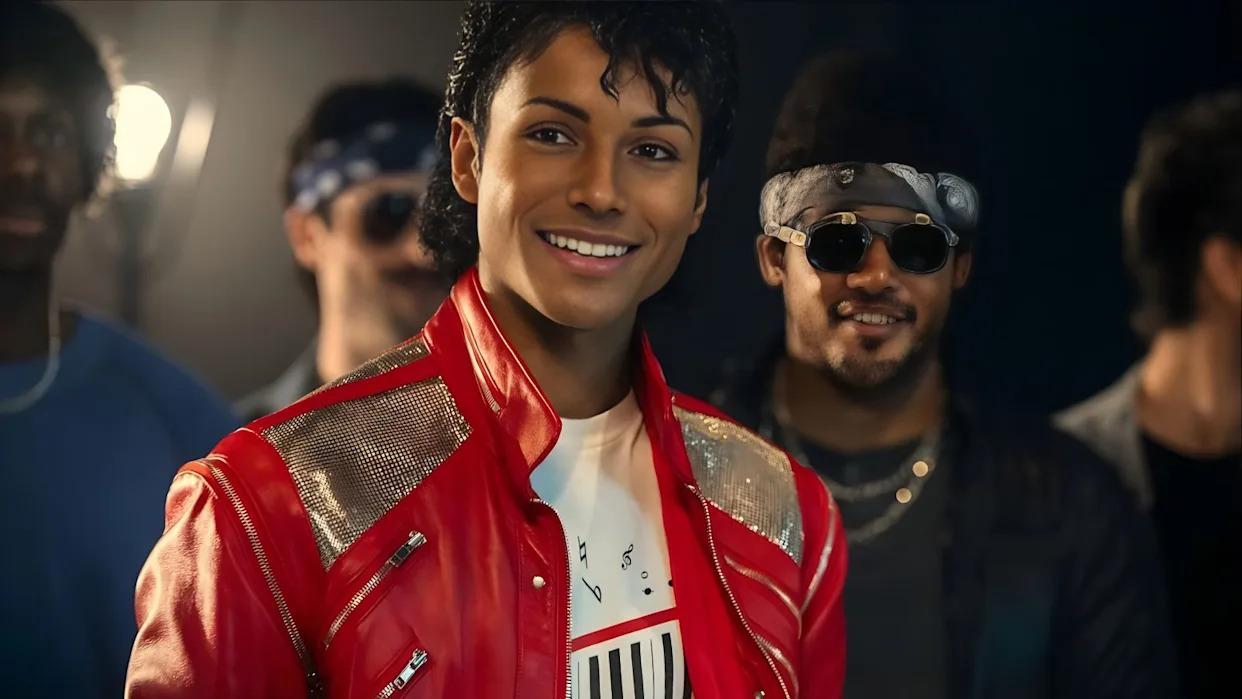
A Performance That Commands Attention
Across nearly all reviews, one element stands out with remarkable consistency: Jaafar Jackson’s portrayal of his uncle.
Critics widely agree that his performance is technically impressive, capturing Jackson’s signature voice, dance style, and stage presence with uncanny precision. His embodiment of the artist—particularly in recreations of iconic eras such as Off the Wall, Thriller, and Bad—has been described as both “uncanny” and “transformative.”
The choreography sequences, in particular, serve as the film’s strongest asset. They highlight Jackson’s evolution as a performer, from fluid disco-inspired movement to the sharp, militaristic precision that defined his later work.
Even critics who dismissed the film’s narrative acknowledged that Jaafar Jackson’s performance anchors the production, providing moments of authenticity within an otherwise contested framework.
A Story Told Through Music, Not Complexity
Structurally, Michael follows a familiar blueprint: the rise-to-fame narrative typical of music biopics. The film charts Jackson’s early struggles under the strict guidance of his father, Joe Jackson, and his eventual emergence as a global superstar.
However, many critics argue that the film prioritizes spectacle over substance. It leans heavily on musical set pieces and milestone moments rather than exploring the psychological or emotional depth of its subject.
The result is a narrative that feels compressed and selective. Key events are condensed or simplified, and Jackson’s artistic breakthroughs often appear effortless—stripping away the creative struggle that typically defines compelling biographical storytelling.
In effect, the film plays less like a comprehensive biography and more like a curated “greatest hits” compilation.
The Central Criticism: A Sanitised Portrait
The most significant point of contention lies in what the film chooses to omit.
Critics have repeatedly highlighted the absence of any meaningful engagement with the controversies that defined Jackson’s later life. Allegations, legal battles, and personal complexities are largely excluded from the narrative, creating what many describe as a “sanitised” or “whitewashed” portrayal.
This omission is not incidental. Reports indicate that legal constraints and estate involvement led to the removal of material referencing certain allegations, resulting in reshoots and a restructured final act.
Consequently, the film ends in 1988, at the height of Jackson’s career, avoiding the more controversial chapters that followed.
For many critics, this editorial decision fundamentally undermines the film’s credibility as a biographical work.
Estate Influence and Narrative Control
The involvement of the Michael Jackson Estate is a defining factor in the film’s tone and structure. With figures such as John Branca closely tied to both the real-life legacy and the production itself, the film operates within tightly controlled boundaries.
This influence is reflected in the portrayal of Jackson as an almost mythic figure—an artist defined by talent, innocence, and victimhood, rather than contradiction or complexity.
While this approach aligns with the estate’s broader efforts to preserve Jackson’s legacy, it has led critics to question whether the film functions more as brand management than as cinema.
A Genre Problem: The Limits of Music Biopics
The reception of Michael also reflects a broader trend within the music biopic genre.
Following commercially successful films like Bohemian Rhapsody, studios have increasingly leaned toward celebratory narratives that emphasize performance and nostalgia over critical examination.
Michael fits squarely within this pattern. It delivers visually polished recreations of iconic moments but avoids interrogating the contradictions that made its subject both compelling and controversial.
For some audiences, this formula works. For others, it exposes the limitations of a genre that often prioritizes commercial appeal over narrative depth.
Critical Reception and Rotten Tomatoes Struggles
Early critical reception has been notably mixed to negative. Initial ratings on Rotten Tomatoes indicate a low approval score, with only a minority of critics offering positive reviews.
Descriptions such as “clichéd,” “bland,” and “soulless” appear frequently across reviews, often paired with praise for the musical sequences and lead performance.
This split highlights a recurring pattern: the film succeeds as a spectacle but struggles as a narrative.
Commercial Prospects vs Critical Reception
Despite critical skepticism, Michael is still expected to perform strongly at the box office. Early projections suggest it could reach significant global earnings, potentially surpassing other major music biopics.
This disconnect between critical reception and commercial success is not unusual for the genre. The enduring popularity of Jackson’s music—and the curiosity surrounding his life—provide a built-in audience that may outweigh negative reviews.
The Question of a Sequel
The film concludes with a suggestive note: “The story continues.”
This has fueled speculation about a potential sequel that could explore the later, more controversial phases of Jackson’s life. However, such a project would require a markedly different approach—one willing to engage with the complexities that the first film avoids.
Whether that shift will occur remains uncertain.
Final Assessment: A Film Defined by What It Leaves Out
Michael is a technically polished and visually engaging film that succeeds in recreating the spectacle of Michael Jackson’s artistry. Its musical sequences and Jaafar Jackson’s performance offer moments of genuine impact.
Yet as a biographical work, it remains incomplete.
By focusing narrowly on Jackson’s rise and avoiding the more difficult aspects of his life, the film presents a version of the artist that feels curated rather than examined. For some viewers, this approach provides a celebratory tribute. For others, it raises fundamental questions about authenticity and storytelling.
Ultimately, Michael stands as both a testament to Jackson’s enduring cultural influence and a reminder of how challenging it is to capture the full truth of a life that continues to provoke debate.


