

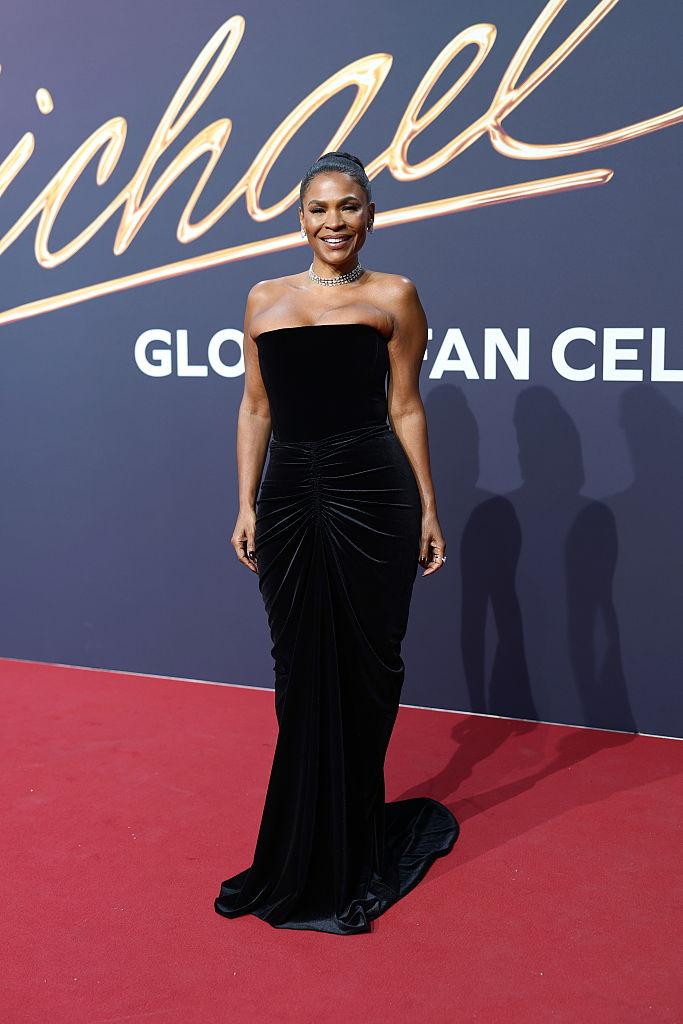
Nia Long in 2026: A Defining Moment in a Defining Career
The Return to the Spotlight—On Her Own Terms
Few actors manage to remain culturally relevant across decades without losing their identity. Nia Long is one of those rare figures. In 2026, she finds herself at a pivotal intersection: revisiting legacy, expanding her creative reach, and stepping back into the spotlight through one of the most anticipated films of the year, the biopic Michael.
At the Los Angeles premiere on April 20, 2026, Long appeared alongside a wide roster of high-profile names, including Laura Harrier and Colman Domingo. The event itself was more than a standard red carpet—it signaled a broader cultural moment tied to the enduring fascination with Michael Jackson and the narratives surrounding his life.
Yet, beyond the glamour, Long’s role—and her personal evolution—reveals a deeper story.
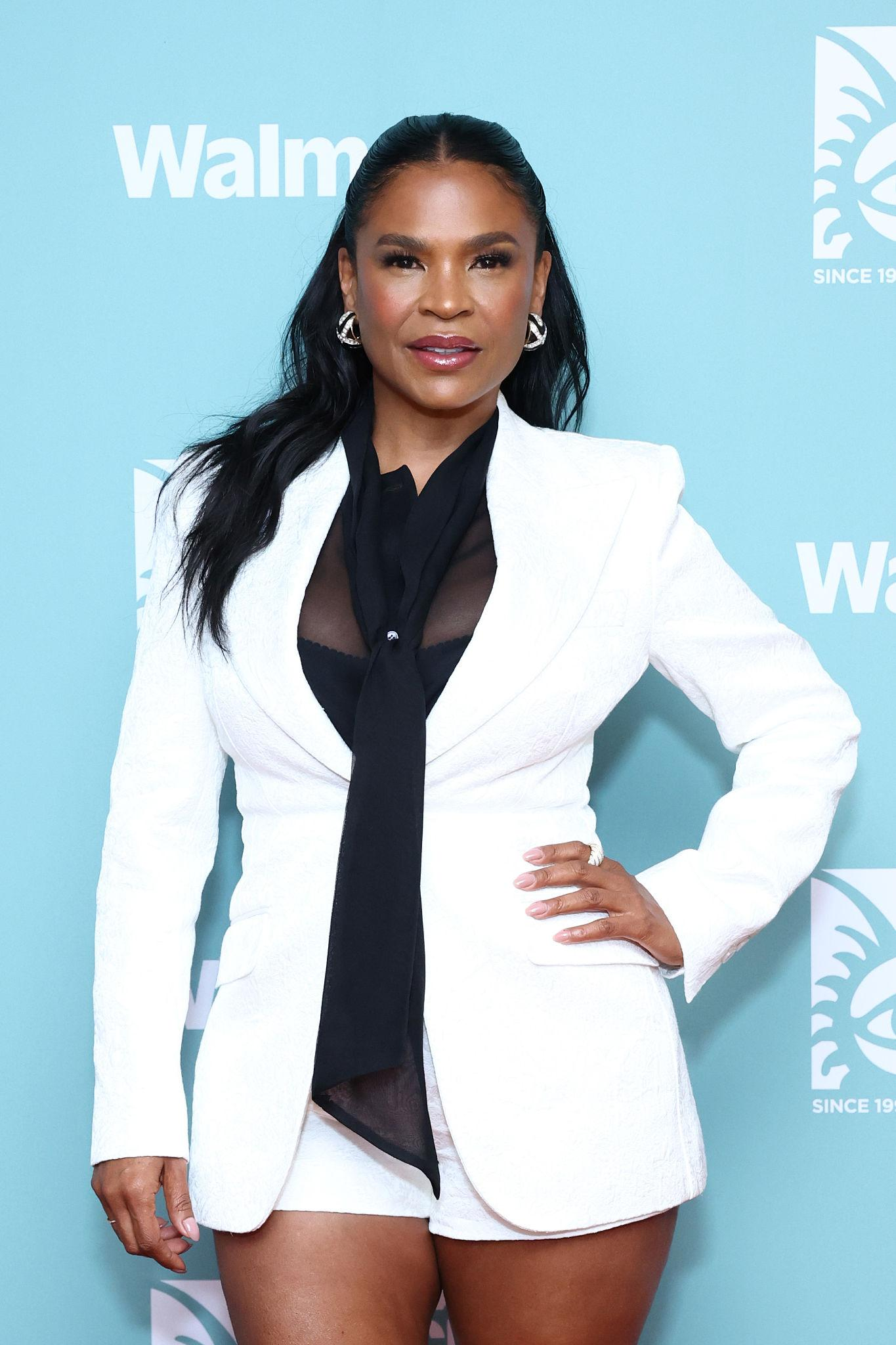
Inside Michael: A Role Defined by Restraint and Presence
In the film Michael, Long portrays Katherine Jackson, a role that demands subtlety rather than spectacle. The character is positioned as a quiet anchor within the Jackson family dynamic, contrasting sharply with more outwardly intense portrayals.
Her performance has been described as one built on stillness—where silence carries weight. Instead of dominating scenes, Long’s interpretation allows emotional nuance to emerge through restraint, particularly when placed alongside Jaafar Jackson and Domingo’s portrayal of Joe Jackson.
This artistic choice reflects a broader trend in modern biographical storytelling: shifting from dramatized intensity to psychological authenticity.
From a production standpoint, the film represents a major investment. With a budget estimated between $155 million and $200 million, it faces significant commercial expectations—requiring upwards of $390 million to $500 million to break even. Early critical reception, however, has been mixed, with ratings initially as low as 27% before rising modestly to 33%.
For Long, the stakes are less about box office performance and more about narrative integrity—how history is remembered and reinterpreted.
Red Carpet Visibility Meets Cultural Longevity
The April 20 premiere at the TCL Chinese Theatre drew not just cast members but members of the Jackson family, including siblings and next-generation figures.
Long’s presence at the event symbolized more than participation—it marked continuity. From her breakout roles in The Fresh Prince of Bel-Air, Love Jones, and The Best Man, she has long been associated with defining images of Black Hollywood in the 1990s.
That legacy still resonates today. For many audiences, she remains an enduring symbol of a particular cultural aesthetic—often described as “’90s Fine”—a blend of style, confidence, and relatability that shaped representation in mainstream media.
Now, in 2026, she is not revisiting that identity; she is expanding it.
Personal Evolution: Love, Independence, and Boundaries
Off-screen, Long’s life reflects a similarly transitional phase. Following her separation from former fiancé Ime Udoka, with whom she shares a son, she has been candid about her changing perspective on relationships.
In a recent conversation, she articulated a clear expectation for emotional investment:
“I want flowers sent to my house. I need you to show consistent effort. I need you to show me that I need you.”
This statement underscores a shift toward intentionality in her personal life. She acknowledges having “experienced good love,” which now informs her ability to distinguish between genuine connection and superficial engagement.
Interestingly, she also admits a lack of experience with casual dating, noting that she has historically moved quickly into long-term relationships. The result is a recalibration phase—one that prioritizes self-awareness over external validation.
Her comments about requiring non-disclosure agreements—even jokingly—highlight another dimension: the intersection of privacy and celebrity culture in an era where personal narratives are constantly commodified.
The Concept of “Grace” as a Life Strategy
A recurring theme in Long’s recent reflections is the idea of grace—not as a passive quality, but as an active discipline.
She describes it as a learned response to adversity, particularly in the wake of public scrutiny and personal upheaval. Rather than reacting defensively, she emphasizes introspection:
“What do I stand for? What’s important to me, ultimately?”
This philosophy extends to her portrayal of Katherine Jackson. Observing the matriarch’s life, Long identifies grace as a survival mechanism—one that enables resilience in high-pressure environments.
The concept becomes central not just to her acting but to her broader worldview: a framework for navigating fame, relationships, and personal growth simultaneously.
Reinvention Without Reinvention: Expanding Creative Control
Unlike many actors who attempt radical reinvention, Long’s trajectory is more incremental and strategic. She is actively moving into production, storytelling, and authorship.
Her upcoming projects include:
- A romantic dramedy titled Don’t Ever Wonder, reuniting her with Larenz Tate
- A memoir described as one of the most challenging undertakings of her career
These ventures signal a shift toward ownership—both creatively and financially. As she puts it:
“The only strategy I have in this game is my bank account… Let’s strategize how we’re going to make money and create generational wealth.”
This approach aligns with broader industry trends, where established actors increasingly leverage their influence to control narratives rather than simply participate in them.
Representation, Identity, and Cultural Impact
Long’s influence extends beyond individual roles. She occupies a distinct position within discussions of representation—particularly for Black women in Hollywood.
Her career reflects multiple eras:
- The emergence of Black romantic leads in the 1990s
- The evolution of mainstream television diversity
- The current emphasis on authenticity and self-definition
Her reflections on beauty standards are particularly revealing. Growing up in environments where representation was limited, she developed a complex relationship with self-image—one that evolved over time.
Today, her visibility carries different weight. It is not just about presence but about redefining narratives around aging, identity, and success.
What Comes Next?
Looking ahead, Long’s trajectory suggests expansion rather than consolidation. She is entering a phase where:
- Creative control becomes central
- Personal storytelling gains prominence
- Public identity becomes more self-directed
At 55, she openly acknowledges the realities of change—physical, emotional, and professional—without framing them as limitations. Instead, she treats them as variables to be managed.
Her definition of freedom is precise:
“Being able to do what you want to do when you want to do it, because it serves your spirit.”
This perspective positions her not as a legacy figure, but as an active participant in shaping the next phase of her career.
Conclusion: A Career That Refuses to Plateau
Nia Long’s current moment is not a comeback—it is a continuation, albeit with greater clarity and control.
Her involvement in Michael places her at the center of a major cultural event, but it is her personal evolution that defines the narrative. She is navigating visibility, legacy, and reinvention with a deliberate strategy grounded in authenticity.
In an industry often driven by reinvention cycles, Long’s approach stands out: evolve without abandoning identity.
That may ultimately be her most significant contribution—not just to film, but to the broader cultural conversation.


