

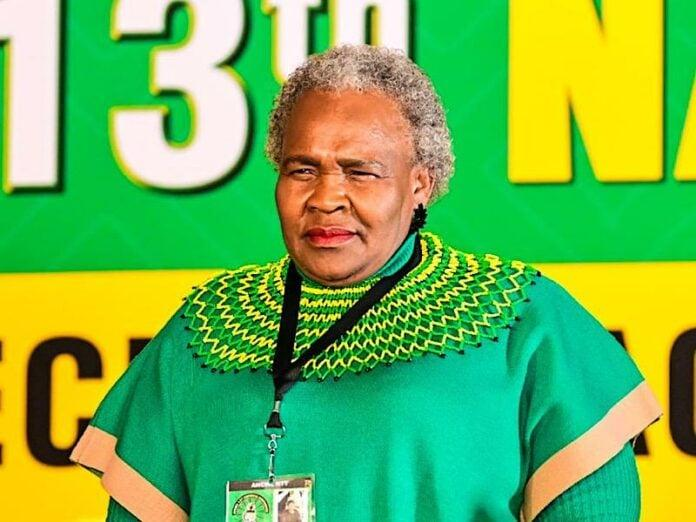
Sisisi Tolashe: Power, Scrutiny, and the Politics of Accountability
A Minister Under the Microscope
In South Africa’s political landscape, few figures have recently drawn as much attention as Sisisi Tolashe. As the country’s Minister of Social Development and president of the ANC Women’s League, Tolashe occupies a position of considerable influence—overseeing a department responsible for billions in public spending and millions of vulnerable citizens.
Yet, in April 2026, her leadership is increasingly defined not only by policy responsibilities but by a series of controversies that have triggered political, legal, and ethical scrutiny. At the center of this unfolding narrative lies a complex web of allegations—ranging from undisclosed luxury vehicles to questionable appointments within her department.
This feature examines the key developments shaping the Sisisi Tolashe story, the institutional responses, and the broader implications for governance in South Africa.
The SUV Controversy: A Trigger for Public Scrutiny
The most immediate catalyst for renewed attention came from revelations that Tolashe had received two luxury SUVs, which she stated in Parliament were donations intended for the ANC Women’s League.
However, this explanation quickly became contested. Investigations indicated that the vehicles were not registered under the organization but rather under the names of her children.
This discrepancy raised fundamental questions:
- Why were the vehicles not declared as required under parliamentary rules?
- What was the true ownership structure of the assets?
- Were ethical codes governing public office breached?
The issue escalated further when it emerged that the vehicles were allegedly donated by foreign officials, intensifying concerns about transparency and compliance with executive ethics regulations.
Political pressure followed swiftly. Fikile Mbalula made it clear that if Tolashe had violated Cabinet ethics, consequences would be unavoidable:
“Ministers are guided by the executive code. So if a minister breaks the executive code and an oath of office on matters like this, there is no negotiation; you will be dropped.”
At the time, a formal report from Tolashe was still pending, leaving the matter unresolved but politically volatile.
Parliamentary Pressure and Legal Escalation
Opposition forces moved quickly to formalize the controversy. The Democratic Alliance (DA) called for a parliamentary inquiry, arguing that the SUV issue was part of a broader pattern of concerning conduct.
Their allegations extend beyond the vehicle scandal and include:
- Failure to disclose gifts received from a foreign embassy
- Allegations of misleading Parliament
- Questions around high-level appointments within the department
- Claims of shielding certain officials from accountability
The DA further escalated the matter by:
- Filing complaints with the Ethics Committee
- Lodging a case with the Public Protector
- Requesting presidential clarification on whether permission was granted to accept the vehicles
- Announcing plans to open a criminal case with the South African Police Service
The financial dimension also adds weight to the situation. The vehicles are estimated to be worth approximately R1 million, a figure that amplifies the seriousness of the disclosure issue.
Internal Department Controversies: Appointments and Oversight Failures
While the SUV issue dominates headlines, it is not the only challenge facing Tolashe’s leadership. Separate investigations have raised concerns about governance practices within the Department of Social Development.
One particularly significant development involves allegations that senior officials associated with Tolashe falsified credentials on their CVs, including claims of experience linked to the late Hlengiwe Mkhize.
Key points from the investigation include:
- Fabricated or exaggerated work experience used to secure senior positions
- Lack of proper vetting procedures within the department
- Disputed qualifications for individuals appointed to influential roles
A long-serving public official, who had been responsible for vetting candidates, reportedly flagged concerns about one such appointment but was ultimately bypassed.
The episode has exposed systemic weaknesses in oversight mechanisms, raising broader questions about how appointments are made at senior government levels.
Governance at Stake: Why This Matters
The controversies surrounding Tolashe extend beyond personal accountability—they touch directly on institutional integrity.
The Department of Social Development is one of South Africa’s most critical public institutions. With a budget of R294 billion and responsibility for distributing social grants to millions, its operational stability is essential.
Any disruption in leadership or credibility can have far-reaching consequences:
- Delays or inefficiencies in grant distribution
- Reduced public trust in government institutions
- Increased scrutiny from oversight bodies
- Political instability within the ruling party
The situation underscores a broader governance challenge: ensuring that high-ranking officials adhere to strict ethical and administrative standards in environments where political and institutional roles often intersect.
Political Fallout and Possible Outcomes
At present, the trajectory of the Sisisi Tolashe case remains uncertain, but several possible scenarios are emerging:
1. Formal Parliamentary Inquiry
If approved, this would compel Tolashe to testify under oath and provide detailed explanations for the allegations.
2. Executive Action
Should the findings indicate a breach of ethics, removal from Cabinet remains a real possibility.
3. Legal Proceedings
With corruption charges already filed, the matter could progress into the judicial system, depending on investigative outcomes.
4. Internal ANC Resolution
As president of the ANC Women’s League, Tolashe’s position within party structures adds another layer of complexity, potentially influencing how the matter is resolved politically.
A Broader Reflection on Accountability
The Sisisi Tolashe story is not an isolated case—it reflects enduring tensions within governance systems where political authority, administrative oversight, and public accountability intersect.
At its core, the controversy raises a fundamental question:
Can institutions enforce accountability effectively when those under scrutiny hold significant political power?
The answer will depend on the robustness of oversight mechanisms—Parliament, law enforcement, and internal party structures—and their willingness to act decisively.
Conclusion: A Defining Moment
Sisisi Tolashe’s tenure has reached a defining moment. What began as a disclosure issue involving luxury vehicles has evolved into a multi-layered controversy encompassing ethics, governance, and institutional credibility.
The coming weeks will be critical. Reports are awaited, investigations are underway, and political pressure continues to build. Whether this results in accountability, exoneration, or deeper systemic reform will shape not only Tolashe’s future but also public confidence in South Africa’s governance framework.
For now, the situation remains unresolved—but its implications are already significant.


