Jim Parsons: A Defining Legacy Beyond Sheldon Cooper
Introduction: The Actor Who Became a Cultural Reference Point
Jim Parsons occupies a rare position in modern television history. For over a decade, he embodied a single character so convincingly that it reshaped sitcom storytelling and audience expectations. As Sheldon Cooper in The Big Bang Theory, Parsons delivered a performance that was not only critically acclaimed but also culturally transformative.
- Introduction: The Actor Who Became a Cultural Reference Point
- The Breakthrough That Changed Television Comedy
- The Decision That Ended an Era
- “I Don’t Believe I Would Do a Reboot”: A Firm Position
- Carrying Sheldon Without Playing Him
- Revisiting the Role—On Different Terms
- The Ensemble Legacy and Fan Nostalgia
- Beyond Sheldon: A Broader Creative Trajectory
- Industry Implications: Why Reboots Aren’t Guaranteed
- Conclusion: A Legacy Secured, Not Repeated
Now, years after the show’s conclusion, Parsons is actively redefining his career—and his recent comments about a potential reboot have reignited debate about legacy, typecasting, and the lifecycle of iconic television roles.
The Breakthrough That Changed Television Comedy
When The Big Bang Theory premiered in 2007, it introduced a new archetype to mainstream audiences: the hyper-intellectual, socially rigid scientist navigating everyday life. Sheldon Cooper quickly became the show’s central gravitational force.

Parsons’ portrayal combined precision timing, physical comedy, and emotional restraint. The result was a character that felt both exaggerated and authentic. Over 12 seasons and nearly 279 episodes, the sitcom evolved into a global phenomenon, with Sheldon at its core.
His performance earned him four Primetime Emmy Awards for Outstanding Lead Actor in a Comedy Series—an achievement that cemented his status as one of television’s most accomplished comedic actors.


The Decision That Ended an Era
The conclusion of The Big Bang Theory in 2019 was not simply a network decision—it was driven by Parsons himself. His departure after season 12 effectively brought the series to an end, a move that colleagues later described as unexpected.
From an industry perspective, this decision illustrates a key dynamic: long-running shows often hinge on a single performer’s willingness to continue. In Parsons’ case, the character had reached both creative and personal saturation.
“I Don’t Believe I Would Do a Reboot”: A Firm Position
In April 2026, Parsons addressed the possibility of returning to Sheldon Cooper during an appearance on The View. His response was unambiguous:
“I don’t believe I would do a reboot.”
He expanded on the reasoning with a level of introspection that reveals the complexity of long-term character work:


“I can’t say I miss him, partly because, especially 12 years on a TV show where they’re writing for this specific actor, there’s a lot of me in that. Not the genius part, but there’s a lot of me in that.”
This statement reflects a deeper industry reality: when writers tailor a character around an actor for over a decade, the boundary between performance and identity becomes blurred.
Carrying Sheldon Without Playing Him
Despite rejecting a reboot, Parsons does not distance himself from the character entirely. He acknowledges that elements of Sheldon remain embedded in his personality:
“There’s a lot about his qualities and just who he was”
Audience engagement reinforces that connection. Parsons continues to encounter fans who associate him with Sheldon, a phenomenon that still surprises him:
“The longer it goes on, I’m more and more surprised when people approach me about it… But it’s always really sweet.”
From a cultural standpoint, this highlights the durability of television identities in the streaming era, where shows remain continuously accessible to new audiences.
Revisiting the Role—On Different Terms
Although Parsons has ruled out a full return, he has not entirely severed ties with the franchise. He provided narration for the spinoff Young Sheldon, revisiting the character in a more limited capacity.
He described that experience as:
“very weird” and “also very beautiful.”
This selective engagement suggests a strategic approach: maintaining connection to a defining role without being confined by it.
The Ensemble Legacy and Fan Nostalgia
The enduring popularity of The Big Bang Theory is not solely tied to Parsons. The ensemble cast—including Kaley Cuoco, Johnny Galecki, Mayim Bialik, Simon Helberg, and Kunal Nayyar—collectively shaped its success.
Recent nostalgia-driven moments, such as Bialik sharing a “tiara” throwback referencing Amy and Sheldon’s relationship, demonstrate how deeply the show remains embedded in fan culture.
Audience reactions—repeating iconic lines like “It’s a Tiaraaaa!!!”—underscore the emotional connection viewers maintain with the series.
Beyond Sheldon: A Broader Creative Trajectory
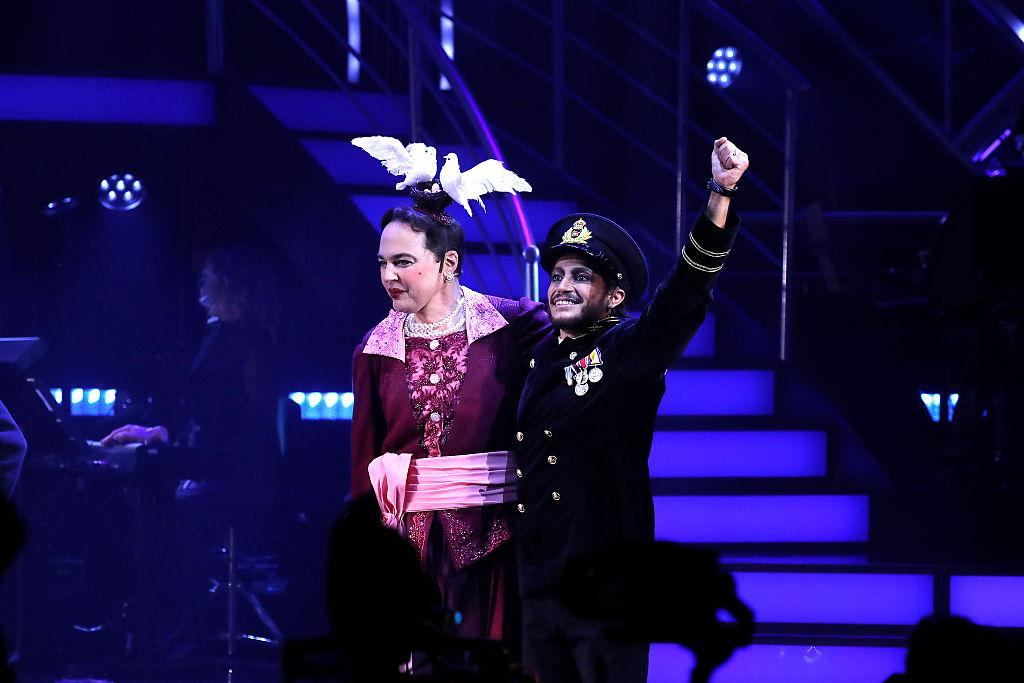
Parsons has consciously diversified his career following the show’s conclusion. His Broadway work, including Titanique, reflects a shift toward stage performance and varied storytelling formats.
This transition is consistent with a broader pattern among television actors seeking longevity: moving away from defining roles before they become limiting.
Industry Implications: Why Reboots Aren’t Guaranteed
Parsons’ stance carries broader implications for the entertainment industry:
- Star dependency: Reboots often rely on original leads; without them, audience expectations shift dramatically.
- Creative closure: Long-running narratives can reach a natural endpoint that actors are reluctant to revisit.
- Brand integrity: Returning to an iconic role risks diluting its legacy if not executed carefully.
In this context, Parsons’ refusal is not unusual—it is strategically aligned with preserving both personal and professional credibility.
Conclusion: A Legacy Secured, Not Repeated
Jim Parsons’ career illustrates a fundamental principle in entertainment: defining success is not just about creating an iconic role, but knowing when to step away from it.
His portrayal of Sheldon Cooper remains one of the most recognizable performances in modern television. Yet his refusal to return signals a deliberate effort to evolve rather than replicate past achievements.
For audiences, the message is clear. Sheldon Cooper is not being erased—he is being preserved, exactly as he was.