A Career Built on Precision, Not Noise
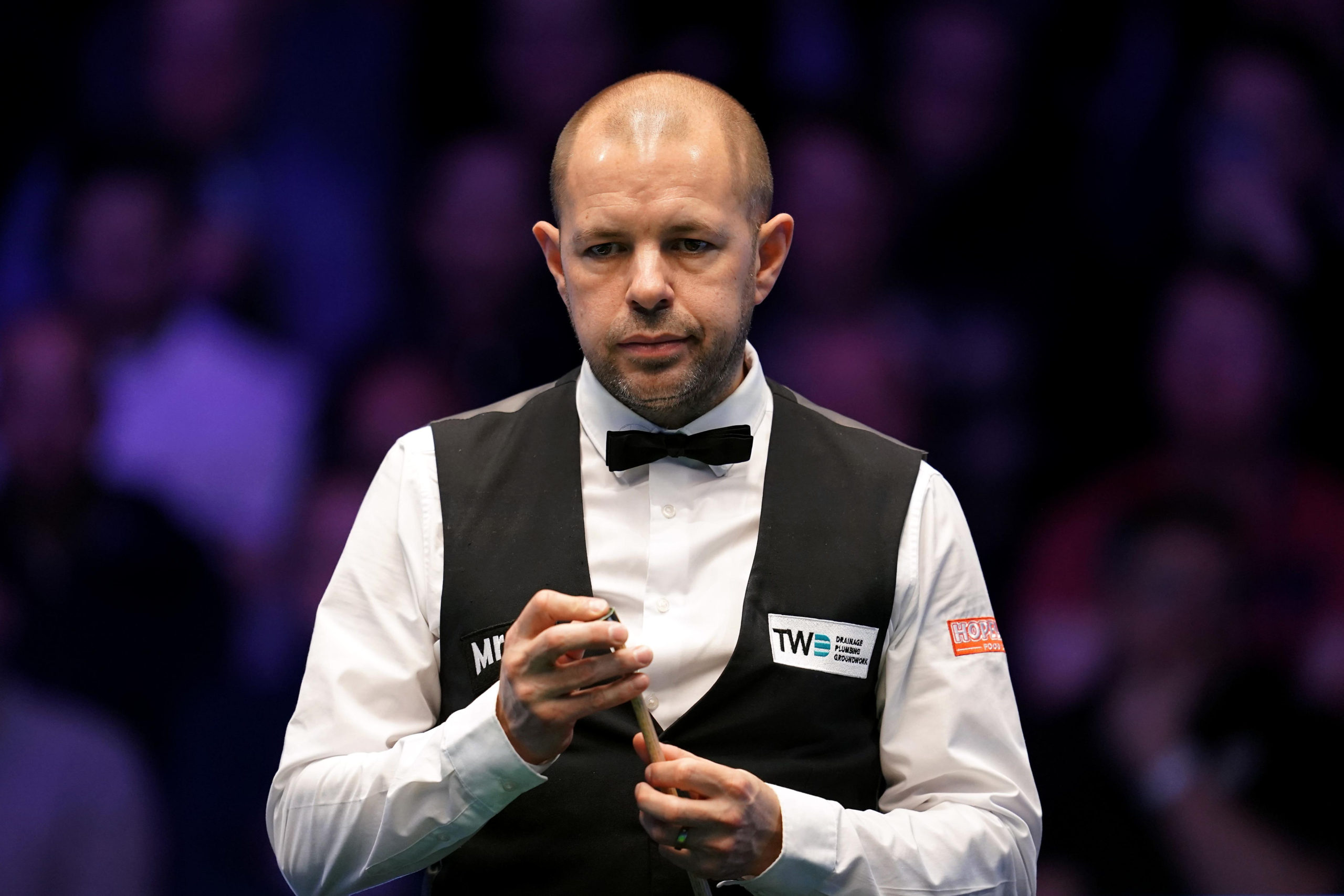
In a sport often defined by dominant personalities and psychological warfare, Barry Hawkins has carved out a different identity—one grounded in composure, technical discipline, and quiet resilience.
At 46, Hawkins remains a relevant force on the professional circuit, not through intimidation or theatrics, but through a consistent ability to deliver under pressure. His recent performances at the World Snooker Championship 2026 have once again placed him in the spotlight—both for his results and his candid reflections on the mental side of the sport.
Breaking the Crucible Drought
A Long-Awaited Return to Winning Ways
Hawkins’ 10–4 victory over Matthew Stevens marked a significant milestone. It was not just a routine first-round win—it ended a five-year wait for a victory at the Crucible Theatre.
For a player who once thrived at this venue, the drought had become a defining narrative. Between 2013 and 2018, Hawkins established himself as one of Sheffield’s most reliable performers:
- World Championship finalist (2013)
- Four semi-final appearances
- Multiple deep runs that earned him a reputation as a “Crucible specialist”
Yet in recent years, that consistency had faded. Early exits and even a failure to qualify in 2023 raised questions about whether his peak years were behind him.
This latest victory, therefore, was more than progression—it was a reset.
Form vs Momentum: The Welsh Open Factor
Success That Didn’t Carry Forward
Earlier in 2026, Hawkins secured the Welsh Open, his fifth ranking title and first since 2023.
On paper, that should have positioned him as a strong contender heading into the World Championship. But Hawkins himself dismissed the idea that the win provided lasting momentum:
“No, that’s long gone. That feels like history.”
His perspective highlights a key reality in professional snooker: confidence is often transient. Without immediate continuity between tournaments, psychological momentum can dissipate quickly.
A contributing factor was his withdrawal from the World Open in China due to injury, which disrupted his competitive rhythm.
Playing Through Pain: The Physical Challenge
Managing Injury at the Highest Level
Hawkins entered the World Championship carrying a persistent lower back issue—serious enough to force tournament withdrawals and limit preparation.
His approach has been pragmatic:
- Daily stretching routines
- Core strengthening exercises
- Controlled match scheduling
While not fully recovered, he indicated that the condition is improving, allowing him to compete effectively. This adaptability underscores a broader trend among veteran players: longevity increasingly depends on physical management as much as technical skill.
The Missing Ingredient: “Swagger”
A Rare Admission in Elite Sport
Perhaps the most revealing aspect of Hawkins’ recent interviews is his candid acknowledgment of what he believes is missing from his game: psychological dominance.
“You’ve gotta have a bit of confidence, a bit of arrogance around the table… It’s not just about playing snooker.”
He went further, stating plainly:
“I’ve never been one of them people who’s had it.”
In a sport where presence can influence outcomes as much as potting ability, this is a notable admission. Hawkins recognizes that:
- Body language can intimidate opponents
- Confidence can alter shot selection
- Perceived dominance can create psychological pressure
Yet, by his own account, he has never fully embraced that aspect of competition.
Mind Games and Mental Barriers
A Different Approach to Competition
Unlike many top professionals, Hawkins has historically avoided engaging in mental games at the table.
He revealed that even after consulting sports psychologists earlier in his career, implementing those strategies proved difficult:
“It’s easier said than done… you can’t walk around the table looking like a governor when you can’t pot a ball.”
This pragmatic realism defines his approach. Rather than projecting confidence artificially, Hawkins relies on performance to dictate presence—a method that can be effective but may lack the psychological edge seen in players like Ronnie O’Sullivan, whom he cited as an example of adaptability.
Controversy at the Crucible: Conditions Under Scrutiny
Table Complaints Spark Response
Following his victory, Hawkins drew attention for his criticism of the playing conditions at the Crucible.
He described the table as feeling like a “ping-pong table,” citing:
- Faster-than-expected cushions
- Difficulty controlling the cue ball
- Inconsistent playing conditions
These concerns were not dismissed. Officials from the World Snooker Tour responded promptly, emphasizing that:
- Table fitters are “constantly monitoring” conditions
- Players have formal channels to provide feedback after matches
The exchange highlights an ongoing tension in elite snooker: the balance between standardized conditions and player expectations.
Consistency Without a Triple Crown
The “Best Without One” Debate
Despite a long and successful career, Hawkins is often labeled as one of the best players never to win a Triple Crown event.
His record includes:
- Multiple ranking titles
- A World Championship final appearance
- Consistent top-level performances over more than a decade
Yet the absence of a major title continues to shape perceptions of his legacy.
Interestingly, Hawkins himself attributes part of this gap to his mindset—particularly his tendency toward self-criticism:
“I always talked myself down… I just go about my business.”
What Comes Next
A Renewed Opportunity
With his first-round victory secured, Hawkins advances to face the winner of Mark Williams or Antoni Kowalski.
This next stage represents more than progression—it offers a chance to redefine his current phase as a player:
- Can he convert form into a deep run?
- Can experience compensate for perceived psychological gaps?
- Can consistency finally translate into a major title challenge?
Conclusion: Redefining Success on His Own Terms
Barry Hawkins does not fit the conventional mold of a dominant snooker champion. He lacks the overt swagger, the psychological intimidation, and the headline-driven persona that often define the sport’s biggest names.
What he offers instead is something rarer: sustained competitiveness built on discipline, honesty, and technical excellence.
His recent performances at the 2026 World Snooker Championship demonstrate that even without the traditional markers of dominance, a player can remain relevant at the highest level. Whether or not he ultimately secures a defining title, Hawkins’ career stands as a case study in consistency—and a reminder that success in sport is not always loud.


