

Udonis Haslem: The Enduring Blueprint of Heat Culture
Introduction: More Than a Player, A Standard
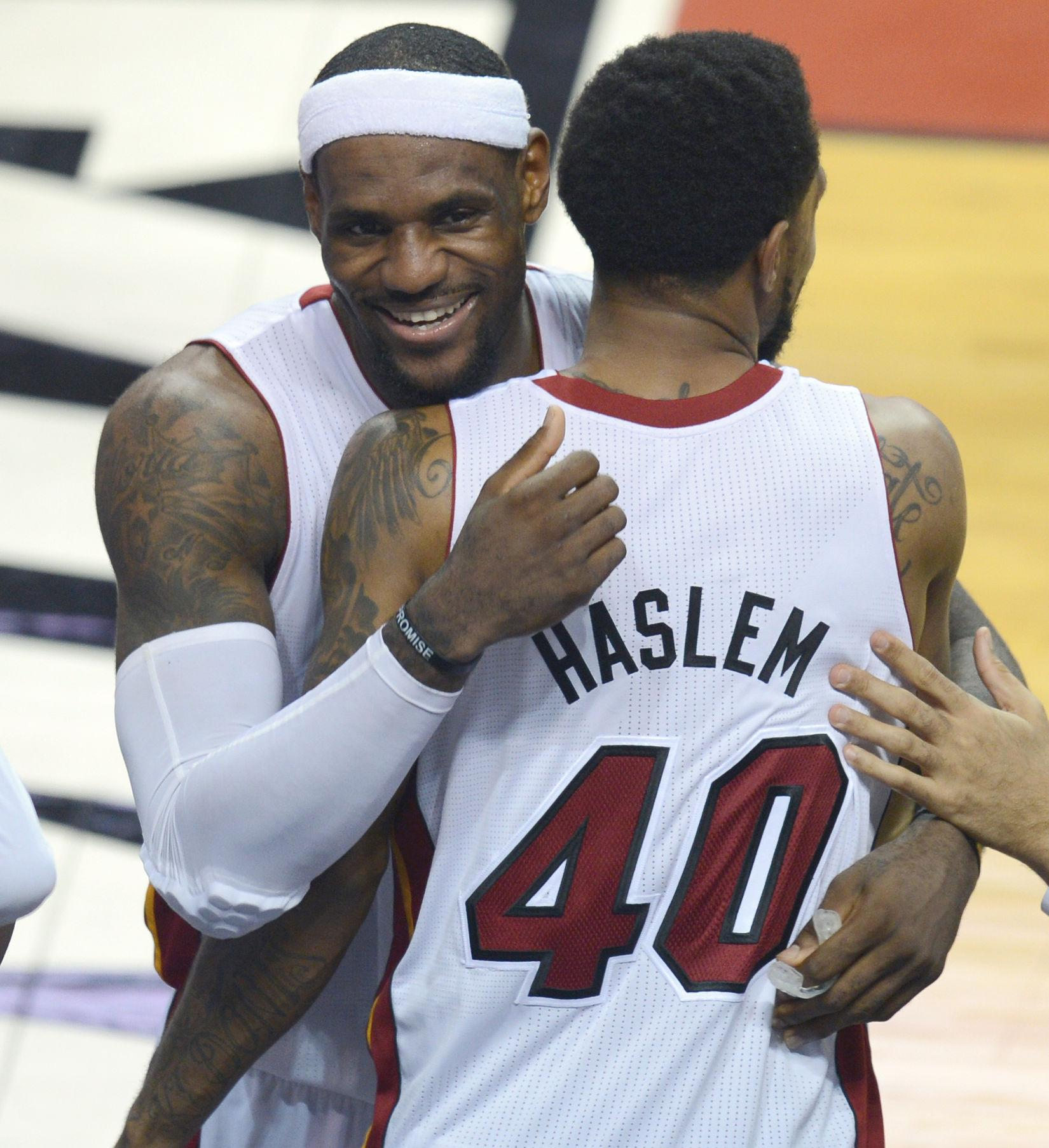
In a league defined by movement—free agency, superteams, and constant reinvention—Udonis Haslem represents a rare constant. A 20-year veteran of the Miami Heat, three-time NBA champion, and lifelong embodiment of “Heat Culture,” Haslem’s story is not about statistical dominance. It is about identity, discipline, sacrifice, and an unwavering connection to a city that shaped him.
From going undrafted to becoming a franchise cornerstone, Haslem’s career is less a traditional sports journey and more a case study in resilience and leadership—one that continues to evolve even after retirement.
From Overlooked Prospect to Miami Fixture
Haslem’s professional journey began under difficult circumstances. After going undrafted, he spent a formative year in France playing for Chalon-Sur-Saône. That experience, by his own admission, was pivotal:
“The most pivotal point in my NBA journey was when I didn’t get drafted… I embraced that. And I had a humongous chip on my shoulder.”
That period sharpened both his mental toughness and physical preparation. When he returned to the United States and joined the Miami Heat in 2003—the same year as Dwyane Wade—he carried a hardened mindset that would define his entire career.
Brotherhood and Dynasty: The Wade–Haslem Era
Few partnerships in NBA history lasted as long or meant as much to a franchise as Haslem’s relationship with Dwyane Wade. Over 15 seasons together, their connection transcended basketball.
Haslem described Wade as his favorite teammate, recalling even their earliest days with humor:
“I had never waited in the dentist’s waiting room that long… he had so many damn cavities growing up.”
Behind the humor was a bond built on trust and loyalty. That loyalty was reciprocated. At one point, when a potential trade involved Haslem, Wade shut it down immediately, refusing to move forward without him.
Together, alongside stars like LeBron James and Chris Bosh, they formed the core of the Heat’s championship runs in 2006, 2012, and 2013.
Championships and the Intangibles That Don’t Show Up in Stats
Haslem’s statistical output rarely captured his full impact. He was never the leading scorer or the face of marketing campaigns. Yet, internally, his value was unquestioned.
His contributions included:
- Defensive versatility and physical toughness
- Leadership in the locker room
- Mentorship of younger players
- Emotional accountability during high-pressure moments
The 2013 NBA Finals remain one of the defining moments of his career. Reflecting on Ray Allen’s iconic Game 6 shot, Haslem recalled:
“When Ray released it, I knew it was good… it was right on target.”
This moment preserved the Heat’s championship run and underscored the stakes of a superteam built to win—or be dismantled.
Defining “Heat Culture”: Discipline, Sacrifice, and Identity
Perhaps Haslem’s most enduring contribution is philosophical rather than statistical. His articulation of “Heat Culture” has become a blueprint for organizational identity:
“It’s about getting comfortable being uncomfortable… embracing the struggle… and sacrifice.”
He emphasized a critical principle often overlooked:
- Success requires collective sacrifice, not just role players adapting, but stars, coaches, and management aligning around a common goal.
This ethos explains why the Miami Heat have remained competitive across eras, regardless of roster changes.
Leadership Beyond the Court
After retiring, Haslem transitioned into a front-office and mentorship role with the Heat, continuing his influence at a structural level.
Unlike many retired players, he maintains an unusually hands-on approach:
- Attends practices and training camps
- Actively participates in drills
- Builds trust with players through shared effort
He described this approach clearly:
“I start at the bottom… that’s where we build these relationships… in our most vulnerable moments.”
This method reinforces his credibility—players respect him not just for his past, but for his continued commitment.
Evolution Into Media and Analysis
Haslem has also begun establishing himself as a basketball analyst, a transition encouraged years earlier by Dwyane Wade. Initially skeptical, he now embraces the role, drawing from:
- Experience under elite coaches like Pat Riley and Erik Spoelstra
- Two decades of on-court perspective
- Deep understanding of modern NBA tactics
His analysis reflects both technical knowledge and cultural insight, particularly around defense, where he noted the increasing use of zone schemes as a strategic tool rather than a fallback.
Personal Life and Foundations
Beyond basketball, Haslem’s personal story is closely tied to his time at the University of Florida, where he met his wife, Faith. He often cites this moment as one of his most meaningful:
“My favorite memory… is probably meeting my wife… the rest is history.”
Family, community, and loyalty remain central themes throughout his life narrative, reinforcing his identity as more than just an athlete.
Legacy: A Model of Longevity and Loyalty
Haslem’s legacy is multifaceted:
- 20 seasons with one franchise — increasingly rare in modern sports
- Three NBA championships
- Cultural architect of the Miami Heat identity
- Mentor across multiple generations of players
He also became the Heat’s all-time leading rebounder and had his iconic No. 40 jersey retired, symbolizing his deep connection to Miami and its history.
Future Outlook: Influence That Continues to Expand
Looking ahead, Haslem’s impact is likely to grow in several areas:
- Executive leadership within the Heat organization
- Expanded role in media and broadcasting
- Continued mentorship of emerging NBA talent
His mindset remains forward-looking:
“I don’t look back very often, because I’m too focused on looking forward.”
This perspective suggests that his post-playing career may be as influential as his time on the court.
Conclusion: The Rare Constant in a Changing League
Udonis Haslem’s story challenges conventional metrics of greatness. He is not defined by scoring titles or MVP awards, but by something less tangible and arguably more valuable: consistency, accountability, and cultural leadership.
In an era where loyalty is often transactional, Haslem stands as a counterexample—a player whose identity is inseparable from his team and city. His career offers a clear takeaway:
Success in professional sports is not solely about talent. It is about endurance, sacrifice, and the willingness to embrace a role that serves something larger than oneself.


