Elise Stefanik’s Political Pivot: A Defining Moment in U.S. Conservative Politics
A Turning Point for a Once-Rising Republican Star
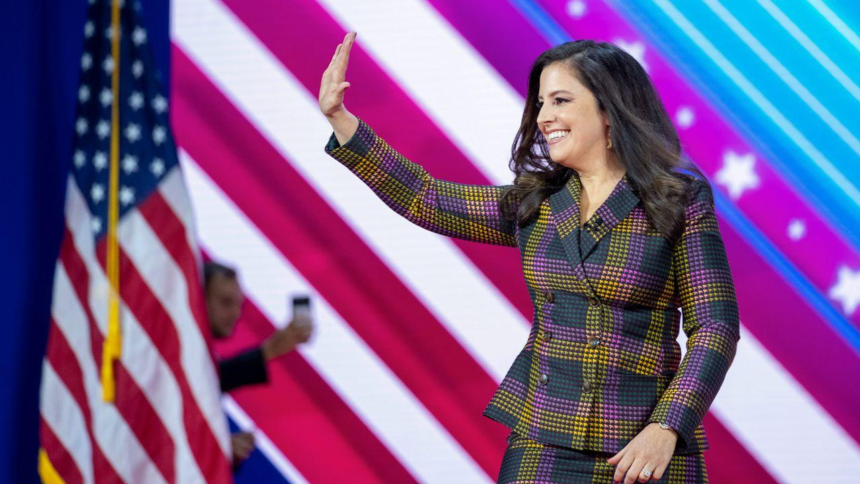
Few figures in modern American politics have experienced as sharp and visible a transformation as Elise Stefanik. Once regarded as a moderate Republican with strong ties to elite academic institutions, Stefanik has redefined her political identity in recent years—emerging as a prominent conservative voice and, more recently, stepping away from Congress at a pivotal moment in her career.
- A Turning Point for a Once-Rising Republican Star
- From Harvard Graduate to Conservative Firebrand
- “Poisoned Ivies”: A Political Statement in Book Form
- The Peak—and Plateau—of Political Influence
- A Power Vacuum in New York Politics
- Beyond Congress: A Shift Toward Personal and Ideological Priorities
- The Broader Implications: Culture, Education, and Political Identity
- What Comes Next?
In 2026, her name is once again dominating headlines—not because of electoral ambition, but due to her new book, “Poisoned Ivies,” and the broader political consequences of her decision to exit Congress. The developments surrounding Stefanik reflect a deeper shift within American politics, particularly within the Republican Party and its evolving relationship with institutions like universities.
From Harvard Graduate to Conservative Firebrand
Stefanik’s political journey is marked by contrast. A graduate of Harvard University, she once embodied a traditional Republican profile—policy-focused, institutionally aligned, and relatively moderate. However, over the past decade, her rhetoric and priorities have shifted significantly.


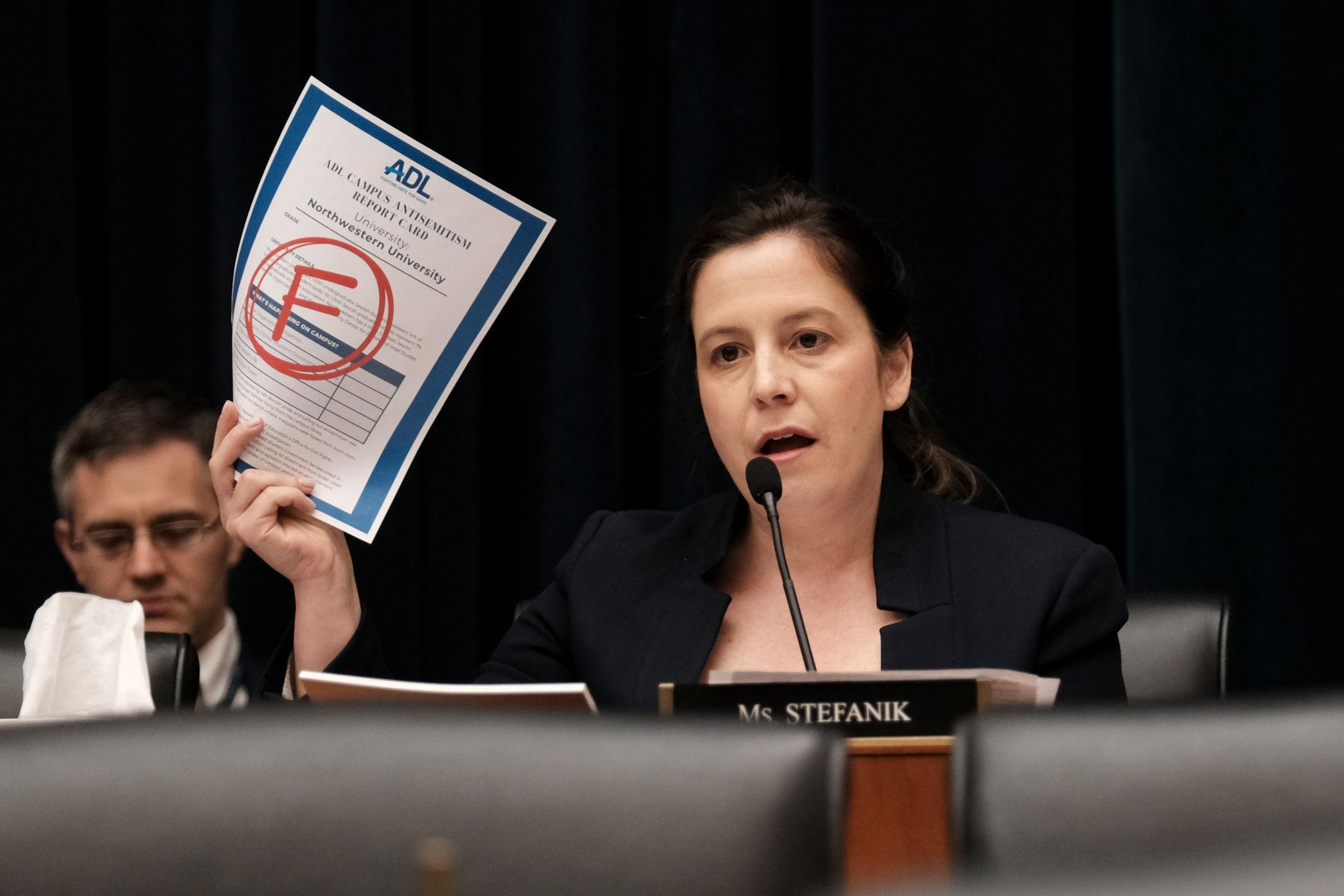
Her feud with Ivy League institutions, including her alma mater, intensified as she began publicly criticizing what she describes as ideological bias and rising extremism on campuses. That conflict reached a national audience during a highly publicized congressional hearing in 2023, where she questioned university leaders on antisemitism and campus conduct.
One exchange became particularly notable:


“Does calling for the genocide of Jews violate your university’s code of conduct?”
The response from university leaders—widely seen as evasive—sparked widespread political fallout, contributing to leadership resignations and placing Stefanik at the center of a national debate on academic accountability.
“Poisoned Ivies”: A Political Statement in Book Form
Stefanik’s 2026 book, “Poisoned Ivies,” serves as both a political manifesto and a retrospective on that defining moment. The book argues that elite universities have drifted away from their foundational mission, becoming, in her view, environments shaped by “radical ideology.”
In public interviews, Stefanik emphasized how dramatically she believes campuses have changed:
“It really was unrecognizable to me… It was not like that when I was there 20 years ago.”
Her argument extends beyond isolated incidents. She frames antisemitism as a broader indicator of institutional decline, describing it as:


“a canary in the coal mine … an attack on Western civilization.”
The book also draws on personal accounts she says flooded her office—“tens of thousands of emails … sometimes in a day” from students and families reporting experiences on campus.
For supporters, the book represents a bold critique of higher education. For critics, it reflects a selective narrative shaped by political positioning. Regardless of perspective, the publication has reinforced Stefanik’s role as a key figure in ongoing culture-war debates.
The Peak—and Plateau—of Political Influence
Stefanik’s rise within the Republican Party was rapid. She became one of the most effective fundraisers in the GOP and a central figure in supporting down-ballot candidates. At one point, she was even nominated by Donald Trump to serve as U.S. ambassador to the United Nations—a nomination later withdrawn due to political considerations.
However, her trajectory shifted again in the lead-up to 2026.
She suspended her campaign for New York governor and announced she would not seek reelection to Congress, citing personal and professional reasons:
“It was the right decision for my family, it was the right decision politically and professionally.”
Her departure leaves a noticeable gap in New York Republican politics, where she had been one of the party’s most visible and effective communicators.
A Power Vacuum in New York Politics
Stefanik’s exit has triggered a competitive race to replace her in New York’s 21st Congressional District. Both Republican and Democratic candidates are positioning themselves ahead of the June primary, with analysts already describing the contest as highly contentious.
Political observers note that her absence creates structural challenges for the GOP:
- Loss of a major fundraising figure
- Reduced statewide visibility
- Lack of a clear successor with comparable influence
As one political dynamic shifts, another emerges—highlighting the fragile balance of leadership within party systems.
Beyond Congress: A Shift Toward Personal and Ideological Priorities
In stepping away from public office, Stefanik has signaled a recalibration of priorities. She has expressed satisfaction with her decision to leave Congress and focus on family life, marking a rare pause in a career defined by rapid ascent.
At the same time, she has remained vocal on major policy issues, including:
- Support for U.S. foreign policy positions in the Middle East
- Alignment with conservative views on religion and public life
- Continued defense of Trump-era political strategies
Her comments on religious leadership and politics illustrate this stance:
“As a Catholic, I don’t want to see the Pope weighing in on domestic U.S. politics…”
This blend of personal retreat and ideological engagement suggests that while she may be stepping back from elected office, she is not exiting the political conversation.
The Broader Implications: Culture, Education, and Political Identity
Stefanik’s story is not just about one politician—it reflects a broader realignment in American politics.
Her focus on higher education highlights a growing divide between political movements and academic institutions. The debate over campus culture, free speech, and ideological influence is likely to persist, with figures like Stefanik continuing to shape its direction.
At the same time, her rise and partial withdrawal underscore the volatility of political careers in an era defined by rapid media cycles, shifting alliances, and public scrutiny.
What Comes Next?
Despite stepping away from Congress, Stefanik remains relatively young and politically relevant. Many observers expect her to return to public life in some capacity, whether through media, advocacy, or future political campaigns.
Her current position—outside elected office but still highly visible—offers flexibility. It allows her to influence discourse without the constraints of legislative responsibility.
Whether “Poisoned Ivies” marks the end of one chapter or the beginning of another remains uncertain. What is clear is that Elise Stefanik has already left a lasting imprint on the intersection of politics, education, and culture in the United States.