

CSK vs KKR IPL 2026: Gaikwad Struggles, Roy Strikes, Mhatre Shines in Powerplay Battle
Introduction: A Match Defined by Contrasts
The Indian Premier League 2026 clash between Chennai Super Kings (CSK) and Kolkata Knight Riders (KKR) at the MA Chidambaram Stadium unfolded as a study in contrasts—struggles at the top, explosive middle-order moments, and decisive bowling interventions.
At the center of the narrative were three key figures: Ruturaj Gaikwad, Anukul Roy, and Ayush Mhatre. Their performances, each telling a different story, shaped the flow and tone of the match.
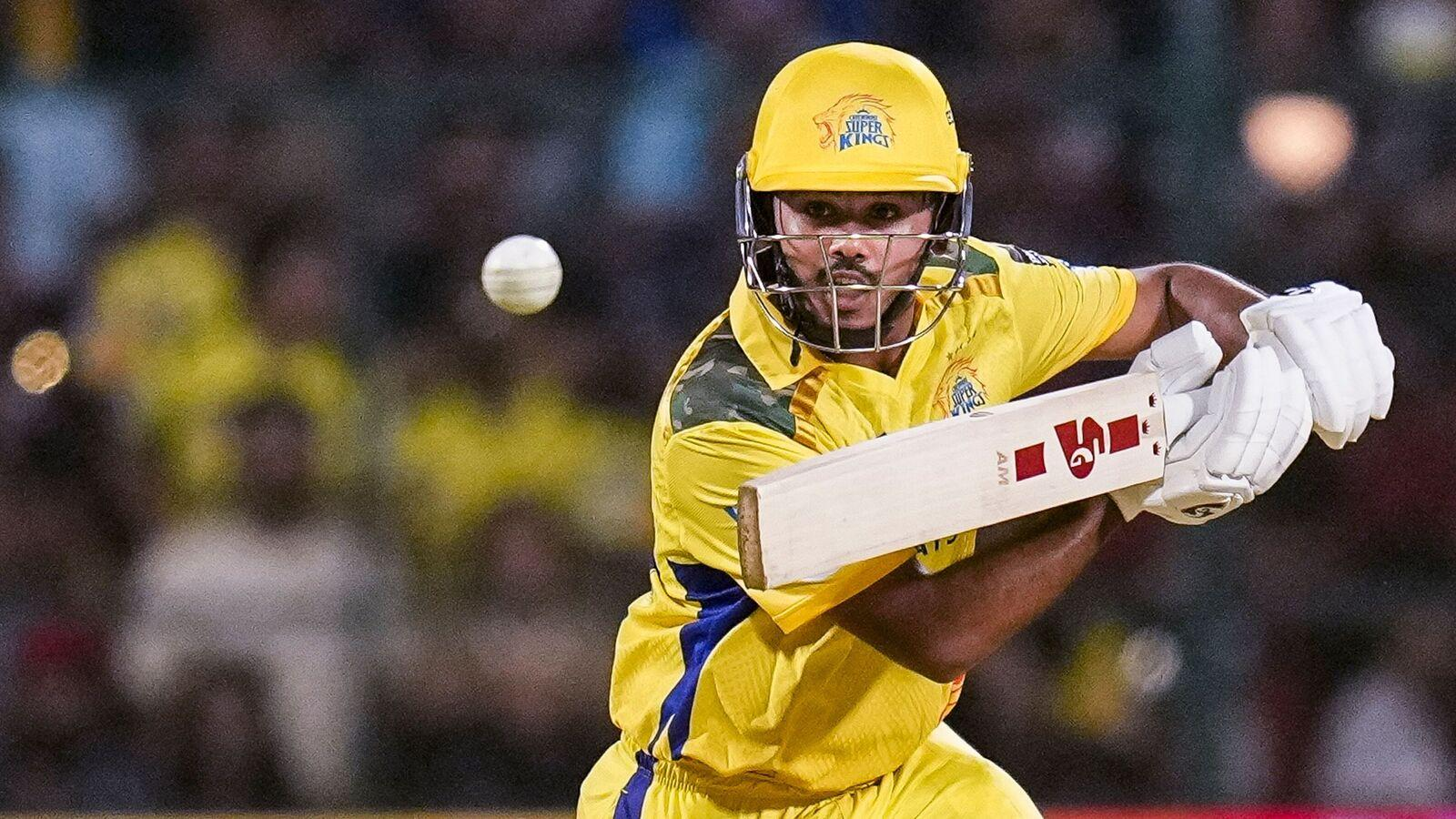
Gaikwad’s Lean Patch Continues
For CSK captain Ruturaj Gaikwad, IPL 2026 has so far been a difficult campaign. His struggles deepened further in this match, where he managed just 7 runs off 6 deliveries before being dismissed by Anukul Roy.
This dismissal was not an isolated failure but part of a concerning pattern. Gaikwad’s scores this season now read:
- 15 vs Delhi Capitals
- 7 vs Royal Challengers Bengaluru
- 28 vs Punjab Kings
- 6 vs Rajasthan Royals
- 7 vs KKR
The consistency lies not in performance, but in inconsistency. As captain and top-order anchor, his early departures have placed repeated pressure on the middle order.
His wicket in this match came when he was caught in the deep by Rovman Powell, after managing just a single boundary alongside three singles—an innings that lacked both fluency and control.
Anukul Roy: Quietly Effective, Decisively Impactful
If Gaikwad’s dismissal symbolized struggle, Anukul Roy’s performance represented control and precision.
The left-arm spinner retained his place in the KKR XI and justified that decision with a crucial breakthrough. His dismissal of Gaikwad not only removed the opposition captain but also disrupted CSK’s early momentum.
Roy’s IPL journey has been steady rather than spectacular. Retained by KKR for INR 40.00 lakh in 2026, his cumulative IPL earnings now stand at approximately 2.20 crore, reflecting his role as a dependable squad player.
In this match, his contribution went beyond numbers. By striking early, he reinforced KKR’s strategy of controlling the powerplay through disciplined bowling rather than sheer pace.
Ayush Mhatre’s Explosive Counterattack
While Gaikwad faltered, Ayush Mhatre provided a sharp contrast with an aggressive innings that briefly shifted momentum in CSK’s favor.
Walking in after the early wicket, Mhatre played with intent:
- 38 runs
- 6 fours and 2 sixes
- High strike rate during the powerplay
His partnership with Sanju Samson propelled CSK to 72 runs in the powerplay, setting a strong platform.
Mhatre’s approach was clear—attack the bowlers early, capitalize on fielding restrictions, and force KKR onto the defensive. For a brief period, it worked effectively.
However, his innings ended on the final ball of the sixth over when he was caught in the deep by Ramandeep Singh off Vaibhav Arora. The timing of his dismissal was critical, halting CSK’s early surge.
Middle-Order Contributions: Momentum Gains and Losses
After the powerplay, CSK’s innings transitioned into a phase of rebuilding mixed with bursts of acceleration.
- Sanju Samson continued his strong form, starting aggressively with three consecutive boundaries and narrowly missing a half-century, falling just two runs short.
- Dewald Brevis added 41 runs off 29 balls, showcasing composure and attacking flair.
- Sarfaraz Khan contributed a steady 23 runs before being dismissed by Sunil Narine.
Despite these contributions, the innings lacked sustained partnerships after the powerplay. Each promising phase was interrupted by timely wickets from KKR’s bowlers.
Tactical Context: Conditions and Decisions
The match conditions at Chepauk added another layer of complexity. The pitch, relaid earlier in the year, has shown variable bounce, making stroke play increasingly challenging as the innings progresses.
KKR’s decision to bowl first aligned with broader IPL trends:
- Teams prefer chasing due to dew factor in night games
- Early control with spin and variations has proven effective
KKR’s bowling strategy—mixing spin with pace-off deliveries—reflected these conditions and contributed to their ability to contain CSK after the powerplay.
Match Flow Snapshot
- CSK strong start: 72 runs in powerplay
- Early breakthrough: Gaikwad dismissed for 7 by Anukul Roy
- Mhatre’s aggressive 38 shifts momentum briefly
- Middle-order contributions keep CSK competitive
- Regular wickets prevent a dominant total
Broader Implications for IPL 2026
For Chennai Super Kings
The immediate concern is the form of their captain. Gaikwad’s repeated low scores raise tactical questions:
- Should he alter his batting approach?
- Does CSK need to reconsider top-order roles?
While players like Samson and Brevis offer stability, consistent starts remain critical in T20 cricket.
For Kolkata Knight Riders
KKR’s focus remains on securing their first win of the season. Performances like Roy’s provide a foundation, but consistency across matches will determine their trajectory.
Conclusion: A Match of Turning Points
This encounter between CSK and KKR was not defined by a single dominant performance but by a series of pivotal moments.
- Anukul Roy’s dismissal of Gaikwad set the tone
- Ayush Mhatre’s aggressive innings injected momentum
- The middle order kept CSK competitive but not dominant
For Gaikwad, the spotlight intensifies as his early-season struggles continue. For Roy and Mhatre, the match reinforced their roles as impactful contributors in high-pressure situations.
As IPL 2026 progresses, such performances—quietly decisive or explosively brief—will continue to shape the narrative of the tournament.


