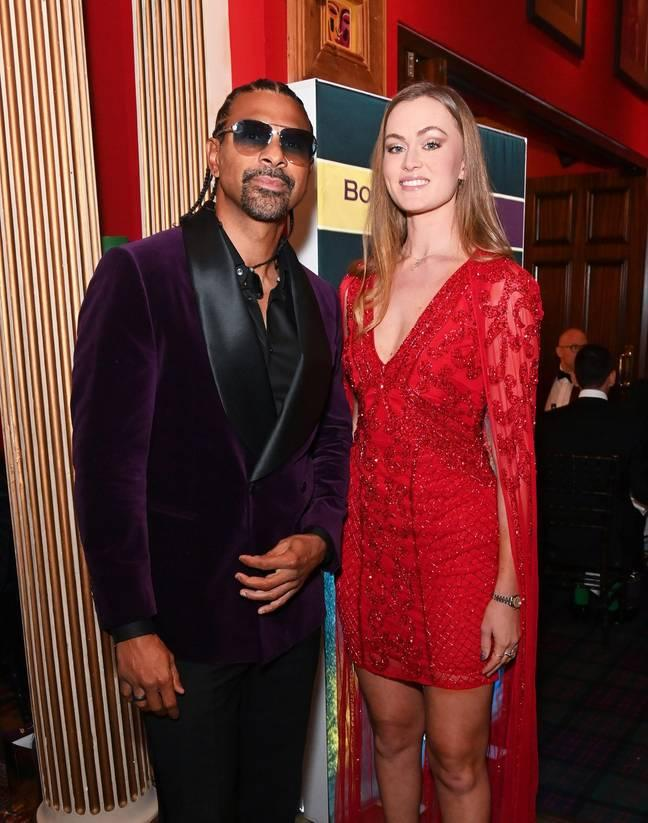
David Haye, Sian Osborne and the Relationship Debate: Fame, Controversy, and Public Scrutiny
A Personal Life Under the Spotlight
Former world heavyweight boxing champion David Haye is once again dominating headlines—but this time, the attention has shifted away from his achievements in the ring and toward his personal life.
- A Personal Life Under the Spotlight
- From Champion Boxer to Cultural Talking Point
- The Relationship with Sian Osborne
- The “Throuple” Narrative and Public Interpretation
- The 2026 Controversy: Comments That Triggered Backlash
- Social Media and Public Reaction
- Beyond One Comment: A Wider Conflict
- Non-Monogamy in the Public Eye
- Public Image vs Private Reality
- Cultural Impact and Ongoing Debate
- Conclusion: A Story That Goes Beyond Celebrity
At the center of the discussion is his relationship with Sian Osborne, a dynamic that has evolved from a relatively private romance into one of the most widely debated celebrity relationships in recent years. The conversation has intensified following his recent appearance on I’m a Celebrity…Get Me Out of Here! South Africa, where comments he made about his partner sparked widespread backlash.
What began as curiosity about his unconventional relationship has now developed into a broader cultural discussion about respect, language, and modern relationship structures.



From Champion Boxer to Cultural Talking Point
Born on October 13, 1980, in London, David Haye built a formidable reputation in professional boxing. At 45, he remains one of Britain’s most recognizable sporting figures, having unified the cruiserweight division before moving up to heavyweight and winning the WBA title.
His career brought financial success, brand partnerships, and long-term visibility. However, in recent years, his public identity has expanded beyond sport. Increasingly, discussions about Haye focus on his personal choices—particularly his relationships and public statements.


The Relationship with Sian Osborne
David Haye and Sian Osborne have been together since around 2020. Initially maintaining a low profile, their relationship gradually became more visible through social media appearances and public outings.
At its core, their partnership appears committed but non-traditional. Reports and public signals suggest the couple have explored consensual non-monogamy—an arrangement where both partners agree to maintain relationships beyond a conventional one-to-one structure.
This aspect of their relationship became widely discussed when they reportedly used exclusive dating platforms to present themselves as a “package deal,” seeking a third partner. The narrative quickly gained traction in media and online communities.
The “Throuple” Narrative and Public Interpretation
The term “throuple” became closely associated with Haye’s personal life, particularly during his links with Una Healy and Helen Flanagan.


Public speculation intensified when the trio were seen together on holiday, and further attention followed a Valentine’s Day message in 2023 where Haye referenced multiple “queens.”
However, the situation has been more complex than the label suggests:
- Una Healy later clarified that her relationship with Haye did not constitute a formal throuple
- Helen Flanagan described emotional involvement but discomfort with a shared relationship structure
These differing perspectives highlight a recurring issue in celebrity culture: simplified labels often fail to reflect the nuances of real relationships.
The 2026 Controversy: Comments That Triggered Backlash
The latest surge in attention came during Haye’s appearance on I’m a Celebrity…Get Me Out of Here! South Africa in April 2026.
During a conversation with fellow contestants, Haye discussed his girlfriend and made remarks that quickly drew criticism. While initially praising Osborne, he stated:
“She’s got the personality of a proper ugly bird.”
When challenged, he expanded on his reasoning, introducing what he described as “Ugly Duckling Syndrome,” arguing that women perceived as less attractive earlier in life often develop stronger personalities.
He added:
“Most ugly girls realise they’ve gotta have a personality… so people overlook the fact that they’re not aesthetically amazing straight away.”
The reaction was immediate:
- Scarlett Moffatt responded: “You can’t say that, David!”
- Ashley Roberts expressed visible disbelief
- Fellow campmates reacted with discomfort and criticism
The remarks were later discussed publicly, including on Good Morning Britain, where Susanna Reid dismissed the comments as not standing up to scrutiny.
Social Media and Public Reaction
Once clips of the exchange circulated online, the backlash intensified significantly. Viewers and social media users criticized the comments as:
- “disgusting”
- “sexist”
- “cringey”
Some users questioned why such views were aired on mainstream television, while others criticized Haye personally, describing his remarks as outdated and offensive.
The controversy also extended beyond a single moment. Critics pointed out that the comments aligned with broader concerns about how women are discussed in public spaces, particularly by high-profile figures.
Beyond One Comment: A Wider Conflict
The issue did not remain isolated. Within the show, tensions were already present between Haye and other contestants, including Beverley Callard.
Callard later suggested that her conflict with Haye reflected deeper concerns about respect and attitude. She described him as overly competitive and dismissive, adding that their disagreement was “not over.”
This context amplified the impact of the girlfriend comments, positioning them as part of a broader pattern rather than a one-off remark.
Non-Monogamy in the Public Eye
Haye’s relationship has also contributed to a wider conversation about modern relationship structures.
Non-monogamous relationships—once largely private—are increasingly visible due to:
- social media transparency
- evolving cultural attitudes
- public figures discussing alternative lifestyles
However, the effectiveness of such relationships often depends on key factors:
- clear communication
- mutual consent
- respect between partners
Critics argue that while Haye has been open about non-traditional dynamics, his public comments risk undermining the principles required to sustain them.
Public Image vs Private Reality
Haye has previously suggested that his private life should remain private, once stating:
“What I do behind closed doors is between me and the girls involved.”
Yet reality television and social media exposure complicate that boundary. Public appearances turn private conversations into widely shared content, often reshaped by audience interpretation.
In this case, the gap between intention and perception has become central to the controversy.
Cultural Impact and Ongoing Debate
The “David Haye girlfriend” discussion now extends beyond celebrity gossip. It intersects with broader societal issues, including:
- gender representation
- acceptable public language
- evolving expectations of public figures
For some observers, Haye represents openness and unconventional living. For others, the controversy highlights inconsistency between values and behavior.
The situation illustrates how quickly personal narratives can become cultural debates—particularly when amplified by television and digital platforms.
Conclusion: A Story That Goes Beyond Celebrity
David Haye’s story is no longer confined to boxing or even entertainment. It reflects a convergence of celebrity culture, modern relationships, and shifting social expectations.
At its core, the debate centers on a simple but critical principle: regardless of relationship structure, respect and communication remain essential.
As public scrutiny continues, the focus is likely to remain on how high-profile figures navigate personal expression in an era where every word can shape broader conversations.