

Peter Magyar Results: A Political Earthquake Reshaping Hungary
A Landslide That Redefined Power
The 2026 Hungarian parliamentary election delivered one of the most decisive political results in modern European history. Péter Magyar, once a little-known insider within the ruling establishment, led his Tisza party to a sweeping victory that ended Viktor Orbán’s 16-year grip on power.
With more than 98% of votes counted, the results were unmistakable: a landslide that not only shifted leadership but also signaled a broader transformation in Hungary’s political direction.
Magyar’s message to supporters captured the moment’s magnitude:
“We did it… Together we overthrew the Hungarian regime.”
The Numbers Behind the Victory
The scale of the result is central to understanding its significance.
- Tisza Party (Magyar): ~138 seats
- Fidesz (Orbán): ~55 seats
- Our Homeland (far-right): ~6 seats
- Total Parliament Seats: 199
These figures give Tisza a two-thirds constitutional majority, surpassing the critical threshold of 133 seats required to enact major structural reforms.
Earlier projections during vote counting consistently pointed in the same direction:
- Around 53% of votes counted: Tisza already leading with ~136 seats
- Near-final count: dominance confirmed across most constituencies
This was not a narrow win—it was a systemic shift.
Record Turnout and Public Mandate
One of the defining features of the election was participation.
- Turnout reached approximately 79.5%, a historic high in democratic Hungary
Magyar emphasized the legitimacy of his mandate, stating:
“Never before in the history of democratic Hungary have so many people voted.”
The high turnout reflects a population mobilized not just for change, but for decisive change.
Orbán’s Concession: A Clear and Painful Defeat
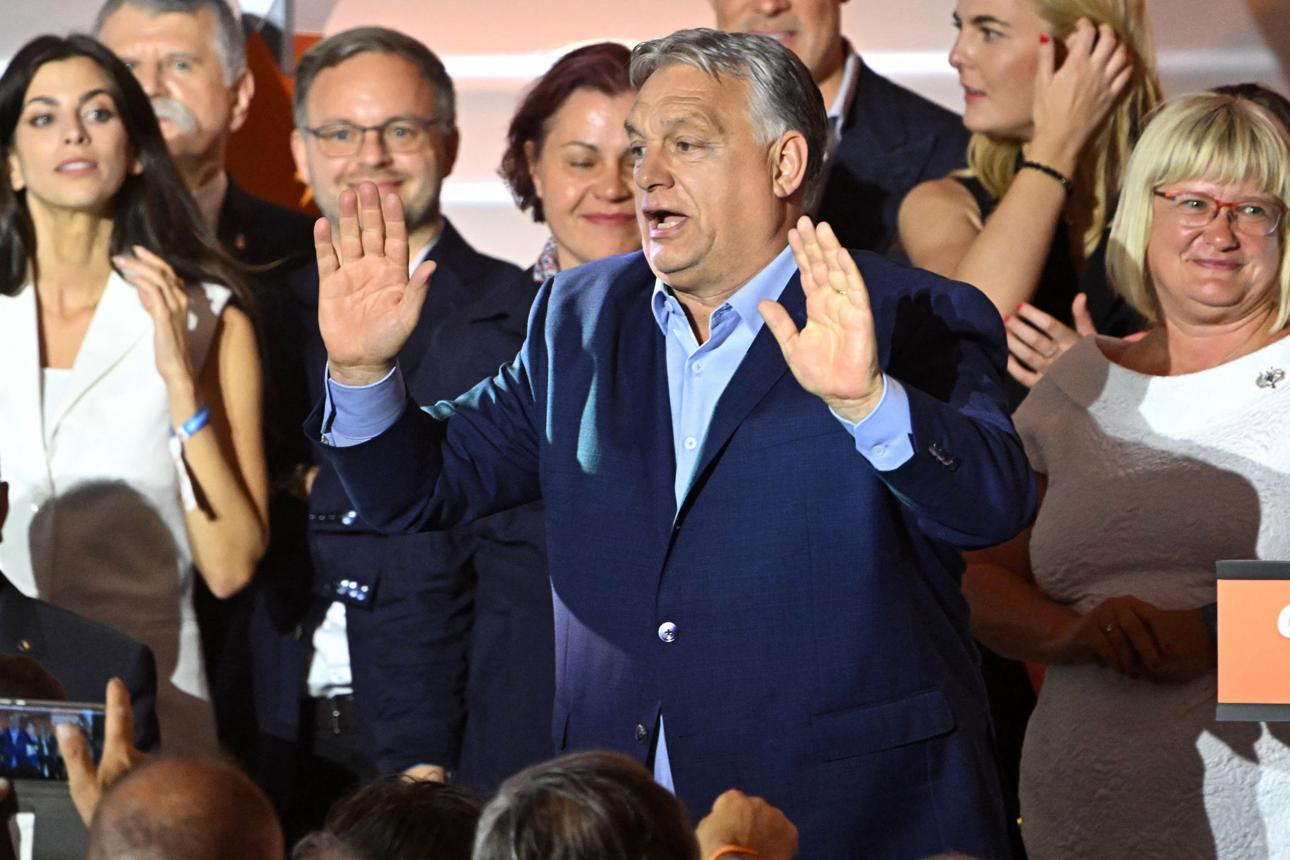
Despite speculation about how the long-serving leader might react, Orbán conceded quickly.
He acknowledged:
“The result of the election is clear and painful.”
In a separate address, he added:
“We will serve our country and the Hungarian nation from the opposition.”
Orbán also thanked roughly 2.5 million supporters, signaling that while defeated, his political base remains intact.
The concession marked a peaceful transfer of power—an important institutional outcome in itself.
How Magyar Achieved the Breakthrough
Magyar’s rise is unusual in European politics. Once aligned with Fidesz, he broke away and built a movement in just two years.
Key factors behind his success:
1. Anti-Corruption Narrative
Magyar capitalized on growing frustration with what he described as systemic corruption and patronage networks.
2. Grassroots Campaigning
He conducted an intensive campaign:
- Touring towns and villages
- Delivering up to seven speeches a day
3. Broad Coalition Appeal
His movement attracted:
- Former government supporters
- Young voters seeking change
- Pro-European constituencies
4. Strategic Political Positioning
He framed the election as a fundamental choice:
- “East or West” alignment for Hungary
This narrative proved decisive in mobilizing voters.
Immediate Political Implications
Constitutional Power Shift
With a two-thirds majority, Magyar’s government can:
- Reverse Orbán-era constitutional reforms
- Restructure institutions such as the judiciary
- Dismantle entrenched patronage systems
Policy Reset
Magyar has pledged to:
- Reform healthcare and education
- Restore judicial independence
- Tackle corruption
- Rebalance media influence
International Repercussions
The election result has implications far beyond Hungary.
European Union Relations
Magyar’s platform emphasizes closer ties with the EU:
- Plans to unlock up to €17bn in frozen EU funds
- Commitment to reintegrate Hungary into European policy frameworks
Ukraine and Russia
The shift is particularly significant geopolitically:
- Orbán had maintained close ties with Vladimir Putin
- Magyar advocates distancing Hungary from Russia
- Ukraine welcomed the result as a “turning point”
Western Alliances
European leaders responded quickly:
- Widespread congratulations from EU figures
- Emphasis on democratic renewal and unity
Public Reaction: Celebration and Relief
The results triggered widespread celebrations across Budapest:
- Tens of thousands gathered in the streets
- Chants such as “It’s over!” echoed in metro stations
- Flags, music, and spontaneous gatherings marked the night
The atmosphere reflected not just a victory, but a sense of political release after years of entrenched governance.
A Turning Point for Hungarian Democracy
Magyar framed the result in historical terms:
- Compared it to the 1848 revolution
- Drew parallels with the 1956 uprising
These references underline the symbolic weight of the election—positioning it as a moment of national renewal.
What Comes Next?
While the results are decisive, the transition presents challenges:
Institutional Reform
Rebuilding institutions after years of centralized control will require:
- Legal restructuring
- Administrative overhaul
- Political consensus-building
Economic and Social Expectations
Voters expect rapid improvements in:
- Public services
- Transparency
- Economic stability
Political Stability
Despite defeat, Fidesz remains a significant opposition force, ensuring continued political competition.
Conclusion: More Than an Election Result
The “Peter Magyar results” are not merely a numerical outcome—they represent a structural reset in Hungarian politics.
A new leader has emerged with:
- A strong democratic mandate
- Constitutional authority
- International backing
At the same time, the result reflects a broader trend: voters rejecting long-standing political systems in favor of accountability and reform.
Whether Magyar can translate electoral success into sustained governance will define Hungary’s next chapter. But one fact is already clear—the 2026 election has permanently altered the country’s political landscape.


