
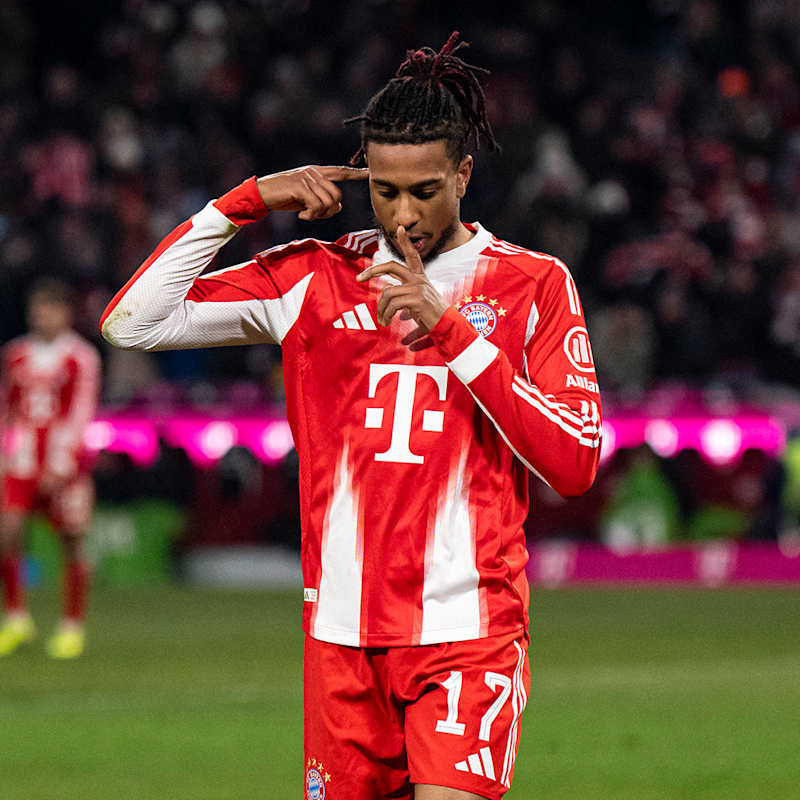
Michael Olise: Between Viral Moments and World-Class Status
In modern football, performance is no longer judged solely by what happens during the 90 minutes. Narrative, perception, and digital amplification now play equally powerful roles. Few players illustrate this dynamic more clearly than Michael Olise, whose recent Champions League appearance at the Santiago Bernabéu became both a sporting milestone and an unexpected cultural flashpoint.
From a viral pre-match routine to record-breaking performances, Olise’s trajectory reflects the evolving nature of elite football—where talent, identity, and visibility intersect in complex ways.
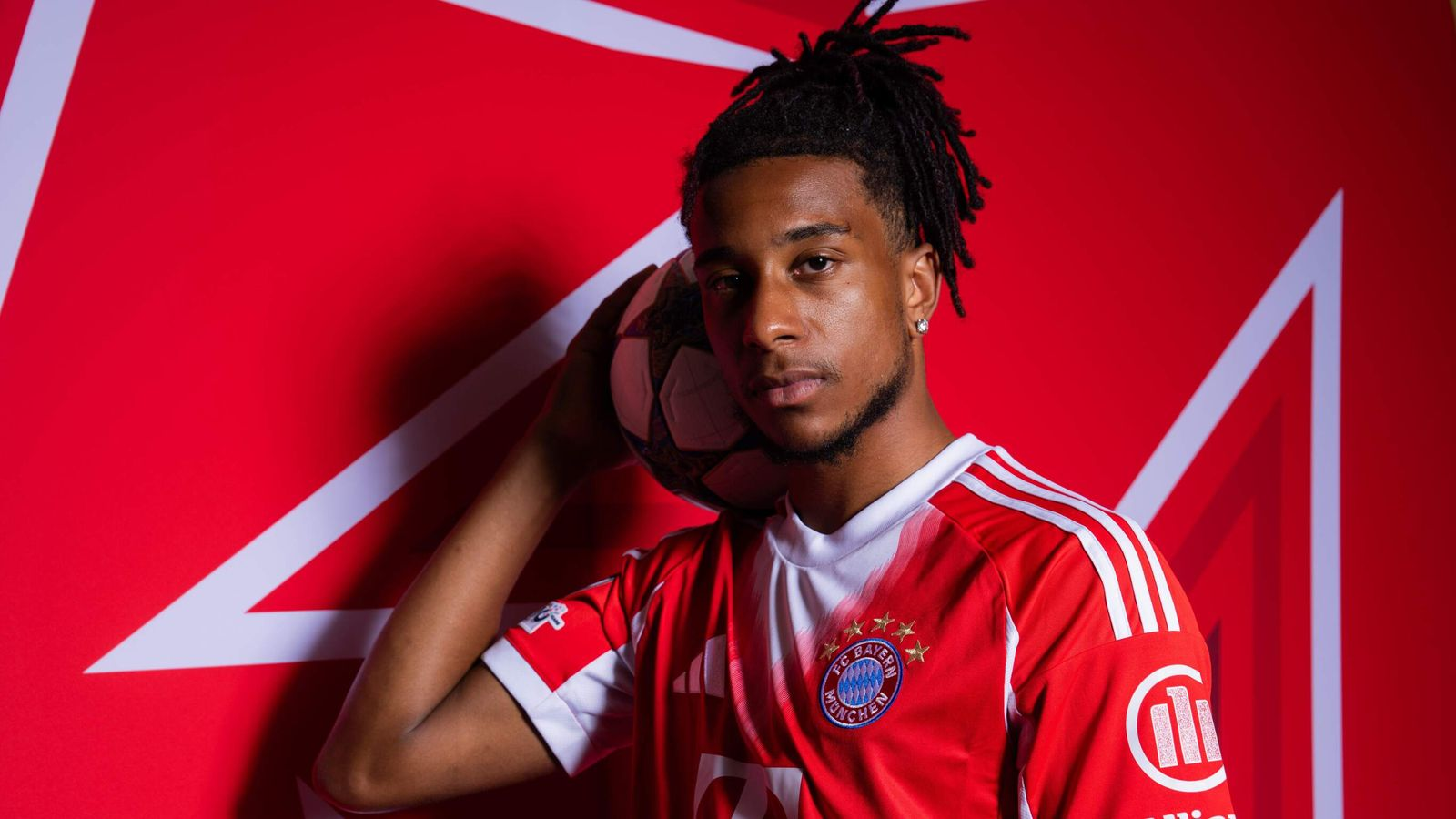
A Bernabéu Moment That Escaped Context
Ahead of Bayern Munich’s high-stakes clash with Real Madrid, Olise carried out what has been described as a familiar pre-match routine. The moment, filmed on the pitch, showed the winger performing a sequence that many likened to a Michael Jackson-style moonwalk.
On its own, the act was unremarkable—a personal ritual repeated across multiple stadiums. However, context transformed perception.
At the Bernabéu, one of football’s most symbolic arenas, the clip quickly gained traction online. Social media accounts reframed the routine as a gesture of disrespect toward the home side, and the narrative escalated rapidly. Within hours, what began as a routine pre-match habit became a debated controversy.
The mechanism is familiar: a short clip, stripped of context, amplified through emotionally charged interpretations. In this case, the setting amplified the stakes.
Separating Fact from Viral Fiction
Despite the intensity of the reaction, there is no verified evidence that UEFA or Real Madrid initiated any formal complaint or disciplinary process.
The distinction matters.
The video is authentic. The backlash is real. But the claim that formal action was being prepared lacks confirmation from official channels. This gap between verified information and viral narrative underscores a recurring issue in modern sports discourse—where speculation can quickly assume the appearance of fact.
In analytical terms, the incident is best classified as a media-amplified controversy, not a regulatory dispute.
Performance Under Pressure: Delivering on the Biggest Stage
While the pre-match episode dominated conversation, the actual match reinforced Olise’s growing influence at the elite level.
Bayern Munich secured a 2–1 victory over Real Madrid in the Champions League quarter-final first leg. Within that context, Olise delivered a historically significant contribution.
According to statistical reporting, he became the first French player in the 21st century to register 25 assists in a single season for a club competing in one of Europe’s top five leagues—surpassing the previous benchmark set by Franck Ribéry.
This achievement positions him not merely as a promising talent, but as a statistically dominant creator within elite European football.
From London Roots to European Spotlight
Olise’s rise is rooted in a multicultural background that has shaped both his identity and his career decisions.
Born in Hammersmith, London, on December 12, 2001, he grew up in Hayes within a family defined by diverse cultural influences. His father, of Nigerian heritage, and his French-Algerian mother created an environment where multiple identities coexisted. This background afforded him eligibility to represent England, France, Nigeria, or Algeria.
His eventual decision to represent France was deeply personal:
“My mother is from France. I came here when I was a child. I was connected to this,”
This statement reflects not strategic calculation, but cultural alignment—a recurring theme in his career narrative.
Development Through Setbacks and Structure
Olise’s pathway to elite football was not linear.
After joining the Chelsea academy at a young age, he spent seven formative years there before being released at 14—a moment that often defines whether a player progresses or fades.
Guided by his father’s emphasis on resilience and discipline, Olise transitioned to Reading, where his development regained momentum. This phase established the technical and psychological foundation that would later define his playing style.
His progression through Crystal Palace further refined his abilities, particularly in high-pressure Premier League environments.
The Bayern Transition: From Potential to Production
In July 2024, Bayern Munich invested approximately €60 million to secure Olise—a move initially questioned due to his injury record in England.
Two seasons later, that skepticism has largely dissipated.
Under the management of Vincent Kompany, Olise has evolved into a central figure within Bayern’s attacking structure. His development has been attributed not only to technical ability but also to professionalism:
“Michael had his fair share of injuries at Crystal Palace, but what he does off the field for the good of his health at his young age is incredible,”
Kompany’s observation highlights a critical factor in elite performance: sustainability. Olise’s ability to maintain fitness has unlocked consistency—transforming potential into measurable output.
Recognition Across the Game
The broader football ecosystem has taken notice.
Thierry Henry identified his potential early:
“He’s got incredible qualities, and you ain’t seen nothing yet, it’s only the start,”
More recently, Sami Khedira offered a more definitive assessment:
“Olise is probably the best winger in the world at the moment. He offers an overall package that is top class.”
While such claims are inherently subjective, they reflect a consensus that Olise has entered the upper tier of attacking players globally.
Transfer Interest and Strategic Resistance
With rising performance inevitably comes transfer speculation.
Liverpool have been linked with Olise as a potential successor to Mohamed Salah. However, Bayern’s leadership has firmly rejected the notion of a sale.
Honorary president Uli Hoeness stated:
“Liverpool spent €500 million last year and are having a very poor season. We won’t contribute to them playing better next year,”
He added:
“We play this game for our fans. We have 430,000 members, we have millions of supporters worldwide, and it doesn’t help them much if we have €200m in the bank but play worse football every Saturday because of it.”
This stance reflects a broader strategic principle: prioritizing sporting dominance over short-term financial gain.
The Broader Implication: Football in the Age of Visibility
Olise’s recent experiences highlight a structural shift in football.
Performance remains the foundation, but narrative now operates in parallel. A pre-match routine can become a global talking point. A statistical milestone can redefine a player’s standing overnight. Transfer rumors can shape perception before negotiations even begin.
In this environment, players are not just athletes—they are subjects within a continuous media ecosystem.
Olise’s ability to navigate this landscape—balancing performance with composure—may prove as critical as his technical skillset.
Conclusion: A Career at a Critical Inflection Point
Michael Olise stands at a pivotal stage in his career.
At 24, he combines elite production with growing influence in high-pressure environments. His record-breaking assist numbers, decisive contributions in major matches, and recognition from leading figures position him firmly among Europe’s top attackers.
At the same time, his recent viral moment at the Bernabéu illustrates the challenges of modern football visibility—where perception can shift rapidly and narratives can outpace facts.
If current trends continue, Olise is not merely approaching the elite tier—he is already operating within it.


