
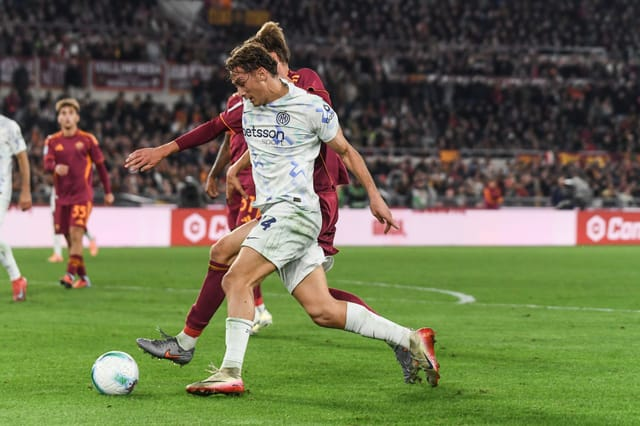
Inter vs Roma: A Game of Two Halves That Defined a Night at San Siro
The clash between Inter Milan and AS Roma on Matchday 31 of the Serie A delivered exactly what high-stakes Italian football promises—intensity, tactical nuance, and moments that reshape narratives. Played at the iconic San Siro, the match ended in a commanding 5–2 victory for Inter, but the scoreline alone does not fully capture the dynamics of a contest that shifted dramatically across two halves.
This was not merely a routine league fixture. It was a statement performance from Inter and a sobering test of resilience for Roma, whose ambitions in the Champions League race now face increasing pressure.
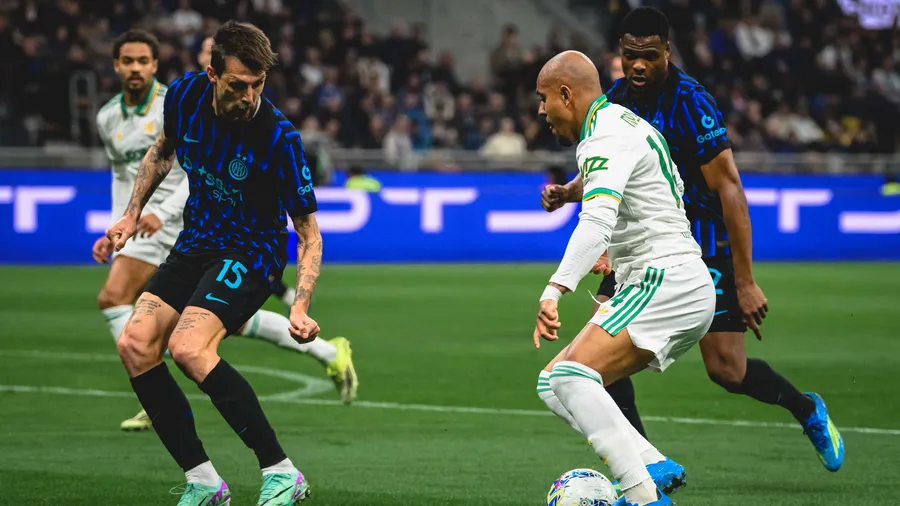
Early Shock and a Competitive First Half
Roma’s evening began on unstable footing. As highlighted by their coach Gian Piero Gasperini, the team “conceded after just a few seconds,” a moment that immediately tilted momentum toward Inter.
Yet, despite the early setback, Roma demonstrated composure and tactical discipline throughout much of the first half. Gasperini himself acknowledged:
“The first half was certainly very good, and going into the break behind was a real blow to our morale.”
Roma managed to stay competitive, showing structure in midfield and attacking intent through players like Pellegrini and Soulé. However, conceding again in the 47th minute—right at the start of the second half—proved psychologically damaging.
This pattern reflects a recurring issue: Roma’s difficulty in maintaining defensive concentration during key transitional moments.
The Turning Point: Inter’s Third Goal
If there was a single defining moment, it was Inter’s third goal. Gasperini was direct in his assessment:
“From the third goal onwards, it was a struggle.”
At 3–1, the match effectively slipped beyond Roma’s control. Inter capitalized on this shift with ruthless efficiency, exploiting defensive gaps and controlling possession with authority.
Inter’s structure under coach Cristian Chivu proved decisive. Their 3-5-2 formation allowed fluid transitions between defense and attack, with midfielders orchestrating tempo and wing-backs stretching Roma’s defensive line.
The attacking partnership of Lautaro Martínez and Marcus Thuram led the line effectively, converting pressure into goals and maintaining constant threat.
Roma’s Collapse: Tactical and Mental Breakdown
While the final scoreline reads 5–2, the deeper issue for Roma lies in the nature of their second-half collapse.
Gasperini described it as:
“A game with two very different halves—Roma was very much in it in the first half… Then the final result makes everything look different; the game was effectively over after 3–1.”
Several contributing factors emerged:
1. Defensive Fragility
Roma’s vulnerability without key players was evident. Gasperini emphasized the absence of Mancini:
“Without a doubt, Mancini is important for us.”
The lack of defensive cohesion allowed Inter to exploit space repeatedly.
2. Squad Depth Challenges
Roma were missing multiple players, including Wesley and Koné. These absences reduced tactical flexibility and defensive stability.
3. Psychological Drop
Perhaps most critically, morale deteriorated rapidly after conceding the third goal. The team’s structure loosened, and Inter took full advantage.
Inter’s Clinical Efficiency
While Roma’s struggles are part of the narrative, Inter’s performance deserves equal recognition. This was a display of control, precision, and depth.
Key aspects of Inter’s dominance included:
- Efficient finishing: Converting chances with minimal waste
- Midfield control: Dictating tempo through Barella and Çalhanoğlu
- Defensive structure: Maintaining shape even under Roma’s early pressure
- Squad depth: Strong options from the bench ensured sustained intensity
Inter demonstrated why they remain one of the most formidable sides in Italian football. Their ability to accelerate the game after gaining a lead is a hallmark of elite teams.
The Bigger Picture: Champions League Implications
Beyond the match itself, the result carries significant implications for the Serie A standings and the race for European qualification.
Gasperini addressed this directly:
“It is difficult for us, for Como, for Juve and Atalanta—for everyone. There are still seven games left.”
Roma’s defeat complicates their pursuit of a Champions League spot. With limited matches remaining, every dropped point increases pressure.
However, the coach remains cautiously optimistic:
“We are behind, but we will do everything we can to make up the ground.”
Roma now face a critical stretch, including two upcoming home matches that could define their season.
Tactical Snapshot: Official Line-Ups
The match also highlighted contrasting tactical setups:
Inter (3-5-2)
- Sommer
- Akanji, Acerbi, Bastoni
- Dumfries, Barella, Çalhanoğlu, Zieliński, Dimarco
- Thuram, Lautaro
Roma (3-4-2-1)
- Svilar
- Mancini, Ndicka, Hermoso
- Rensch, Cristante, Pisilli, Çelik
- Soulé, Pellegrini
- Malen
Inter’s formation emphasized width and midfield overloads, while Roma’s setup aimed to balance defensive solidity with attacking support. Ultimately, Inter executed their system more effectively.
What Comes Next
For Inter, this victory reinforces their position as a dominant force in Serie A. Performances like this are not just about points—they send a message to title rivals and European competitors alike.
For Roma, the path forward is more complex. The team must:
- Restore defensive organization
- Manage squad injuries effectively
- Maintain mental resilience under pressure
Their season is far from over, but margins are tightening.
Conclusion: A Scoreline That Tells Only Part of the Story
Inter’s 5–2 victory over Roma will be remembered as a decisive result, but the match itself was more nuanced. For 45 minutes, Roma competed with intensity and structure. What followed, however, exposed critical weaknesses—both tactical and psychological.
In elite football, games often hinge on moments rather than minutes. At San Siro, that moment was Inter’s third goal. From there, the outcome was no longer in doubt.
As the Serie A season approaches its final stretch, both teams leave this fixture with clarity—Inter with confidence, and Roma with urgent questions to answer.


