

Dylan Harper: The Rookie Rewriting the Spurs’ Future in Real Time
A Breakout Moment That Changed the Conversation
On April 2, 2026, Dylan Harper delivered a performance that shifted perception—from promising prospect to emerging franchise cornerstone.
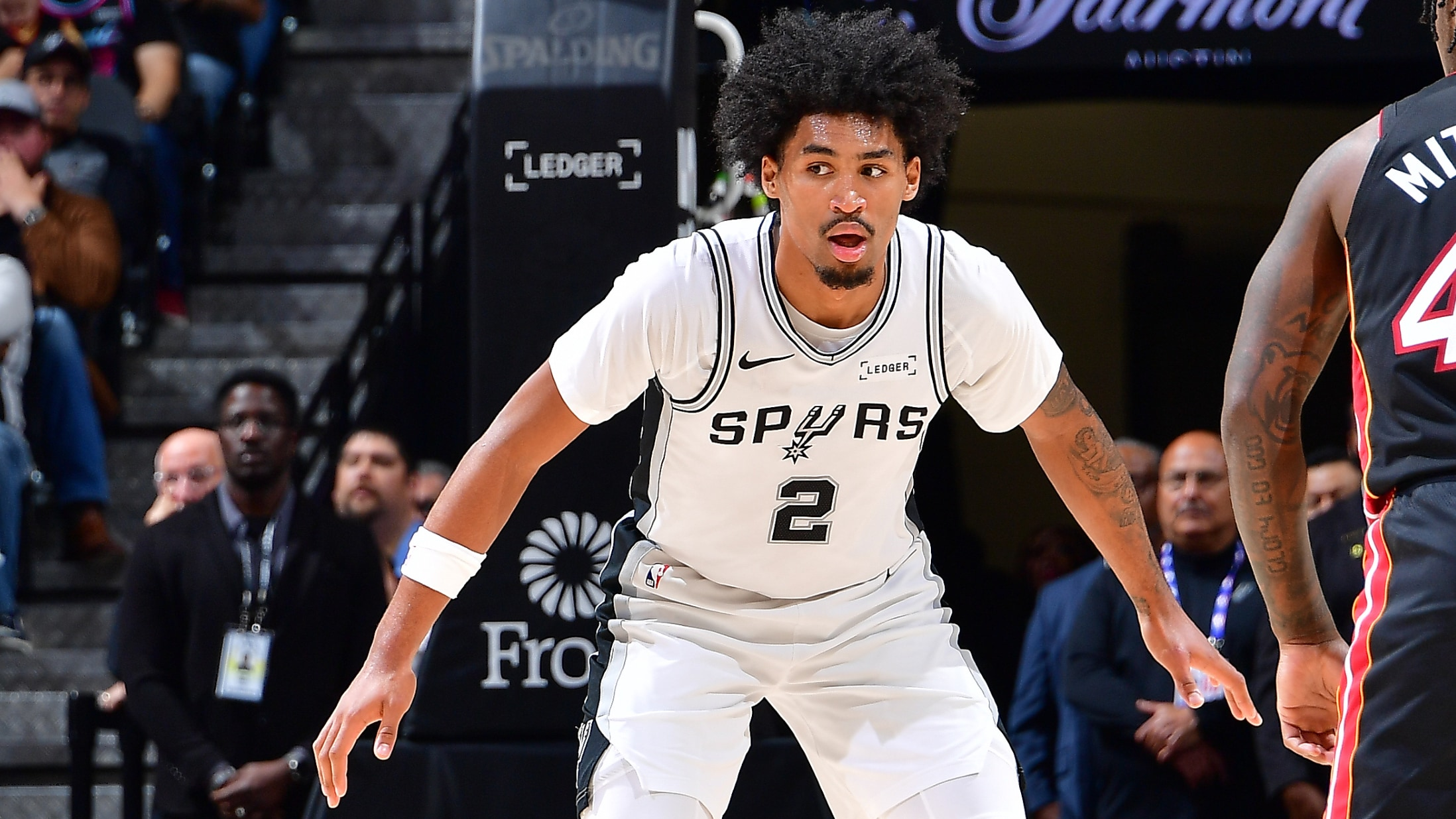
In a game that quickly became one of the most talked-about highlights of the NBA season, Harper launched a half-court shot at the halftime buzzer. The ball dropped cleanly through the net, extending the San Antonio Spurs lead and igniting both the arena and the broader basketball world.
The moment was not just spectacle—it was symbolic.
“This wasn’t luck, that was all skill,” Harper said after the game, pointing directly to his disciplined pregame routine.
That statement encapsulated the broader narrative forming around him: a player whose rapid rise is grounded in preparation rather than hype.
The Game That Defined His Arrival
The Spurs defeated the LA Clippers 118–99, extending their winning streak to 11 games. Harper contributed significantly, finishing with 19 points and delivering the defining play of the night—the halftime buzzer-beater from near midcourt.
The context matters.
- The Spurs were without Victor Wembanyama, their franchise centerpiece.
- Multiple players stepped up, including De’Aaron Fox (22 points) and Stephon Castle (20 points).
- Yet Harper’s shot became the emotional and strategic turning point.
At halftime, the Spurs held a commanding 24-point lead—momentum that the Clippers never fully recovered from.
Even when Kawhi Leonard pushed back with 24 points, the game had already tilted decisively.
From Prospect to Primary Option
Harper’s breakout is not limited to a single highlight.
In a separate performance earlier that same stretch, he recorded a career-high 24 points in his first start, signaling a deeper shift in role and responsibility.
This transition reflects a deliberate strategic pivot by the Spurs:
- Increased minutes and ball-handling duties
- Integration into the starting lineup
- Expanded offensive decision-making authority
This is not a temporary experiment. It is a structural adjustment.
The Spurs are accelerating their rebuild timeline—and Harper is central to that recalibration.
Chemistry with Wembanyama: A Two-Man System in Development
One of the most critical developments is Harper’s growing synergy with Victor Wembanyama.
Their partnership is already showing tactical promise:
- Harper’s pick-and-roll navigation forces defensive shifts
- Wembanyama capitalizes on spacing and interior mismatches
- Opposing defenses are forced into high-risk decisions
The result is a dual-threat system:
- Perimeter creation through Harper
- Interior dominance through Wembanyama
This combination has the structural profile of a modern NBA contender.
Discipline, Routine, and the Mechanics of Elite Performance
Harper’s explanation for his half-court shot offers insight into his development model.
He practices deep-range shooting every pregame session, building muscle memory for extreme-distance attempts.
This is not anecdotal—it is methodological.
His approach reflects:
- Repetition-based skill acquisition
- Situational simulation under controlled conditions
- Psychological conditioning for high-pressure execution
The result is a player capable of performing high-variance actions with low perceived risk.
That distinction separates highlight players from reliable performers.
The Influence of Basketball Lineage
Harper’s composure is not incidental.
He comes from a basketball lineage, as the son of Ron Harper—a multi-time NBA champion.
This background contributes to:
- Early exposure to professional standards
- Understanding of championship-level discipline
- Familiarity with league expectations
It is evident in his decision-making and confidence, particularly in late-clock situations.
The Spurs’ Transformation: From Rebuild to Contender
The broader implication of Harper’s emergence is organizational.
The Spurs have quietly transitioned from rebuilding to competing:
- 11-game winning streak
- 27–2 record since February 1st
- Depth demonstrated even without Wembanyama
This trajectory suggests:
- The roster is ahead of schedule
- The developmental system is functioning effectively
- The core—Harper, Wembanyama, and supporting pieces—is viable
Harper’s integration into the starting lineup is effectively a stress test for long-term contention.
Rookie of the Year Implications
Harper’s recent performances have reinserted him into award discussions.
Key factors:
- Increased usage rate
- Efficiency under pressure
- Signature highlight moments (e.g., half-court buzzer-beater)
Awards are often narrative-driven. Harper now has:
- Statistical production
- Team success
- Memorable defining moments
That combination is typically decisive in end-of-season voting.
Cultural Impact: Why Harper Is Trending Now
The virality of Harper’s half-court shot is not incidental.
It aligns with several broader trends:
- Increased appetite for highlight-driven content
- Social media amplification of high-difficulty plays
- Audience preference for young, rising stars
His performance has positioned him as:
- A highlight generator
- A narrative focal point
- A symbol of the Spurs’ resurgence
This visibility accelerates both personal brand growth and league-wide recognition.
What Comes Next: Projection and Risk Factors
Harper’s trajectory is upward, but several variables remain:
Positive Indicators
- Expanding role within a winning system
- Proven ability to perform in high-pressure situations
- Strong developmental infrastructure
Potential Constraints
- Defensive adjustments by opponents
- Sustainability of shooting efficiency
- Integration with a fully healthy roster
The key question is not whether Harper can produce—but whether he can maintain consistency as defensive attention increases.
Conclusion: A Franchise Timeline Rewritten
Dylan Harper’s emergence is not incremental—it is disruptive.
In a matter of games, he has:
- Delivered defining highlight moments
- Earned a starting role
- Influenced team strategy
- Reframed expectations for the Spurs’ timeline
The half-court buzzer-beater will remain the viral moment.
But the underlying story is more significant:
A 20-year-old guard is accelerating a franchise’s transition from rebuilding to contention.
That shift rarely happens this quickly—and almost never this visibly.


