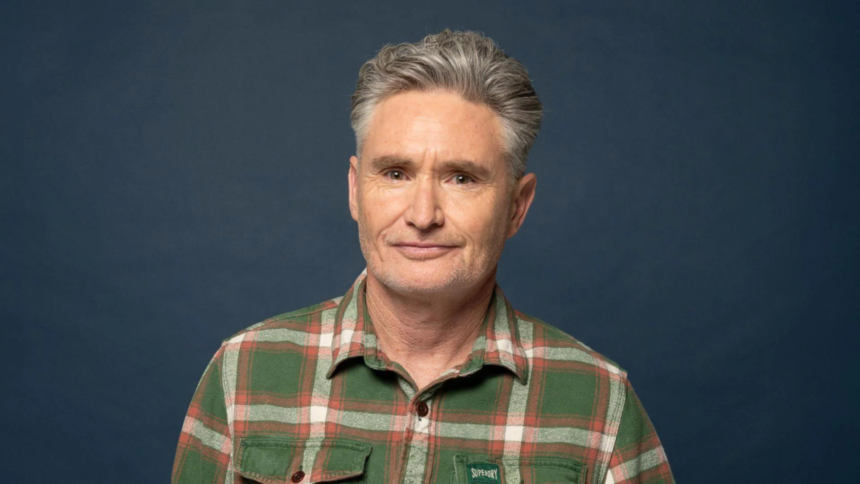
Dave Hughes: The Comedian Who Chose Laughter Over Everything
For nearly three decades, Dave Hughes has been one of Australia’s most recognizable comedic voices — a blunt, self-deprecating performer whose rough-edged humor and unmistakable accent turned him into a household name across television, radio, and stand-up comedy.
But behind the jokes and chaotic on-stage persona is a man who has spent much of his life wrestling with addiction, ambition, family expectations, and the relentless need to make people laugh.
At 55, Hughes is opening up more candidly than ever about the decisions that shaped his life: quitting alcohol at just 21, navigating a difficult relationship with work, and realizing too late that family mattered more than professional validation. Yet even after decades in the spotlight, one thing remains unchanged — his belief that comedy is worth more than wealth, status, or comfort.
“Hand on heart, give me $10 billion — I would say ‘no’ if I had to stop comedy,” Hughes said recently. “The joy of creating laughter is everything to me.”

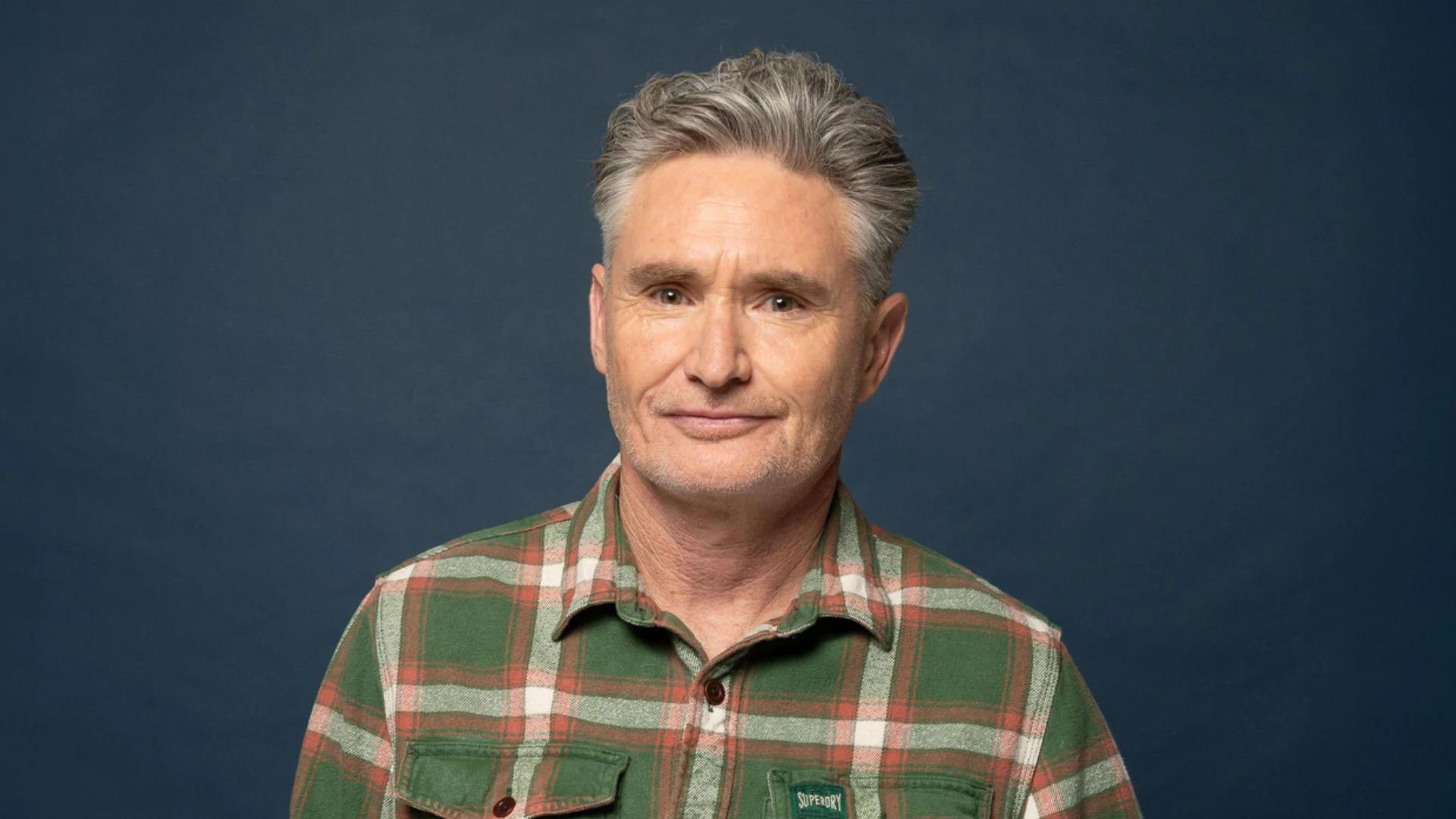
A Childhood Marked by Alcohol and Anxiety
Long before he became “Hughesy,” Dave Hughes grew up in Warrnambool, Victoria, in a household shaped by alcohol. His father drank heavily, something Hughes now says had a profound impact on him as a child.


“I came from a long line of drinkers,” he explained. “I grew up with my dad drinking too much, which can be really stressful for kids.”
As a teenager and young adult, Hughes found himself repeating the same patterns he had witnessed growing up. He drank excessively, blacked out regularly, and often lost control.
“I always got too drunk. I’d sometimes wake up in a police cell,” he recalled. “I wasn’t violent — I’m not a violent person — but I would be locked up for my own safety.”
According to accounts of his early life, Hughes was battling anxiety and depression while using alcohol and drugs as a form of escape. By his early twenties, he realized he was heading toward the same destructive cycle that had affected his father.


That realization became the turning point.
The Decision That Changed His Life Forever
In November 1992, before turning 22, Hughes made a decision that would define the rest of his life.
“I said, ‘I’m not going to drink anymore,’ and I just made a decision,” he explained.
Unlike many public stories about addiction recovery, Hughes did not describe a dramatic intervention or rehabilitation program. Instead, he said the change came from fully accepting the consequences of alcohol.
“If you realise alcohol is terrible for you and you fully accept it, then you go, ‘I accept it’ and it’s just gone.”
More than three decades later, Hughes remains sober — an extraordinary achievement given the nightlife culture surrounding comedy clubs, radio entertainment, and television production.
Ironically, despite his healthy lifestyle, Hughes jokes that people still assume he is hungover.
“Often people go, ‘Oh, you look terrible, you guys had a big night?’ — ‘No, I’ve had nine hours sleep, I’m fine.’”
Today, he embraces veganism and clean living, creating a public image that sharply contrasts with the stereotypical hard-drinking comedian.
Comedy Became the New Obsession
If alcohol disappeared from Hughes’s life, comedy quickly filled the vacuum.
After quitting drinking, he moved to Perth and pursued stand-up comedy seriously. Early performances were reportedly disastrous, but Hughes persisted, refining the awkward, brutally honest style that would eventually define his career.
His breakthrough came in the late 1990s, particularly after appearances at the Melbourne International Comedy Festival and television comedy specials. By the early 2000s, Hughes had become one of Australia’s most in-demand entertainers.
His long-running radio partnership with Kate Langbroek became hugely successful, dominating breakfast radio ratings for years. Later, he expanded into television, joining Channel Ten’s The Project while continuing his radio commitments simultaneously.
But success came at a personal cost.
“My Wife Thinks I’m Addicted to Work”
While Hughes conquered alcohol addiction, he now admits another obsession took its place: work.
“The father of three told Australian Story last year that he was ‘definitely addicted’ to work and comedy.”
During the height of his television and radio career, Hughes’s schedule was relentless. He hosted breakfast radio in the mornings and appeared nightly on The Project. At the same time, he and his wife Holly Ife were raising three children — Sadie, Rafferty, and Tess.
“I was gone both ends of the day, and we had three kids in that time, so I wasn’t there that much,” Hughes admitted. “I should have been there more, but I was too worried about my own ego.”
His reflections reveal a surprisingly vulnerable side to a comedian often associated with punchlines and public antics. Hughes has openly acknowledged his deep desire for approval and recognition.
“I’ve spent a lot of time … concerned about being a hero or wanting to be known or wanting to be adored by everyone or as many people as possible.”
That honesty has resonated with audiences who see in Hughes a broader modern struggle: balancing ambition, identity, and family life in a culture that often rewards overwork.
Learning to Understand His Father
One of the most emotional aspects of Hughes’s recent reflections has been his changing perspective on his father.
For years, he struggled with resentment about growing up around heavy drinking. But age and parenthood have softened his outlook.
“We had some tough times, but in hindsight, he wanted the best for me,” Hughes said. “He had a lot of wisdom, there’s no doubt.”
His father once told him that “family is the most important thing” — advice Hughes ignored during the busiest years of his career.
“It took me a long time to realise that he was right,” he admitted.
Now, Hughes says he is especially focused on maintaining a healthy relationship with his teenage son Rafferty.
“A lot of people have troubles with their dads — a lot of blokes — and I get it, so I’m trying not to do that with my own son.”
Hughesy the Political Commentator?
While Hughes remains best known as a comedian, recent social media posts have shown a more outspoken political side.
In May 2026, Hughes criticized Australian politicians after spotting several flying business class while he sat in economy during a trip between Sydney and Melbourne.
“I walked past three politicians in business class,” Hughes said in an Instagram video. “They don’t care about wasting money.”
He connected the image to broader frustrations about government spending, taxation, and economic pressures facing ordinary Australians.
“Many hard workers on this flight. Some of ’em on the edge of solvency,” he wrote online.
The comments sparked significant public reaction, with supporters praising Hughes for voicing frustrations they felt politicians were ignoring.
Days earlier, he had also criticized the handling of the NDIS and Australia’s illegal tobacco crisis, accusing governments of allowing criminal networks to profit from public systems.
The shift suggests Hughes is increasingly comfortable using his platform for commentary beyond entertainment — blending comedy with social frustration in a way that resonates with audiences disillusioned by politics.
Why Comedy Still Comes First
Despite the personal revelations and political commentary, one thing remains central to Dave Hughes’s identity: making people laugh.
“That was my first love,” he said. “I loved comedy long before my children were born.”
Unlike celebrities who eventually retreat from public life, Hughes insists he never wants to stop performing.
Even death, he jokes, could become material.
“Because everything that goes wrong in my life is where I get my best material,” he said. “On my dying day, that’s a good day for me to get material.”
It is a statement that captures the paradox at the heart of Hughes’s life: a deeply reflective man who processes pain through humor, and who sees comedy not merely as a profession, but as survival.
The Legacy of Dave Hughes
Dave Hughes’s story is ultimately larger than celebrity culture or Australian comedy.
It is a story about breaking cycles, confronting addiction, navigating ego, and trying — imperfectly — to become a better parent and partner while living in the glare of public life.
His willingness to speak openly about sobriety, mental health, work addiction, and family pressures has given audiences a more layered understanding of the man behind the jokes.
At a time when celebrity interviews are often carefully managed and emotionally distant, Hughes’s blunt honesty feels unusually genuine.
And perhaps that authenticity explains why audiences still connect with him after nearly 30 years in entertainment.
He may be rough around the edges, politically outspoken, and relentlessly self-deprecating, but Hughes remains committed to the same mission that first pulled him toward a microphone decades ago: finding laughter in life’s messiest moments.