Jannik Sinner Stats: The Numbers Behind Tennis’ New Standard
Jannik Sinner is no longer just one of tennis’ brightest young stars. In 2026, the Italian has become the benchmark for modern dominance, combining elite serving, relentless returning, and remarkable consistency into one of the most statistically complete seasons the ATP Tour has seen in decades.
Ahead of the ATP Rome Masters final against Casper Ruud, Sinner entered the match not only as the World No. 1 but also as the central figure in a growing discussion about whether the sport has ever seen a player balance attack and defense this efficiently at the same time.
The raw numbers are extraordinary. The context around them may be even more impressive.
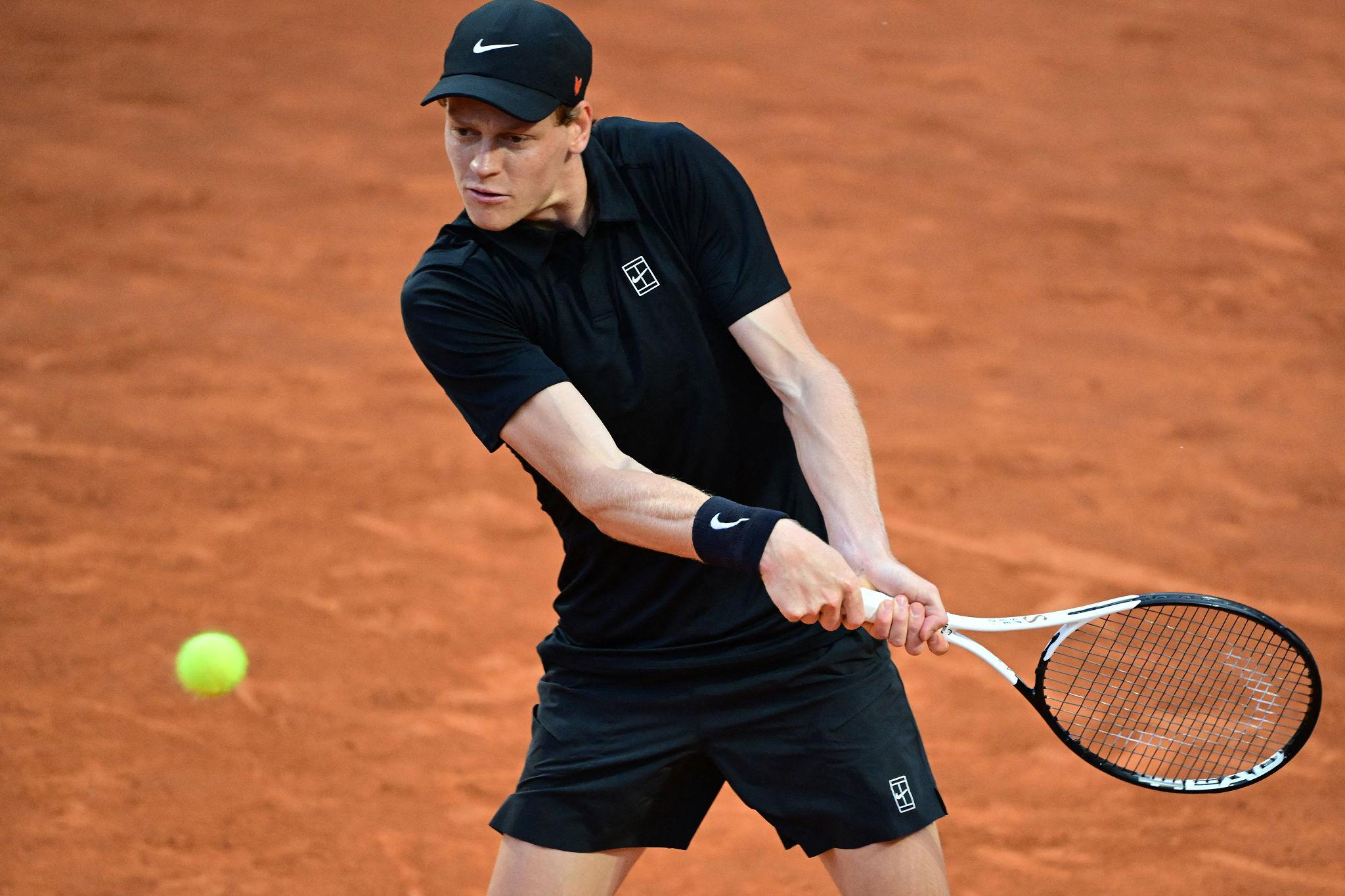


A Rome Final Built on Dominance
At the Internazionali BNL d’Italia in Rome, Sinner arrived in the final after winning five straight matches on clay. Across the tournament, his statistics painted the picture of a player controlling matches with precision rather than chaos.
Sinner landed 59.79% of his first serves while winning 76.61% of points behind them. On second serve, he still captured 64.35% of points, an elite number on clay. He committed only six double faults across the tournament and averaged 4.4 aces per match.


Casper Ruud, one of the ATP Tour’s strongest clay-court specialists, also produced an impressive week. Yet even his numbers slightly trailed Sinner’s. Ruud posted a 61.63% first-serve percentage and won 74.83% of first-serve points, while averaging 2.6 aces per match.
The difference became clearer under pressure.
Sinner converted 15 of 31 break points during the tournament, a conversion rate of 48.39%, while saving 75% of the break points he faced. He conceded just three service breaks all week. Ruud converted break points at a slightly higher 50% rate but saved only 37.5% of break points against him.
That balance between attacking return games and protecting serve has become the defining trait of Sinner’s rise.


The Statistic That Is Changing Tennis
Historically, the ATP Tour’s greatest servers have not also been elite returners.
That is what makes Sinner’s 2026 season statistically unusual.
According to ATP Tour data, Sinner won 95.6% of his service games during a 28-match winning streak that began at Indian Wells. During that stretch, he lost serve just 12 times in 28 matches and won 19 matches without being broken at all.
Those numbers place him alongside some of the greatest servers in tennis history.
Ivo Karlovic’s 95.5% service-games-won rate in 2015 remains one of the highest recorded marks since ATP statistics began tracking the category in 1991. John Isner and Milos Raonic also dominated with serve-heavy seasons built almost entirely around power.
But there is a major distinction.
Those players typically won fewer than 12% of their return games in the same seasons. Sinner, meanwhile, has won 31.9% of his return games in 2026 and 34.1% during his winning streak.
That combination is nearly unprecedented.
Former World No. 4 Brad Gilbert jokingly asked on social media whether Sinner should now be considered a “servebot” because of his serving efficiency. John Isner’s response summarized the difference perfectly:
“Not a bot when you return like that.”
The Evolution of Sinner’s Game
Sinner’s rise has not happened overnight.
The Italian first captured an ATP Masters 1000 title in Toronto in 2023, defeating Alex de Minaur in straight sets. That breakthrough launched a transformation from promising contender into dominant tour leader.
By 2024, he had already collected Masters titles in Miami, Cincinnati, and Shanghai, winning all three finals without dropping a set.
His development accelerated further in 2026.
Sinner swept through Paris, Indian Wells, Miami, Monte-Carlo, Madrid, and Rome, extending a record Masters 1000 winning streak while becoming the first player to win five consecutive Masters 1000 tournaments.
One of the most important changes has been his success on clay.
Earlier in his career, clay was viewed as the surface where rivals like Carlos Alcaraz or Casper Ruud might have the advantage. But Sinner eliminated those doubts in 2026 by winning Monte-Carlo, Madrid, and Rome in the same season.
That achievement placed him alongside Rafael Nadal as the only players to sweep all three clay-court Masters 1000 tournaments in a single year.
Career Golden Masters Achieved
Rome became more than another tournament victory.
By defeating Casper Ruud in the final, Sinner completed the Career Golden Masters, becoming only the second player after Novak Djokovic to win all nine ATP Masters 1000 events.
The accomplishment is one of the rarest in men’s tennis.
Djokovic first completed the set in 2018 and remains the only player to do it twice. Sinner achieved the milestone at age 24, seven years younger than Djokovic did.
The list of Masters 1000 titles now includes:
- Toronto (2023)
- Miami (2024, 2026)
- Cincinnati (2024)
- Shanghai (2024)
- Paris (2025)
- Indian Wells (2026)
- Monte-Carlo (2026)
- Madrid (2026)
- Rome (2026)
Even more remarkably, Sinner has not lost a set in any Masters 1000 final he has won.
Why Analysts Are Paying Attention
Tennis analysts often separate great players into categories.
Some dominate with serve. Others control points through baseline defense and returning. A smaller group excels mentally in pressure moments.
Sinner is now ranking near the top in every major category simultaneously.
The ATP Tour currently lists him among the leaders in serve, return, and pressure metrics. His efficiency on first serve, ability to neutralize opponents’ second serves, and consistency during break points have created a style that leaves opponents with few tactical openings.
The statistics also suggest something broader about the future of tennis.
For years, the sport leaned toward either massive servers or physical baseline grinders. Sinner’s game represents a hybrid model: elite power combined with elite return positioning and movement.
That versatility may define the next generation of ATP champions.
The Ruud Matchup and Tactical Edge
Casper Ruud remains one of the tour’s most respected clay-court players, but the matchup statistics entering Rome revealed why Sinner was considered the heavy favorite.
Betting odds listed Sinner at 13/100 compared to Ruud’s 5/1. Markets also projected a shorter match if Sinner maintained his Rome serving averages.
Neither player had played a tiebreak in Rome entering the final, suggesting both were winning sets by creating early breaks and controlling momentum before late-game pressure arrived.
In those situations, Sinner’s superior break-point defense became decisive.
A Season That Could Become Historic
Sinner’s 2026 record stood at 35-2 during his historic stretch, and he entered Rome riding a 34-match Masters 1000 winning streak.
He is now closing in on Novak Djokovic’s single-season record of six Masters 1000 titles, set in 2015.
At only 24 years old, the Italian appears to be entering the prime years of his career with a statistical profile rarely seen in modern tennis.
His numbers are not just impressive because they are high. They are impressive because they combine categories that traditionally do not coexist at elite levels.
Sinner serves like one of the great power specialists.
He returns like one of the sport’s greatest defenders.
And increasingly, he wins like a player capable of reshaping the standards of the ATP Tour.