Apple’s Intel Experiment: Why Cupertino Is Testing iPhone Chip Production Beyond TSMC
For nearly a decade, Taiwan Semiconductor Manufacturing Company (TSMC) has been the undisputed backbone of Apple’s custom silicon strategy. From the A-series processors powering iPhones to the M-series chips redefining Macs, TSMC has handled the manufacturing while Apple focused on chip design innovation.
- Apple and Intel Are Working Together Again
- Why Apple Wants Another Chip Supplier
- Intel’s 18A Process Could Be the Real Story
- The Timeline: Testing Today, Expansion Tomorrow
- Consumers Probably Won’t Notice Any Difference
- Politics and Manufacturing Strategy
- TSMC Is Still the Center of Apple’s Chip Empire
- A Symbolic Full Circle for Apple and Intel
- The Bigger Picture for the Semiconductor Industry
- Conclusion
Now, that long-standing arrangement may be entering a new phase.
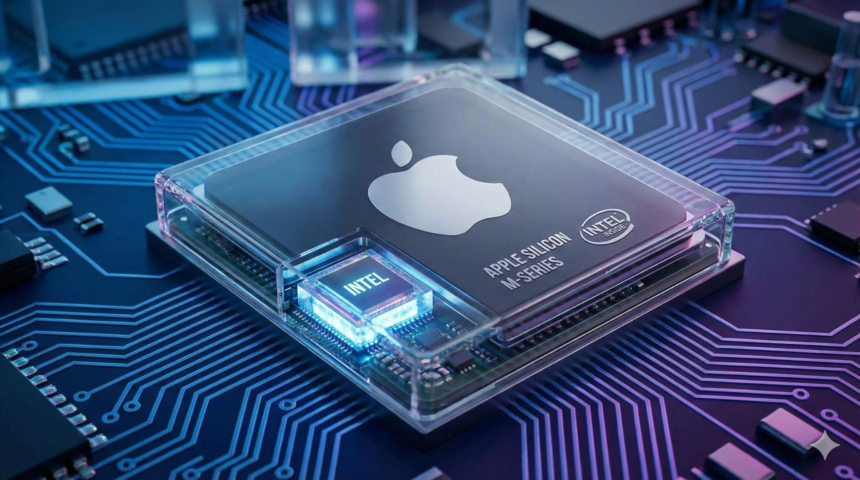
According to multiple reports and analysis from respected Apple analyst Ming-Chi Kuo, Apple has quietly begun testing production of some iPhone, iPad, and Mac chips at Intel’s foundries. The move signals one of the most significant supply-chain shifts in Apple’s modern hardware era — not because Apple is abandoning TSMC, but because it is preparing for a future where relying on a single manufacturing partner may no longer be enough.


Apple and Intel Are Working Together Again
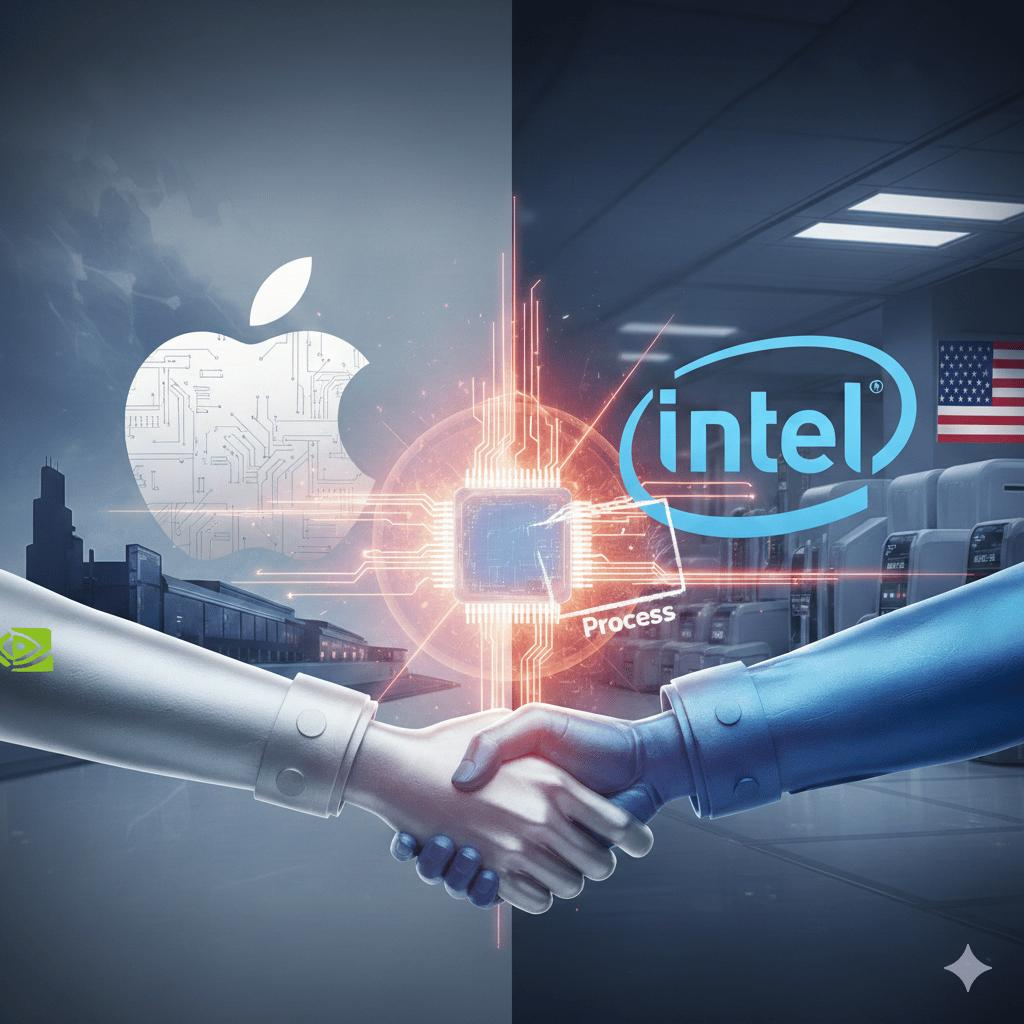
The latest reports indicate that Apple and Intel have already “kicked off” small-scale production testing using Intel’s advanced 18A-P process node. The chips involved are reportedly lower-end or legacy Apple silicon processors rather than flagship chips destined for premium devices.
Ming-Chi Kuo says around 80% of the production mix is aimed at iPhone-related chips, with the remaining portion likely supporting iPads and Macs.


Unlike the Intel era of Mac computers before Apple Silicon arrived in 2020, Intel’s role here is limited strictly to fabrication. Apple continues to design its own processors internally, while Intel would manufacture them in the United States.
That distinction is critical.
Apple’s transition away from Intel processors in Macs was one of the company’s biggest strategic victories in recent years. The new partnership does not reverse that transition. Instead, it reflects a broader manufacturing and supply-chain strategy.
Why Apple Wants Another Chip Supplier
At the heart of this shift is diversification.


TSMC remains the world’s most advanced semiconductor manufacturer and will continue supplying the overwhelming majority of Apple chips. Kuo estimates that TSMC will still retain more than 90% of Apple Silicon production even after Intel ramps up operations.
But Apple increasingly faces pressure from multiple directions:
- geopolitical tensions surrounding Taiwan
- rising global semiconductor demand
- growing AI-related chip shortages
- increasing memory and manufacturing costs
- pressure to expand U.S.-based production
By introducing Intel as a secondary supplier, Apple gains leverage, flexibility, and additional manufacturing resilience.
Kuo described the effort as Apple “simulating and validating Intel’s potential as a full-product-line supplier.”
That language suggests Apple is not merely experimenting with a small side project. Instead, the company appears to be stress-testing whether Intel can eventually become a meaningful long-term manufacturing partner.
Intel’s 18A Process Could Be the Real Story
Intel’s involvement centers around its 18A-P process node and Foveros advanced packaging technology.
The semiconductor industry has closely watched Intel’s foundry ambitions for years. Once dominant in chip manufacturing, Intel struggled to keep pace with TSMC and Samsung in advanced fabrication technologies.
Under CEO Pat Gelsinger’s turnaround strategy, Intel has aggressively pushed to rebuild its foundry business and compete again at the cutting edge of semiconductor manufacturing.
Landing Apple — even for lower-end chips — would represent a major credibility boost.
Industry observers see this as more than a routine supplier agreement. Apple is known for exceptionally demanding manufacturing standards. If Intel can successfully produce Apple-designed silicon at scale, it would validate Intel’s recovery efforts in one of the world’s most competitive technology sectors.
The Timeline: Testing Today, Expansion Tomorrow
The roadmap outlined by Kuo spans several years.
Current reports suggest:
2026
Apple and Intel are conducting small-scale production testing and validation.
2027
Production is expected to ramp up significantly as Intel aims to stabilize yields between 50% and 60% or higher.
2028
Further expansion and operational growth are anticipated.
2029
Capacity may begin declining as the 18A-P process generation becomes outdated and newer manufacturing technologies emerge.
Apple is also reportedly evaluating Intel’s more advanced future process nodes, suggesting this collaboration could evolve further if the current testing proves successful.
Consumers Probably Won’t Notice Any Difference
Despite the significance of the partnership, ordinary users may never notice whether their iPhone or Mac contains a chip fabricated by Intel or TSMC.
Apple still controls:
- chip architecture
- software optimization
- power management
- performance tuning
- ecosystem integration
The fabrication partner manufactures the silicon, but Apple oversees the overall product experience.
Reports indicate there is currently “no indication that users would see any difference in day-to-day performance or quality” between Intel-made and TSMC-made chips for these legacy products.
That is partly because Apple’s design capabilities — not merely fabrication — are what have made Apple Silicon so successful.
Politics and Manufacturing Strategy
The timing of the Intel partnership also intersects with broader political and economic trends.
The United States government has increasingly pushed for domestic semiconductor production amid concerns over supply-chain vulnerabilities and geopolitical risk. Intel’s U.S.-based manufacturing operations align with those goals.
Some analysts believe Apple’s partnership with Intel could help strengthen its relationship with U.S. policymakers, particularly as Washington continues encouraging technology companies to reduce dependence on overseas manufacturing.
At the same time, Apple CEO Tim Cook recently acknowledged supply-chain constraints during Apple’s Q2 2026 earnings call.
“We have less flexibility in the supply chain than we normally would,” Cook said.
Cook also highlighted growing memory costs and increasing strain across the technology industry, particularly as artificial intelligence systems consume more semiconductor capacity worldwide.
Those comments provide additional context for why Apple may now be accelerating supplier diversification.
TSMC Is Still the Center of Apple’s Chip Empire
Even with Intel entering the picture, TSMC remains indispensable to Apple.
The Taiwanese chipmaker currently manufactures Apple’s most advanced processors and continues leading the industry in cutting-edge node technology. The A18 Pro chip, for example, reportedly uses a process equivalent to Intel’s 18A-P node.
Apple’s relationship with TSMC is deeply integrated and unlikely to change dramatically anytime soon.
Instead, Intel’s role appears designed to:
- reduce concentration risk
- provide manufacturing redundancy
- increase Apple’s bargaining power
- support U.S.-based production goals
- create long-term strategic flexibility
In practical terms, this means Apple is expanding its manufacturing ecosystem rather than replacing its primary partner.
A Symbolic Full Circle for Apple and Intel
There is also a symbolic dimension to this story.
Only six years ago, Apple celebrated the transition away from Intel-powered Macs as the dawn of a new era. Apple Silicon transformed Mac performance, efficiency, and battery life, while Intel became associated with the company’s old hardware limitations.
Now, in an unexpected twist, Intel may once again play a role in the future of Apple hardware — not as a chip designer, but as a manufacturer helping bring Apple-designed silicon to life.
That shift reflects how much the semiconductor landscape has evolved.
In today’s industry, manufacturing capability itself has become one of the most valuable strategic assets in technology.
The Bigger Picture for the Semiconductor Industry
Apple’s move could have ripple effects across the global chip market.
If Intel proves capable of reliably manufacturing Apple chips:
- Intel’s foundry business gains major validation
- competitors may consider Intel as a manufacturing partner
- U.S. semiconductor production receives a significant boost
- TSMC faces increased competitive pressure
- Apple gains stronger negotiating leverage
At the same time, the partnership highlights how central semiconductor manufacturing has become to global technology competition.
Artificial intelligence, smartphones, cloud computing, electric vehicles, and advanced computing systems are all driving unprecedented demand for advanced chips. Companies that control manufacturing capacity increasingly hold enormous strategic influence.
Apple’s latest move appears designed to ensure it is not dependent on a single supply-chain pathway in that environment.
Conclusion
Apple’s reported testing of iPhone chipset production at Intel is not simply about changing suppliers. It represents a carefully calculated shift in manufacturing strategy at a time when global semiconductor demand, geopolitical tensions, and AI-driven competition are reshaping the technology industry.
TSMC will remain Apple’s dominant chip manufacturing partner for the foreseeable future. But by bringing Intel into the fold, Apple is preparing for a more diversified and resilient future.
For Intel, the partnership could mark a crucial turning point in its effort to reclaim relevance in advanced semiconductor manufacturing.
And for the broader tech industry, the development underscores an increasingly important reality: in the modern era of computing, controlling chip production may matter almost as much as designing the chips themselves.