Alan Rothwell, David Barlow and the Coronation Street Legacy That Spanned Generations
Alan Rothwell’s death at the age of 89 has brought renewed attention to one of Coronation Street’s earliest and most important characters: David Barlow. For many viewers, Rothwell will always be remembered as Ken Barlow’s younger brother — a cheerful, working-class young man whose story helped shape the Barlow family in the soap’s formative years.
- A Foundational Face of Coronation Street
- David Barlow: The Football-Loving Brother of Ken Barlow
- Alan Rothwell’s Death and the Family Statement
- Coronation Street Pays Tribute to an Original Cast Member
- Bill Roache Remembers His On-Screen Brother
- Samia Longchambon Reveals a Personal Connection
- From The Archers to Brookside, Emmerdale and Beyond
- Lisa Riley’s Tribute and the Oldham Connection
- Why David Barlow Still Matters
- A Career That Outlasted One Defining Role
- Conclusion: Alan Rothwell’s Place in Television History
But Rothwell’s legacy reaches beyond one role. He was part of Coronation Street from the very beginning, appearing in the first episode in December 1960 and helping establish the emotional realism that made the ITV soap a British television institution. His career later moved across radio, television, film, children’s programming, stage work and teaching, leaving behind a body of work that touched several generations of viewers and actors.
A Foundational Face of Coronation Street
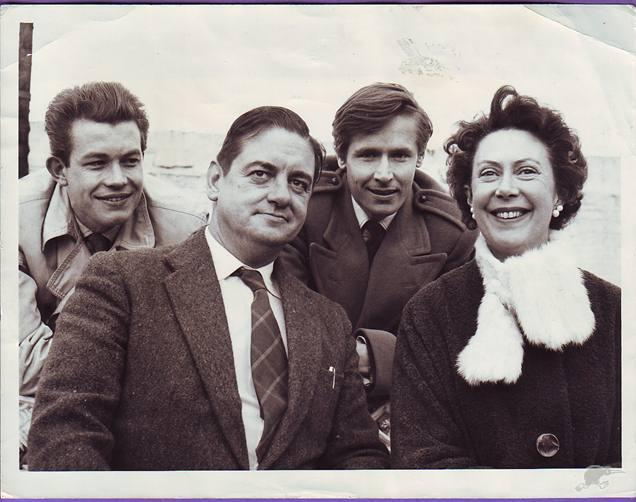
Alan Rothwell was best known for playing David Barlow, the younger brother of Ken Barlow, in Coronation Street. The role placed him inside one of the soap’s original family units at a time when the show was still defining its identity.


David was introduced as a cheerful and likable engineering firm apprentice, a contrast to Ken’s university-educated outlook. Where Ken often represented ambition, social change and intellectual restlessness, David was grounded, practical and energetic. In the earliest years of the programme, that contrast helped give the Barlow family its dramatic texture.
Rothwell played David from 1960 to 1969, though not continuously throughout the full period. He was written out after around a year, returned occasionally between 1963 and 1964, and later secured a regular stint until 1968. Two years after his departure, the character was killed off off-screen.


David Barlow: The Football-Loving Brother of Ken Barlow
David Barlow’s story carried the optimism of youth in early Coronation Street. He was not merely Ken’s younger brother; he represented a different path through working-class life in Weatherfield.
One of David’s defining traits was his love of football. He became an amateur footballer with the fictional Weatherfield County, scoring on his debut before moving to London after being signed by a League team in mid-1961. That storyline gave the character mobility and aspiration, allowing him to leave the street in a way that felt consistent with his ambitions.
In soap terms, David’s off-screen death later became part of the long Barlow family history — a reminder that the lives built in Weatherfield were often marked by absence, loss and memory as much as by day-to-day domestic drama.
Alan Rothwell’s Death and the Family Statement
Rothwell died aged 89 following what his family described as a short illness. His death was confirmed in a statement that reflected both the scale of his professional life and the intimacy of his private one.


His family said: “Alan was a professional radio, television, film and stage actor and director whose career spanned more than 70 years.
“Alan died peacefully in hospital following a short illness.
“Beyond his professional achievements, he was a loving husband, father, grandfather and uncle.
“He will be fondly remembered and deeply missed by his family, friends, colleagues and the many people whose lives he touched through his work.”
The statement captured the breadth of a career that extended far beyond Weatherfield, while also emphasizing the family role he held away from public view.
Coronation Street Pays Tribute to an Original Cast Member
Following the news of Rothwell’s death, Coronation Street paid tribute to his place in the programme’s history.
The soap said: “We’re very sorry to hear of Alan Rothwell’s passing and extend our sincerest condolences to his family at this very sad time.
“He created an iconic and memorable character in David Barlow and will forever be remembered as one of the original cast members of Coronation Street.”
That phrase — “original cast member” — carries particular weight. Coronation Street has become one of television’s most enduring soaps, but Rothwell belonged to the generation that helped prove the concept could work. His performances were part of the foundation on which decades of storytelling were built.
Bill Roache Remembers His On-Screen Brother
Bill Roache, who played Ken Barlow and worked with Rothwell from the show’s earliest episodes, also paid tribute.
He said: “I am very sorry to hear of Alan’s passing.
“He and I worked together on the very first episodes of Coronation Street, which was such a wonderful time, I got to know him well over the years, he was a very good actor and a delightful man.
“I send my thoughts and condolences to his family.”
Roache’s tribute is especially significant because the two actors were linked from the beginning of the soap’s history. Their on-screen brotherhood helped establish the Barlows as one of Coronation Street’s central families, and their early scenes remain part of the programme’s origin story.
Samia Longchambon Reveals a Personal Connection
The tributes also revealed how Rothwell’s influence extended beyond his screen performances. Samia Longchambon, who has played Maria Connor on Coronation Street since 2000, shared that Rothwell had taught her drama.
She wrote on Instagram: “So sad to hear this. Alan was a also drama teacher at our drama school and I have such fond memories of being taught by him.. he was a wonderful man.”
Her tribute gave the story a generational connection. Rothwell was not only part of Coronation Street’s past; he also helped shape performers who would later become part of the soap’s future.
From The Archers to Brookside, Emmerdale and Beyond
Although David Barlow became Rothwell’s most famous role, his career was extensive. He was also known for playing Jimmy Grange in The Archers, showing his importance in radio as well as television.
He appeared in other major British programmes, including Brookside, where he played Nicholas Black, and later made appearances in Emmerdale, Casualty, Doctors, Rovers, The Musketeers, All Creatures Great And Small and Queer As Folk. His later credits also included Alan Partridge: Alpha Papa and A Song For Jenny.
Rothwell was also remembered by many viewers for children’s television. He became a familiar presence through Picture Box and Hickory House, programmes that introduced him to audiences who may never have known him from the cobbles.
That range explains why the tributes came from across different corners of British entertainment. Rothwell was not confined to one era or one audience. He belonged to radio listeners, soap fans, children’s television viewers, drama students and theatre audiences alike.
Lisa Riley’s Tribute and the Oldham Connection
Another emotional tribute came from Emmerdale actress Lisa Riley, who had worked with Rothwell and shared his Oldham roots.
She wrote: “Dearest Alan, may you shine down from heaven. Rest in peace.
“I loved working with you-you put Oldham on the map all those years ago – paved the ways for us lot.
“You were always the truest meaning of GENTLEMEN.”
Her words highlighted something important about Rothwell’s public image: he was remembered not only as a performer, but as a gracious colleague and mentor. For actors who followed him from Greater Manchester and beyond, his career represented a path into national television at a time when regional voices and working-class stories were gaining new prominence on screen.
Why David Barlow Still Matters
David Barlow’s importance lies partly in what he represented during Coronation Street’s earliest years. The soap was not built around glamour or fantasy. It drew power from ordinary lives, family disputes, economic pressures, local loyalties and social aspiration.
David’s character helped balance the Barlow household. He was ambitious, but in a more practical way than Ken. He wanted achievement, but his dream came through football rather than academia. That made him an effective counterpoint to Ken and helped broaden the show’s portrait of post-war northern life.
Even after David’s departure and off-screen death, the Barlow name continued to carry enormous weight within the show. The family became one of Coronation Street’s defining dynasties, and Rothwell’s role remains part of that lineage.
A Career That Outlasted One Defining Role
Actors associated with iconic soap characters can sometimes be remembered only for one part. Rothwell’s career resists that simplification. He was a radio, television, film and stage actor and director whose work spanned more than 70 years.
He moved from early soap history to children’s educational broadcasting, from drama series to later film appearances, and from performance to teaching. That versatility is central to understanding why his death prompted such a broad response.
His work also reflects a distinctive period in British entertainment: the rise of television drama, the enduring force of radio, the growth of regional production, and the creation of programmes that became part of everyday family life.
Conclusion: Alan Rothwell’s Place in Television History
Alan Rothwell’s death marks the loss of a performer whose career was woven through British broadcasting history. As David Barlow, he helped launch Coronation Street and gave life to one of the soap’s earliest family stories. As an actor across radio, television, film and stage, he built a career of remarkable longevity. As a teacher, he influenced younger performers who carried his lessons into later generations of screen work.
For Coronation Street fans, he will remain forever linked with David Barlow — Ken’s younger brother, the football-loving apprentice, and one of the original faces of Weatherfield. For the wider entertainment world, he leaves a legacy defined by craft, warmth, professionalism and a career that quietly shaped British television for more than seven decades.