



Demi Moore’s Toned Arms Spark a Cannes Debate About Beauty, Aging and Hollywood Pressure
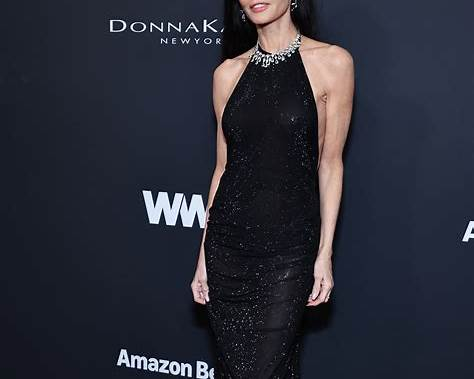
Demi Moore arrived at the 79th Cannes Film Festival looking every bit the veteran Hollywood icon. Wearing a shimmering strapless Jacquemus gown paired with Chopard diamonds, the 63-year-old actress commanded attention on the red carpet during the festival’s opening ceremony in France on May 12, 2026.
- The Cannes Appearance That Triggered Viral Reactions
- “That’s Not Toned”: The Backlash Intensifies
- Supporters Push Back Against Body Shaming
- Hollywood’s Ongoing Obsession With Appearance
- Experts Warn About the Impact of Public Speculation
- Aging in Hollywood Remains a Difficult Reality
- Why the “Toned Arms” Debate Matters
- The Cannes Moment That Became a Cultural Mirror
But while fashion critics praised her elegant silhouette and striking appearance, a different conversation quickly erupted online — one centered not on couture, but on her body.
What began as admiration for Moore’s “toned arms” soon evolved into a larger and more polarizing debate about aging in Hollywood, celebrity beauty standards, weight-loss culture, and the increasingly intense scrutiny women face in the public eye.


The Cannes Appearance That Triggered Viral Reactions
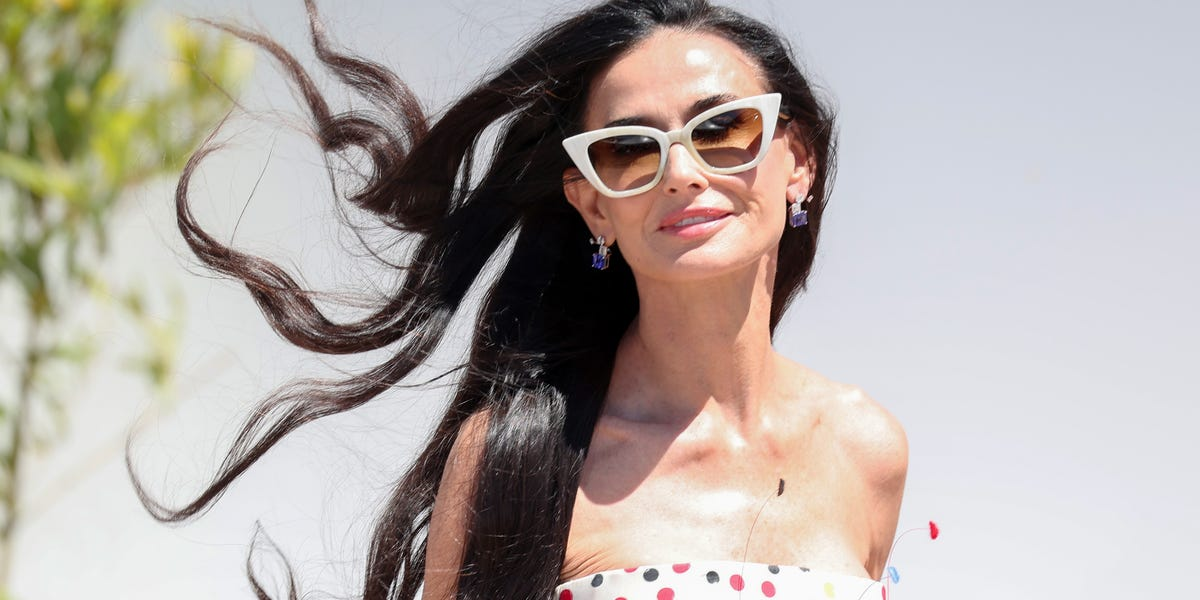
Moore attended the Cannes Film Festival as one of the nine jury members responsible for selecting this year’s Palme d’Or winner. Her red carpet look immediately gained traction online after photos and videos circulated across social media platforms.
The actress wore a silver sequin Jacquemus gown with a strapless neckline that highlighted her arms and shoulders. Her stylist, Brad Goreski, later shared behind-the-scenes footage of the look on Instagram, where actress Rita Wilson commented:



“Maybe one of my most favorites dresses on you.”
Many fans agreed, calling Moore “stunning,” “timeless,” and “gorgeous.” Others praised her commitment to fitness and elegance at 63 years old.
However, the conversation shifted after a social media post celebrating Moore’s “toned arms” went viral. Critics argued that the description normalized extreme thinness rather than healthy fitness.
“That’s Not Toned”: The Backlash Intensifies
Social media users quickly flooded comment sections with sharply divided opinions.
Journalist Scott Menzel wrote:


“She does not look well and she’s a stunning woman. There is a real difference between being healthy and in shape vs. unhealthy and starving yourself.”
TV writer Eden Dranger added:
“They aren’t ‘toned’ they’re lacking any sort of fat and she’s wasting away and Jesus f—king Christ this is not normal.”
Another viral comment read:
“That’s not toned. That’s f–king disgusting. She looks like a skeleton.”
American activist Shannon Watts also weighed in, posting:
“Please stop telling women this is toned.”
Many commenters focused specifically on Moore’s arms, saying they viewed her appearance as “too skinny,” “unhealthy,” or “extreme.” Others speculated — without evidence — about possible use of weight-loss medications such as Ozempic, which has become increasingly associated with dramatic celebrity transformations.
Supporters Push Back Against Body Shaming
At the same time, many fans defended Moore and criticized the harsh tone of the online discussion.
Some argued that aging naturally changes body composition and that women in their 60s often appear leaner. Others said public commentary about women’s bodies has become impossible to escape, regardless of whether someone is thin, curvy, young, or older.
One supporter wrote:
“She looks pretty good for her age.”
Another added:
“She’s just a 63-year-old woman who puts the work in to stay lean and toned, and unfortunately for aging women that has side-effects for their looks.”
A third person commented:
“Stop shaming her! With age a lot of women lose natural weight and water. She looks beautiful!”
The debate highlighted a recurring contradiction in celebrity culture: audiences often criticize unrealistic beauty standards while simultaneously participating in relentless body analysis.
Hollywood’s Ongoing Obsession With Appearance
The controversy surrounding Moore did not emerge in isolation. In recent years, Hollywood has experienced growing public discourse around dramatic celebrity weight loss, cosmetic enhancement, anti-aging pressure, and body-image expectations.
Several stars mentioned in the broader conversation — including Ariana Grande, Olivia Wilde, Kelly Osbourne, and Megan Fox — have all faced public speculation about their appearance.
Olivia Wilde, for example, responded humorously after social media users compared her to “a resurrected corpse” following recent red carpet appearances. Meanwhile, Kelly Osbourne publicly condemned what she described as “disgusting, horrible, mean” commentary about her weight loss following the death of her father, Ozzy Osbourne.
Ariana Grande also addressed years of scrutiny surrounding her body in a 2024 interview, saying:
“I’ve been doing this in front of the public and been a specimen in a Petri dish really since I was 16 or 17.”
She added:
“I just don’t invite it in anymore.”
These examples demonstrate how celebrity bodies increasingly function as public discussion topics — often detached from empathy, medical context, or factual understanding.
Experts Warn About the Impact of Public Speculation
Mental health and behavioral experts have repeatedly warned that constant online analysis of celebrity bodies can have damaging consequences both for public figures and for audiences consuming the discourse.
Behavioral and relationship expert Dr. Patrick Wanis explained that:
“Constant body surveillance can trigger or worsen body dysmorphia, anxiety, and depression.”
He also warned that false assumptions about appearance can reinforce dangerous stereotypes about eating disorders and unhealthy body expectations.
According to Dr. Wanis:
“It reinforces stereotypes that being thin automatically means someone is ‘sick,’ which stigmatizes people with actual EDs.”
The broader concern is not simply celebrity gossip — it is the normalization of obsessive body commentary as entertainment.
Experts note that weight fluctuations can result from numerous factors, including stress, age, sleep, exercise, illness, medication, genetics, and nutrition. Public speculation without evidence can contribute to misinformation and emotional harm.
Aging in Hollywood Remains a Difficult Reality
Perhaps the most revealing aspect of the Demi Moore discussion is how strongly it reflects Hollywood’s ongoing struggle with aging women.
For decades, actresses have faced contradictory expectations:
- remain youthful,
- stay thin,
- avoid visible aging,
- but also avoid appearing “too thin” or “too altered.”
The pressure intensifies for women over 50, particularly those who continue working prominently in film and fashion spaces traditionally dominated by younger celebrities.
One social media user summarized the dilemma succinctly:
“It’s awful. The idea that you simply can’t age in Hollywood.”
That sentiment resonated widely because Moore’s Cannes appearance became less about fashion and more about society’s discomfort with aging itself.
Why the “Toned Arms” Debate Matters
At first glance, the controversy may appear superficial — simply another celebrity fashion discussion. But the intensity of the reaction reveals deeper cultural tensions surrounding beauty ideals, wellness culture, and digital-era scrutiny.
The phrase “toned arms” itself became controversial because critics argued it framed extreme thinness as aspirational. Others countered that criticizing Moore’s body was equally harmful and perpetuated another form of body shaming.
This duality reflects a larger societal problem:
- thinness is often glamorized,
- yet thin women are also publicly attacked,
- while nearly every female body type becomes subject to judgment.
The result is a cycle where women are constantly measured against impossible and shifting standards.
The Cannes Moment That Became a Cultural Mirror
Demi Moore likely attended Cannes expecting conversations about cinema, fashion, and artistry. Instead, her appearance evolved into a global discussion about body image and celebrity culture.
Whether viewers saw her as elegant, concerningly thin, unfairly criticized, or emblematic of Hollywood pressure, the response demonstrated how celebrity appearances now function as cultural flashpoints.
In many ways, the debate says as much about the audience as it does about Moore herself.
At 63, Moore remains one of Hollywood’s most recognizable actresses. Yet the reaction to her Cannes appearance shows that for women in entertainment, visibility still comes with relentless scrutiny — especially in an era where every photo becomes a social media battleground within minutes.
And perhaps that is the real story behind the conversation surrounding Demi Moore’s toned arms.


