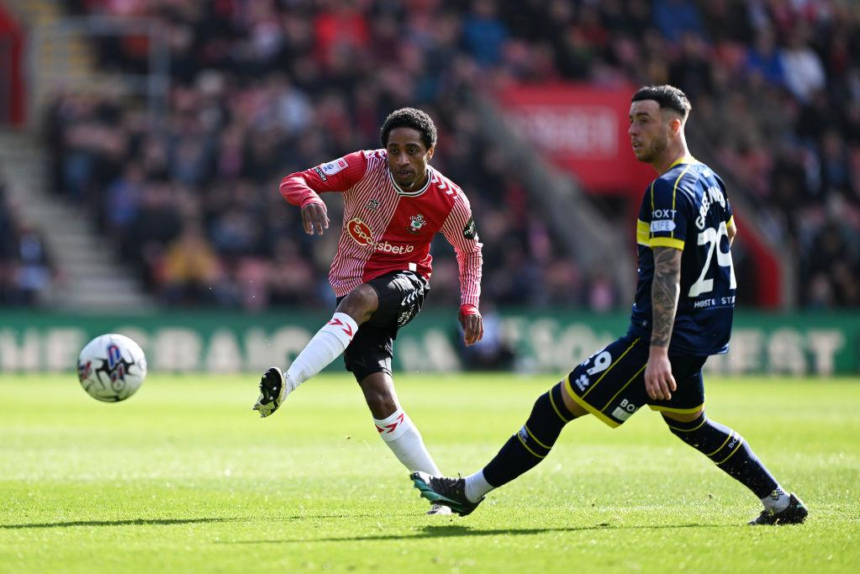
Southampton vs Middlesbrough: Shea Charles Sends Saints to Wembley After a Night of Drama, Tension and Playoff Theatre
Southampton’s Championship playoff semi-final against Middlesbrough had nearly everything: an early shock, a first-half fightback, tactical pressure, touchline confrontation, extra-time fatigue, a bizarre late winner and the lingering shadow of an EFL misconduct case.
- A Semi-Final That Started at Full Speed
- Shea Charles’ 116th-Minute Moment
- Why Southampton’s Approach Eventually Broke Boro
- Middlesbrough’s Strong Start Faded
- The Touchline Tension and the Wider Controversy
- Wembley, Hull City and the Richest Game in Football
- What This Result Says About Southampton FC
- Conclusion: A Night That May Shape Southampton’s Season
By the end of a charged night at St Mary’s Stadium, Southampton had beaten Middlesbrough 2-1 after extra time and advanced by the same score on aggregate. The decisive moment arrived in the 116th minute, when Shea Charles delivered what looked like a cross from the right and watched it drift all the way into the net. It was strange, decisive and unforgettable — the kind of goal that can define a playoff campaign.
Southampton now move on to face Hull City at Wembley on May 23, with a place in the Premier League at stake. But their route to the final is not entirely clean of complications. The win came while the club awaited the outcome of an EFL disciplinary process linked to allegations of unauthorized filming of Middlesbrough training before the first leg.
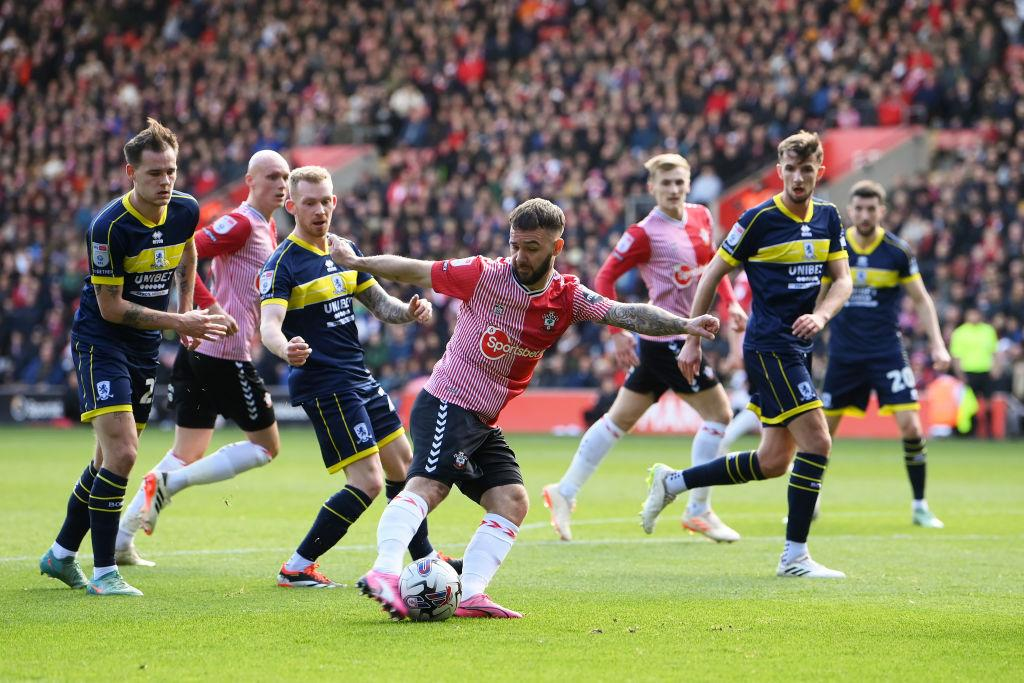


A Semi-Final That Started at Full Speed
The first leg had ended 0-0, leaving both sides with everything to play for on the south coast. Middlesbrough, managed by Kim Hellberg, made the sharper start and stunned the home crowd after just five minutes.
Riley McGree gave Boro the lead with a side-footed finish low into the corner, rewarding a fast, aggressive opening spell from the visitors. Middlesbrough pressed high, recovered possession quickly and made Southampton look uncomfortable in the early exchanges.


Southampton, however, gradually worked their way into the contest. Ross Stewart missed a good opportunity seven minutes after McGree’s opener, but he made amends just before half-time. After goalkeeper Sol Brynn parried a Ryan Manning effort, Stewart reacted with a header to pull Southampton level.
That goal changed the emotional balance of the tie. Middlesbrough had landed first, but Southampton had survived the early storm and turned the match into the kind of long, grinding playoff contest that often rewards persistence over fluency.
Shea Charles’ 116th-Minute Moment
The match remained 1-1 after 90 minutes, sending the semi-final into extra time. By then, both teams were visibly tiring. The pace dropped, players cramped, and the game seemed to be drifting toward penalties.
Then came Charles.


In the 116th minute, he swung his left foot from wide on the right. The ball curled toward the far post, evaded defenders and goalkeeper, bounced in off the inside of the post and sent St Mary’s into celebration. Charles later described it as a “cross-shot,” saying: “I thought I put it into an area [the winner] … it’s gone all the way through and gone in. Incredible moment. It was a cross-shot.”
It was a goal that captured the chaos of extra time: part intention, part fortune, all consequence.
Southampton saw out the remaining minutes, repelling one last Middlesbrough set-piece before the final whistle confirmed their place in the playoff final.
Why Southampton’s Approach Eventually Broke Boro
Beyond the late drama, Southampton’s victory was built on a clear attacking pattern. Their most reliable route to pressure was delivery into the box, both from open play and set pieces.
The numbers underlined the strategy. Southampton attempted 40 crosses across the 120 minutes, one of their highest totals in a league game during the campaign. They also leaned heavily on dead-ball situations, with a large share of their expected goals coming from set pieces.
That mattered because Middlesbrough struggled to fully clear danger when defending aerial balls. Even when Boro’s defenders won the first contact, the ball often stayed alive around the box, allowing Southampton to sustain pressure and force repeat actions.
Southampton’s equaliser came from this kind of pressure. James Bree delivered, Manning’s shot was saved, and Stewart arrived to finish the rebound with a header. The winner, although technically Charles’ own strike, again came from the same wide-area threat that had carried Southampton through much of the night.
Middlesbrough’s Strong Start Faded
Middlesbrough were not passive opponents. Their first 30 minutes were excellent, and McGree’s goal reflected a smart tactical pattern: overloads out wide, quick switches of play and runners attacking the box.
But Boro could not maintain that intensity. As the match stretched, Southampton became more composed, more dominant territorially and more dangerous from repeated deliveries. Middlesbrough ended the game short of forward options and increasingly reliant on midfielders to carry attacking responsibility.
That fading threat proved costly. In a tie decided by fine margins, Middlesbrough had the better opening but Southampton had the stronger finish.
The Touchline Tension and the Wider Controversy
This was not just a football match. It was played under the shadow of a dispute that had already raised the emotional temperature between the clubs.
Southampton had been charged by the English Football League following accusations that unauthorized filming of Middlesbrough’s training took place before the first leg. The EFL requested that an independent disciplinary commission hold a hearing “at the earliest opportunity,” while Southampton asked for more time to complete an internal review.
The controversy fed into the atmosphere at St Mary’s. After the first leg, Hellberg said he “couldn’t believe my eyes or ears” when he heard about the allegations and accused Southampton of trying to “cheat.”
Tempers also flared during the second leg. Hellberg and Southampton coach Tonda Eckert had to be physically separated on the touchline while referee Andy Madley spoke to them. There was also a reported first-half exchange involving Middlesbrough’s Luke Ayling and Southampton’s Taylor Harwood-Bellis, with BBC and Sky Sports reporting that Ayling accused Harwood-Bellis of using discriminatory language.
After the match, Hellberg was asked about the possibility of Southampton being excluded from the final. He replied: “I’m not going to make any suggestions on that or say anything about that question. I’ll talk about what I think, and it’s too short a time here to answer that question again. We’ll see what happens.”
Wembley, Hull City and the Richest Game in Football
Southampton’s reward is a Wembley meeting with Hull City on May 23. Hull beat Millwall 2-0 in the other playoff semi-final, setting up a final with enormous sporting and financial stakes.
The Championship playoff final is often described as the “richest game in football” because promotion to the Premier League brings access to major broadcast revenue, prize money and commercial uplift. The winner is assured a future earnings windfall of at least £200 million, or around $270 million.
For Southampton, the final represents a chance at an immediate return to the Premier League after relegation last season. The club had previously been in the top flight from 2012 to 2023, making this playoff run part of a broader attempt to restore its Premier League status quickly.
Hull, meanwhile, are seeking their first return to the Premier League since 2017.
What This Result Says About Southampton FC
Southampton’s performance was not flawless, but it revealed several qualities that matter in playoff football: resilience, stamina, tactical identity and the ability to keep creating pressure even when the game becomes ragged.
They conceded early. They missed chances. They were pulled into controversy. Yet they still found a way to impose themselves and win late.
That is why this match will be remembered less as a clean tactical masterclass and more as a test of nerve. Southampton survived Middlesbrough’s fast start, absorbed the emotional weight of the occasion and trusted the wide deliveries and set-piece pressure that have become such a major part of their attacking identity.
The final question now is whether that same formula can work at Wembley — and whether the pending disciplinary process will create another twist before the final is played.
Conclusion: A Night That May Shape Southampton’s Season
Southampton vs Middlesbrough was more than a playoff semi-final. It was a dramatic collision of ambition, pressure and controversy. Middlesbrough started with purpose and briefly looked capable of taking control, but Southampton grew into the tie, forced the match toward their strengths and found an unlikely hero in Shea Charles.
His 116th-minute winner sent Southampton to Wembley, but it also kept the wider story alive. The Saints are one win from the Premier League, yet their path remains framed by both footballing achievement and unresolved disciplinary scrutiny.
For now, Southampton FC have their final. Middlesbrough are left with frustration, fatigue and questions about what might have been. Wembley awaits, and so does the next chapter.