Ronald Lamola Biography: Age, Career, Family, Net Worth and Rise as South Africa’s Foreign Minister
A Commanding New Face in South African Diplomacy
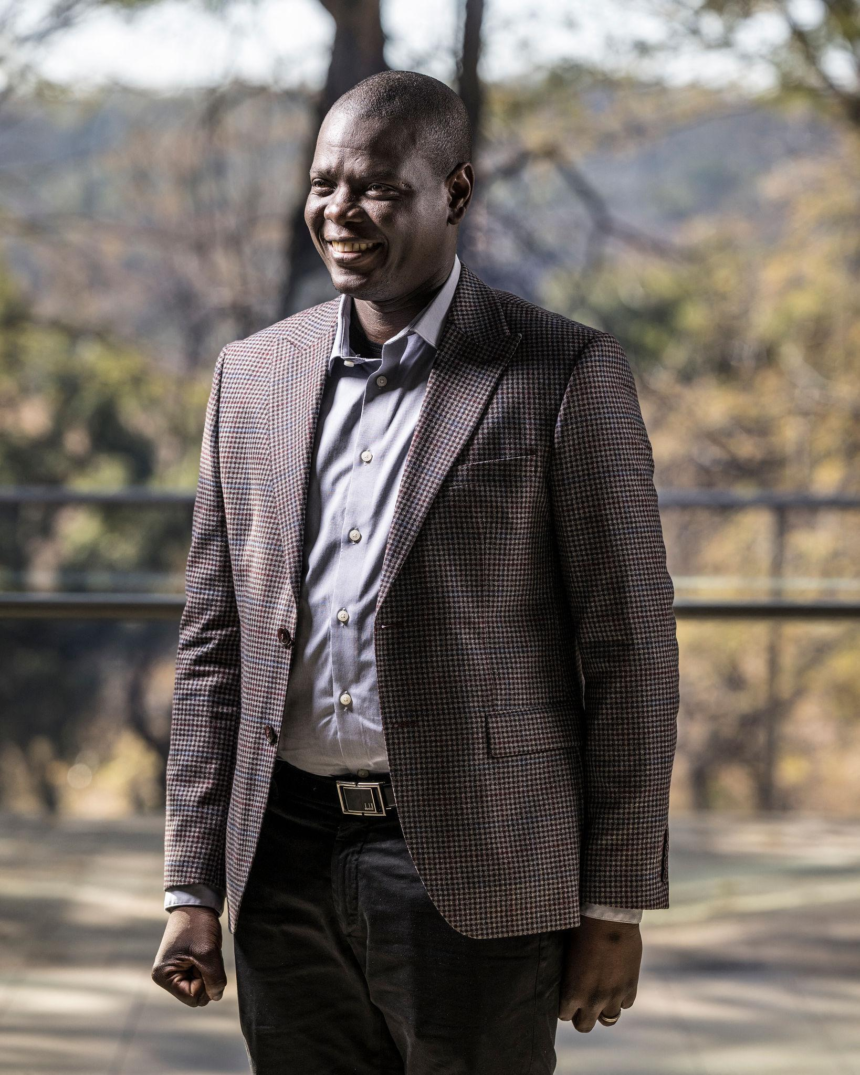
Ronald Ozzy Lamola stands among South Africa’s most prominent post-apartheid political figures: a lawyer, legislator, senior African National Congress leader, and the country’s Minister of International Relations and Cooperation. Born on 21 November 1983 in Bushbuckridge, Mpumalanga, he represents a generation of South African leaders shaped by the final years of apartheid, the democratic transition, and the long struggle to translate political freedom into institutional reform, economic justice, and international influence.
- A Commanding New Face in South African Diplomacy
- Ronald Lamola Quick Facts Snapshot
- From Bushbuckridge to the National Stage: The Early Life Behind Ronald Lamola’s Biography
- Education, Law and the Making of a Technocratic Politician
- Ronald Lamola’s Career Journey: Youth Politics, Cabinet Power and Global Diplomacy
- Justice Minister to Foreign Minister: The Major Turning Point in Ronald Lamola’s Career
- Ronald Lamola’s Achievements and Political Milestones
- South Africa’s G20 Moment and Lamola’s Diplomatic Visibility
- Net Worth, Income Sources and Lifestyle: What Is Known About Ronald Lamola’s Finances?
- Ronald Lamola Family, Wife, Relationships and Personal Life
- Current Relevance and Latest Updates on Ronald Lamola
- Ronald Lamola’s Public Voice and Social Media Presence
- Interesting Facts and Lesser-Known Details About Ronald Lamola
- Influence, Impact and Legacy in South African Politics
- Additional Insights: Why Ronald Lamola’s Profile Matters Now
- Final Reflection on Ronald Lamola’s Biography, Career and Future
His public profile has evolved dramatically. Once best known as a sharp youth-league voice within the ANC, Lamola later became one of the youngest members of President Cyril Ramaphosa’s Cabinet when he was appointed Minister of Justice and Correctional Services in 2019. In July 2024, he moved into one of the state’s most globally visible portfolios: Minister of International Relations and Cooperation, placing him at the centre of South Africa’s foreign policy during a period defined by G20 diplomacy, African peace and security crises, reform of multilateral institutions, and heightened global tensions.
Ronald Lamola Quick Facts Snapshot
| Category | Details |
|---|---|
| Full Name | Ronald Ozzy Lamola |
| Date of Birth / Age | 21 November 1983; 42 years old as of May 2026 |
| Place of Birth | Bushbuckridge, Mpumalanga, South Africa |
| Nationality | South African |
| Profession | Lawyer, politician, legislator, Cabinet minister |
| Current Status | Minister of International Relations and Cooperation of South Africa |
| Political Party | African National Congress |
| Current Government Role | Appointed Minister of International Relations and Cooperation from 3 July 2024 |
| Previous Cabinet Role | Minister of Justice and Correctional Services, 29 May 2019 to 19 June 2024 |
| Parliament | Member of the National Assembly since 22 May 2019 |
| Net Worth | No verified official public net worth is available; online estimates vary widely from about US$500,000 to multi-million-dollar figures |
| Income Sources | Cabinet salary, public office remuneration, previous legal career, and declared professional background as a lawyer |
| Relationship Status | Married |
| Spouse/Partner | Bawinile “Winnie” Msiza / Prudence Moratiwa Msiza |
| Children | Public reports indicate at least one son, but detailed information about his children is not broadly documented |
| Major Achievements | Former ANC Youth League deputy president; ANC NEC and NWC member; former Justice and Correctional Services Minister; current Foreign Minister; key South African figure during the country’s G20 presidency |
From Bushbuckridge to the National Stage: The Early Life Behind Ronald Lamola’s Biography
Ronald Lamola’s biography begins in Bushbuckridge, Mpumalanga, a region whose rural setting shaped much of his early identity. His rise from a provincial upbringing to a national and international political platform has become one of the defining features of his public story. The path was not simply political; it was also academic and legal. He built his credentials through formal legal education, practical training, postgraduate specialization, and later senior roles in public administration.
His education became the foundation of his career. Lamola obtained an LLB from the University of Venda in 2005, completed practical legal training at the University of South Africa in 2006, and pursued postgraduate certificates in corporate law, banking law and financial markets, and telecommunications policy, regulation and management. He later earned two master’s degrees from the University of Pretoria, with work in corporate law and extractive law in Africa. His research interests included property syndication regulation, deposit-taking oversight, corporate social investment in mining and energy, and social labour plan compliance.


Education, Law and the Making of a Technocratic Politician
Lamola’s professional identity has always been more layered than a standard political résumé. His legal background gave him a technical foundation that later became especially relevant in justice reform, constitutional debates, public-sector governance, and foreign-policy conversations linked to international law. His academic record also positioned him as part of a younger ANC generation with formal professional qualifications and experience outside purely party-political structures.
His early legal career began at TMN Kgomo and Associates in 2006. He later moved through several public-sector positions, including Transversal Unit Manager at Govan Mbeki Municipality between March and June 2009, Director in the Office of the MEC for Culture, Sport and Recreation in Mpumalanga from July 2009 to January 2011, and Acting Spokesperson of the Mpumalanga Premier from January 2011 to October 2011. These roles helped shape his understanding of government from the administrative, communications, legal, and political angles before he entered the national executive.


Ronald Lamola’s Career Journey: Youth Politics, Cabinet Power and Global Diplomacy
Lamola entered politics early through the ANC Youth League, a platform that has historically produced some of South Africa’s most visible political personalities. His rise inside the Youth League brought him into national conversation during a turbulent period in ANC politics. He became former deputy president of the ANC Youth League and later established himself in senior ANC structures, including the National Executive Committee and National Working Committee.
His national breakthrough came in 2019. After becoming a Member of the National Assembly on 22 May 2019, he was appointed Minister of Justice and Correctional Services, a portfolio carrying responsibility for some of South Africa’s most sensitive institutions: courts, corrections, justice administration, constitutional governance, and law reform. His tenure in that role lasted until June 2024, after which he was appointed Minister of International Relations and Cooperation from 3 July 2024.
Justice Minister to Foreign Minister: The Major Turning Point in Ronald Lamola’s Career
The shift from justice to diplomacy marked the most important turning point in Ronald Lamola’s career. As Justice and Correctional Services Minister, he was linked to domestic governance, legal systems, correctional policy, and constitutional matters. As International Relations and Cooperation Minister, his stage widened from national institutions to Africa, the Global South, the United Nations system, the G20, bilateral diplomacy, and conflict-resolution platforms.
That transition also came at a defining moment for South Africa’s global posture. South Africa assumed the G20 Presidency in December 2024, giving the country a rare opportunity to place African priorities at the centre of global economic and political discussions. Lamola’s role included representing South Africa in foreign ministers’ meetings, engaging with African Union priorities, and advancing themes such as multilateral reform, peace and security, climate finance, food security, and development.


Ronald Lamola’s Achievements and Political Milestones
Lamola’s major achievements include his rapid elevation from youth politics to national Cabinet, his role as one of the youngest ministers in democratic South Africa’s modern era, and his continued presence in the ANC’s senior decision-making structures. His career reflects a blend of party leadership, legal specialization, executive responsibility, and diplomatic visibility.
As Foreign Minister, he has led South African delegations and delivered remarks in major international settings. In February 2025, he led South Africa’s delegation to the 46th Ordinary Session of the Executive Council of the African Union in Addis Ababa, where discussions included reparations, Agenda 2063, the African Continental Free Trade Area, governance, debt distress, climate impacts, and continental peace and security.
South Africa’s G20 Moment and Lamola’s Diplomatic Visibility
One of Lamola’s most visible assignments has been South Africa’s G20 Presidency. The First G20 Foreign Ministers’ Meeting under South Africa’s presidency took place in Johannesburg in February 2025, with Lamola helping frame the country’s diplomatic priorities around solidarity, equality, sustainability, multilateral cooperation, and African development concerns.
The G20 period also placed Lamola in the middle of difficult geopolitical conversations. Global conflicts, including the Russia-Ukraine war, crises in the Middle East, and instability in parts of Africa, shaped the agenda. South Africa’s foreign policy under this period emphasized dialogue, inclusive peace processes, and the importance of keeping African interests visible in global decision-making structures.
Net Worth, Income Sources and Lifestyle: What Is Known About Ronald Lamola’s Finances?
Ronald Lamola net worth searches often produce conflicting figures, but there is no verified official public estimate that can be treated as definitive. Published online estimates vary widely, ranging from about US$500,000 to much higher multi-million-dollar claims, including figures between US$3 million and US$15.55 million. Because those figures are not consistently documented through audited personal financial records, the most responsible conclusion is that his exact net worth remains unverified.
His verifiable income base is clearer than his private wealth. As a Cabinet minister, Lamola receives remuneration tied to South Africa’s public office-bearer salary framework. Cabinet minister remuneration has been publicly gazetted and reported in the range of more than R2.6 million annually for recent salary cycles, with adjustments applying to ministers, deputy ministers, and parliamentarians. His professional background as a lawyer and earlier public-sector roles also form part of his long-term income history.
Ronald Lamola Family, Wife, Relationships and Personal Life
Ronald Lamola’s relationships and family life have attracted public curiosity, but he has generally maintained a more private profile than many high-visibility political figures. He is married to Bawinile “Winnie” Msiza, also publicly referred to as Prudence Moratiwa Msiza in some biographical reports. Their marriage took place on 8 March 2013 at Cunning Moor in Bushbuckridge, Mpumalanga.
Public reports indicate that the couple has at least one son, though Lamola has not built his political identity around family publicity. His personal image is instead anchored more strongly in education, public service, law, politics, and national leadership. Details about his children, extended family, and household life remain limited, which is consistent with the controlled privacy often maintained by senior public officials.
Current Relevance and Latest Updates on Ronald Lamola
Ronald Lamola remains highly relevant because he currently holds one of South Africa’s most internationally significant Cabinet posts. His portfolio places him at the intersection of African diplomacy, global governance, bilateral relations, regional peace and security, and South Africa’s evolving position between Western powers, BRICS partners, African institutions, and the broader Global South.
Recent public activity has included South Africa’s diplomatic engagements on the G20, African Union priorities, South Sudan, Mozambique, Japan, the Middle East, and global multilateral reform. DIRCO’s recent public record shows Lamola-linked activity around SADC cooperation, the RISDP 2020–2030 framework, nuclear non-proliferation, bilateral consultations, and joint international statements on Gaza-related humanitarian issues.
Ronald Lamola’s Public Voice and Social Media Presence
Lamola’s public voice is formal, legalistic, and policy-centred. His speeches tend to emphasize shared development, rules-based multilateralism, African agency, regional cooperation, and historic solidarity among liberation movements and neighbouring states. In a December 2025 address linked to the South Africa-Mozambique Bi-National Commission, he framed relations between the two countries around common heritage, anti-colonial struggle, trade, energy security, mining, infrastructure, transport, health, culture, and people-to-people ties.
His official public profile also lists the X/Twitter handle @RonaldLamola, giving him a direct channel for public-facing communication. While his office-driven diplomacy is more visible through government statements and speeches than lifestyle-oriented social media, his digital presence forms part of a modern political profile in which ministers communicate policy positions, appearances, and public messages across traditional and online platforms.
Interesting Facts and Lesser-Known Details About Ronald Lamola
One lesser-known detail in Ronald Lamola’s biography is the depth of his legal specialization. His master’s research did not remain at a generic level; it engaged with technically demanding subjects such as property syndication schemes, deposit-taking regulation, the interaction of the Companies Act, Banks Act and Reserve Bank Act, and corporate social investment obligations in the mining and energy sectors.
Another interesting detail is his long arc from youth activism to international diplomacy. Lamola joined ANC politics at a young age and later became a senior figure in the ANC Youth League, but his career did not end with internal party turbulence. He re-emerged as a national executive figure, built Cabinet experience, and eventually became South Africa’s chief diplomat during one of the country’s most globally watched periods.
Influence, Impact and Legacy in South African Politics
Lamola’s impact lies in the way he bridges several political identities: youth-league activist, trained lawyer, ANC insider, former justice minister, foreign minister, and international representative of South Africa’s democratic state. His career illustrates the continued importance of legal training in South African politics, especially in a constitutional democracy where law, rights, governance, and public accountability remain central to national life.
His legacy is still being written, but his current role gives him a platform with long-term significance. As Minister of International Relations and Cooperation, he is not merely managing diplomatic protocol; he is helping articulate South Africa’s position on conflicts, multilateral reform, African development, debt distress, climate pressures, continental integration, and the country’s place in a changing global order.
Additional Insights: Why Ronald Lamola’s Profile Matters Now
Ronald Lamola’s profile matters because South Africa’s foreign policy has become increasingly visible and contested. The country’s positions on Palestine, global governance, BRICS cooperation, African peacekeeping, and relations with the United States, China, Russia, Europe, and regional neighbours have placed its foreign minister under intense scrutiny. Lamola’s task is to project consistency, defend sovereignty, sustain partnerships, and avoid diplomatic isolation while keeping African interests central.
His role also matters domestically. Foreign policy can appear distant from everyday concerns, but Lamola’s portfolio connects directly to trade, investment, migration, regional energy security, continental stability, and South Africa’s international reputation. His speeches on Mozambique, the African Union, and the G20 show an emphasis on practical cooperation—energy, mining, agriculture, infrastructure, transport, health, culture, and trade—rather than diplomacy as ceremony alone.
Final Reflection on Ronald Lamola’s Biography, Career and Future
Ronald Lamola’s story is one of disciplined ascent: from Bushbuckridge to law school, from youth politics to national executive power, and from domestic justice administration to global diplomacy. At 42, he occupies a rare position in South African politics: young enough to represent generational change, experienced enough to hold two major Cabinet portfolios, and senior enough to influence the country’s future international posture.
The defining question for his legacy will be how effectively he translates South Africa’s diplomatic principles into measurable outcomes: stronger African partnerships, credible global leadership, better trade and investment relations, and constructive participation in a divided international system. For readers searching Ronald Lamola biography, Ronald Lamola age, Ronald Lamola career, Ronald Lamola family, Ronald Lamola relationships, or Ronald Lamola net worth, the fuller picture is clear: he is not simply a Cabinet minister, but one of the most consequential South African political figures of his generation.