Blue Ivy Carter’s Met Gala 2026 Debut: A Night That Rewrote the Rules
A Historic Walk Up the Met Steps
On the evening of Monday, May 4, 2026, the iconic steps of New York’s Metropolitan Museum of Art witnessed a moment that blurred the line between legacy and emergence. Blue Ivy Carter—just 14 years old—stepped onto fashion’s most exclusive red carpet for the very first time, joining her parents Beyoncé and Jay-Z at the Met Gala.
It was more than a celebrity appearance. It was a symbolic passing of the torch.
Beyoncé, returning to the Met Gala after a decade and serving as a co-chair, made the night a deeply personal one. Standing beside her daughter, she captured the emotional weight of the moment, saying, “It feels surreal because my daughter’s here. She looks so beautiful. It’s incredible to share it with her.”
For a gala known for its exclusivity, rules, and tightly curated guest list, Blue Ivy’s presence immediately sparked intrigue—and debate.
The Rule Everyone Knows—and the Exception Few Expected
The Met Gala has enforced a strict age restriction since 2018: attendees must be at least 18 years old. The policy, introduced to maintain the event’s formal tone and controlled atmosphere, has been widely respected in recent years.
Yet Blue Ivy, born in January 2012, is only 14.
So how did she make it inside?
The answer lies not in her fame—but in a little-known loophole.
Underage guests are permitted to attend if accompanied by their parents. With Beyoncé and Jay-Z by her side throughout the evening, Blue Ivy met the conditions required to bypass the age restriction.
Her attendance was not entirely unprecedented—exceptions have occasionally surfaced—but it remains rare. In fact, she became one of the youngest attendees in modern Met Gala history, reinforcing how exceptional the moment truly was.
Fashion Meets Legacy: Interpreting “Costume Art”
The 2026 Met Gala theme, “Costume Art,” challenged attendees to treat fashion as a form of artistic expression—blurring boundaries between clothing and sculpture.
Blue Ivy embraced that challenge with remarkable confidence.
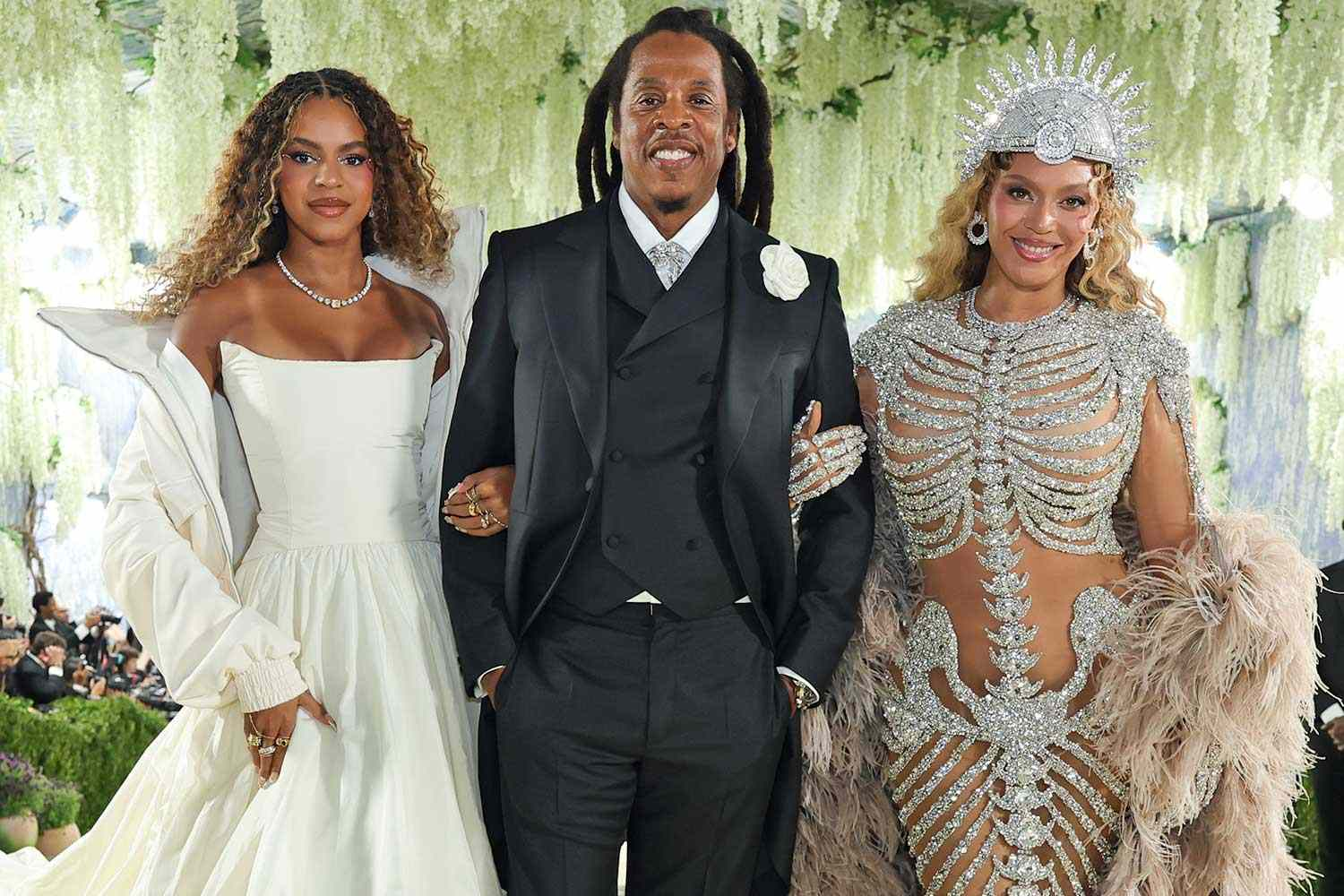
She wore a cream strapless Balenciaga gown featuring a structured bodice and a dramatic bubble-hem skirt—an architectural silhouette that echoed the night’s artistic directive.
Layered over the gown was a cropped jacket worn casually off the shoulders, adding a contemporary, almost rebellious edge. Accessories completed the look: sunglasses, a diamond necklace, and striking footwear that included crystal-embellished heels reportedly worth nearly $5,000.
Yet it wasn’t just the luxury pieces that drew attention. Observers noted a gold-plated ring from an independent brand retailing for around $270—a subtle nod to emerging designers and a reflection of Blue Ivy’s evolving personal style.
The overall effect was deliberate: a balance between high fashion, youth culture, and artistic experimentation.
A Family Affair on Fashion’s Biggest Night
While Blue Ivy’s debut dominated headlines, the broader narrative of the evening centered on family.
Beyoncé’s return to the Met Gala after 10 years was already significant. Her role as co-chair elevated the event’s prestige, and her appearance—wearing a crystal-covered illusion gown designed to resemble a skeleton—was one of the night’s most talked-about looks.
Jay-Z, in an all-black ensemble, completed the trio, creating a unified yet individually distinct visual statement.
Together, they transformed the red carpet into something more intimate—a shared experience rather than a solo spotlight.
Beyoncé emphasized this perspective when speaking about the night: she was excited to experience it “through the eyes of Blue” and to simply “relax.”
For an event often defined by spectacle, this grounded, familial dynamic added a refreshing emotional dimension.
Beyond the Dress: A Cultural Moment
Blue Ivy’s appearance was not just a fashion headline—it was a cultural signal.
As the daughter of two global icons, she has lived in the public eye since birth. But in recent years, she has begun shaping her own identity: performing on stage during tours, appearing at major events, and now stepping into the Met Gala spotlight.
Her debut reinforced several broader shifts:
1. The Rise of Next-Generation Celebrities
Blue Ivy represents a new wave of public figures born into fame but increasingly defining themselves independently.
2. The Evolution of Red Carpet Norms
Her presence challenges traditional boundaries—particularly age restrictions—and reflects a growing flexibility in how institutions like the Met Gala adapt to cultural influence.
3. Youth Influence in High Fashion
At just 14, Blue Ivy is already influencing trends, from luxury styling to supporting emerging designers—demonstrating how younger voices are reshaping the fashion ecosystem.
The Controversy—and Why It Matters
Not everyone views exceptions to the Met Gala’s rules positively.
The age policy was introduced to preserve the event’s exclusivity and decorum, particularly following controversies in earlier years. While the exact reasoning remains unofficial, it is widely understood as part of a broader effort to maintain control over the event’s image.
Blue Ivy’s attendance highlights the tension between rules and influence.
On one hand, the exception underscores the enduring power of celebrity status—particularly when tied to figures like Beyoncé, who also served as co-chair. On the other, it raises questions about consistency and fairness in how those rules are applied.
Yet for many observers, the moment felt less like a breach and more like an evolution.
What Comes Next for Blue Ivy?
If the 2026 Met Gala marked Blue Ivy Carter’s debut, it also signaled the beginning of something larger.
Her growing presence across entertainment and fashion suggests a trajectory that extends far beyond being “Beyoncé’s daughter.” From film appearances to red carpet dominance, she is steadily building her own narrative.
Fashion insiders are already speculating:
Will she become a regular Met Gala attendee?
Will she collaborate with major designers—or continue championing independent brands?
Could she eventually influence the industry in the same way her mother has?
Given her debut, none of these possibilities feel far-fetched.
A Night That Redefined Expectations
The Met Gala has always been about more than fashion. It is a reflection of culture, power, and influence—compressed into a single evening.
Blue Ivy Carter’s appearance in 2026 encapsulated all three.
It was a story about rules—and the exceptions that challenge them.
About legacy—and the next generation stepping into it.
And about a young star beginning to define her own place in a world she was born into.
As the cameras flashed and the headlines rolled in, one thing became clear:
This was not just Blue Ivy’s first Met Gala.
It was the start of her era.