


Samsung’s 4nm Breakthrough: What an 80% Yield Means for the Chip Industry
A Quiet Milestone with Major Consequences
In the high-stakes world of semiconductor manufacturing, progress is rarely linear—and rarely quiet. Yet Samsung Foundry’s latest achievement, surpassing an 80% yield rate on its 4nm FinFET process, marks a turning point that could reshape competition across the global chip market.
According to a report from South Korea, this milestone signals that Samsung’s 4nm process has entered a mature production stage, a status that fundamentally changes how the technology is deployed, priced, and perceived across industries.
While the headline number—80% yield—may seem technical, its implications stretch far beyond fabrication plants. It touches everything from AI development and automotive innovation to the pricing dynamics of consumer electronics.
Understanding the Significance of Yield in Chip Manufacturing
Before diving deeper, it’s important to clarify why “yield” matters.
In semiconductor fabrication, yield refers to the percentage of functional chips produced from a wafer. Higher yields mean:
- Greater efficiency in production
- Lower cost per chip
- Higher profitability for manufacturers
- Improved reliability for customers
Reaching an 80% yield is widely considered a benchmark for process maturity, especially in advanced nodes like 4nm. For Samsung, achieving this level after six years of mass production reflects both persistence and technological refinement.
Samsung’s Strategic Positioning Against TSMC
A Long-Standing Rivalry Intensifies
The global semiconductor landscape has long been dominated by Taiwan Semiconductor Manufacturing Company (TSMC), which supplies chips to industry giants including Apple, NVIDIA, and Qualcomm.
Samsung, however, has been steadily working to close that gap.
With its 4nm process now mature, Samsung is better positioned to:
- Compete directly for high-volume contracts
- Offer more cost-effective alternatives to TSMC
- Attract clients seeking diversification away from a single supplier
The timing is critical. Demand for advanced chips—particularly for AI workloads—has surged to unprecedented levels, creating opportunities for competitors to step in where supply constraints exist.
Pyeongtaek Campus: The Engine Behind the Breakthrough
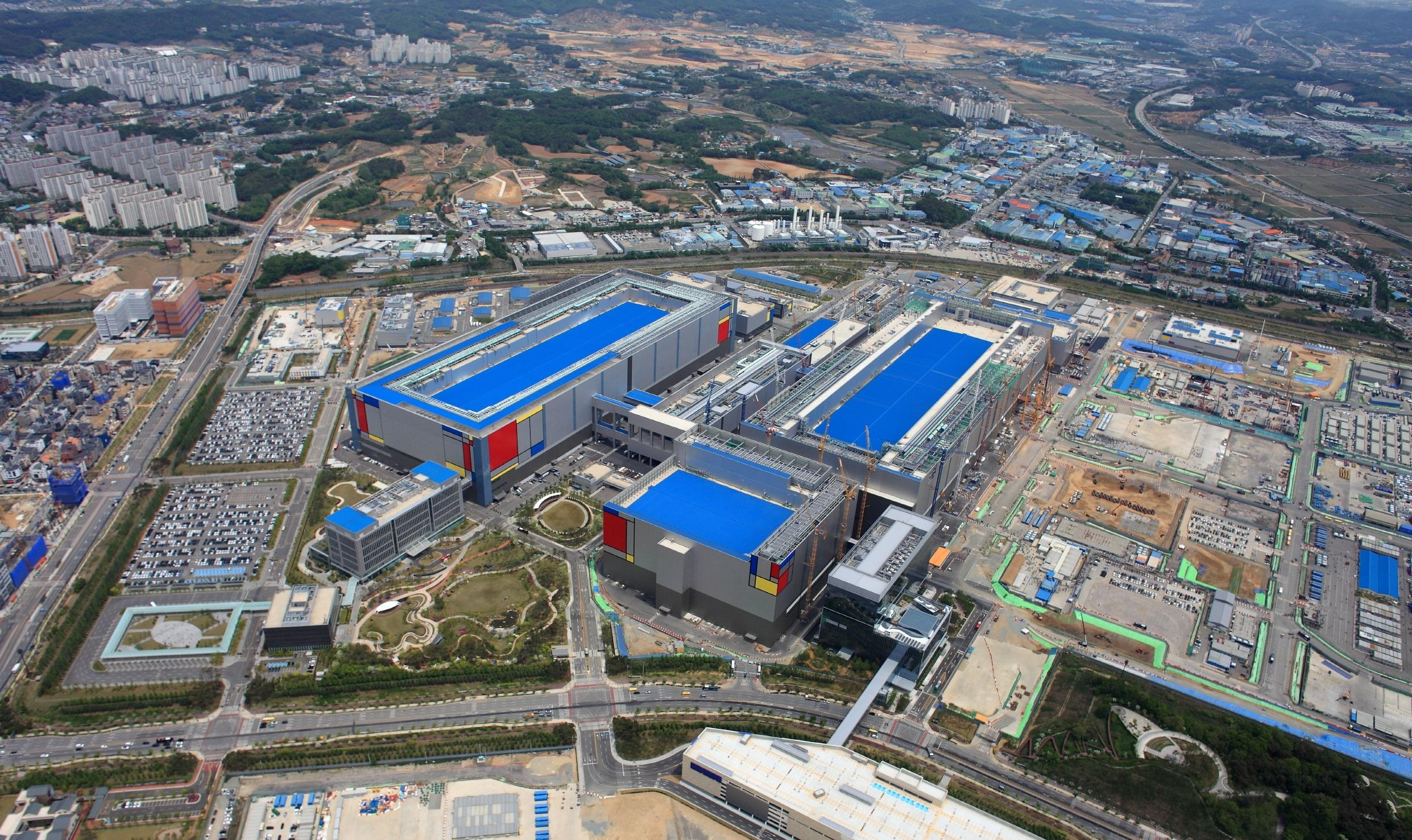
At the center of this advancement is Samsung Electronics’ Pyeongtaek Campus, one of the company’s most advanced manufacturing hubs.
This facility already produces:
- 7nm chips
- 5nm chips
- And now, high-yield 4nm chips
With the new milestone achieved, the campus is now prepared to supply 4nm chips across several high-growth sectors, including:
1. Artificial Intelligence (AI) Accelerators
AI-driven computing requires high-performance chips capable of handling massive datasets. Samsung’s improved yields make it a viable supplier in this rapidly expanding market.
2. Automotive Technology
Modern vehicles rely increasingly on advanced semiconductors for everything from driver assistance systems to infotainment.
3. Mobile Devices
While flagship devices push toward smaller nodes like 3nm and 2nm, 4nm remains a cost-efficient and reliable option for a wide range of smartphones and tablets.
The HBM4 Connection: Memory Innovation at Scale
Samsung’s 4nm process plays a critical role beyond logic chips. It is also used as the base die for sixth-generation HBM4 memory chips.
High Bandwidth Memory (HBM) is essential for:
- AI training and inference
- Data center operations
- High-performance computing
By improving yields at 4nm, Samsung strengthens its position in the memory market—an area already central to its business strategy.
This integration of logic and memory manufacturing creates a powerful synergy, enabling Samsung to offer end-to-end semiconductor solutions.
Economic Pressures and the Path to Profitability
The semiconductor industry has been grappling with rising memory prices, which have put pressure on manufacturers and consumers alike.
Samsung’s improved yields could help mitigate these challenges by:
- Reducing production costs
- Increasing supply stability
- Enhancing margins on existing contracts
The company is now targeting a return to profitability in the second half of the year, with its mature 4nm process playing a key role in that recovery.
Why 4nm Still Matters in a 2nm World
At first glance, the industry’s focus on next-generation nodes like 2nm might make 4nm seem outdated. But in reality, older nodes remain crucial.
Here’s why:
- Cost efficiency: Not all applications require cutting-edge performance
- Scalability: Mature nodes are easier to produce at high volumes
- Reliability: Proven processes reduce risk for large deployments
As demand for semiconductors diversifies, having a stable and efficient 4nm offering allows Samsung to capture a broader segment of the market.
What Comes Next for Samsung Foundry?
Samsung’s progress at 4nm is not an endpoint—it’s a stepping stone.
The company is already:
- Advancing its 2nm roadmap, with mass production targeted in the coming years
- Expanding global manufacturing capabilities
- Strengthening partnerships with major tech firms
If sustained, this momentum could transform Samsung from a challenger into a co-equal competitor with TSMC.
Conclusion: A Turning Point in the Semiconductor Race
Samsung Foundry’s achievement of an 80% yield on 4nm chips represents more than a technical milestone—it marks a strategic inflection point.
With a mature process now in place, Samsung is positioned to:
- Compete more aggressively in the global foundry market
- Support booming demand for AI and advanced computing
- Stabilize costs amid rising industry pressures
In a sector defined by precision and scale, even incremental improvements can have outsized effects. Samsung’s latest breakthrough may well be one of those moments—quiet in announcement, but profound in impact.


