Heidi Klum: The Art of Transformation at the 2026 Met Gala
When Fashion Becomes Performance
At the 2026 Met Gala, where the theme “Costume Art” and the dress code “Fashion is art” encouraged boundary-pushing creativity, few embodied the concept as completely as Heidi Klum. Known globally as a supermodel, television host, and master of dramatic transformations, Klum arrived not simply dressed for the occasion—but transformed into a living sculpture.
- When Fashion Becomes Performance
- A Living Marble Statue on the Red Carpet
- The Met Gala 2026: A Night of Artistic Expression
- A Reputation Built on Transformation
- Public Reaction: Praise, Confusion, and Debate
- Fashion vs. Costume: Redefining the Line
- Why Heidi Klum Continues to Stand Out
- A Moment That Reflects a Larger Trend
- Conclusion: Becoming the Theme
Her appearance quickly became one of the most talked-about moments of the night, blurring the lines between fashion, performance art, and illusion.
A Living Marble Statue on the Red Carpet
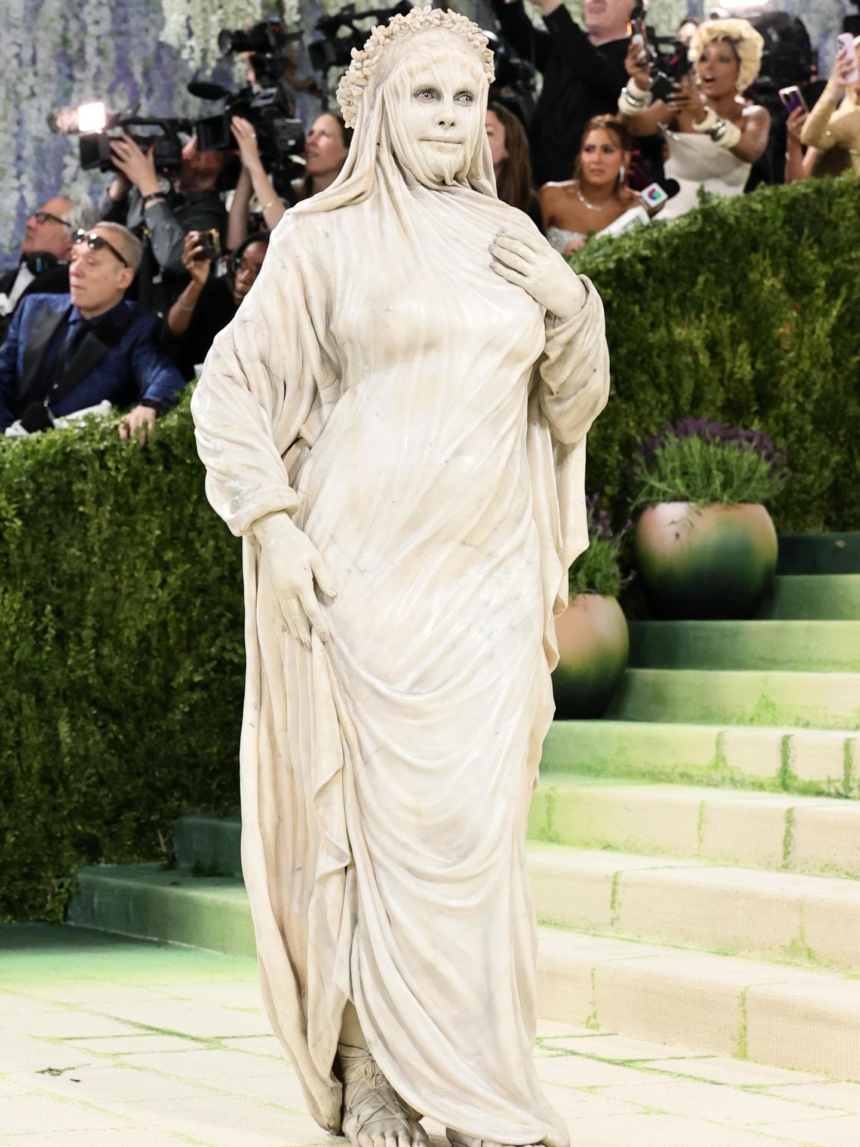
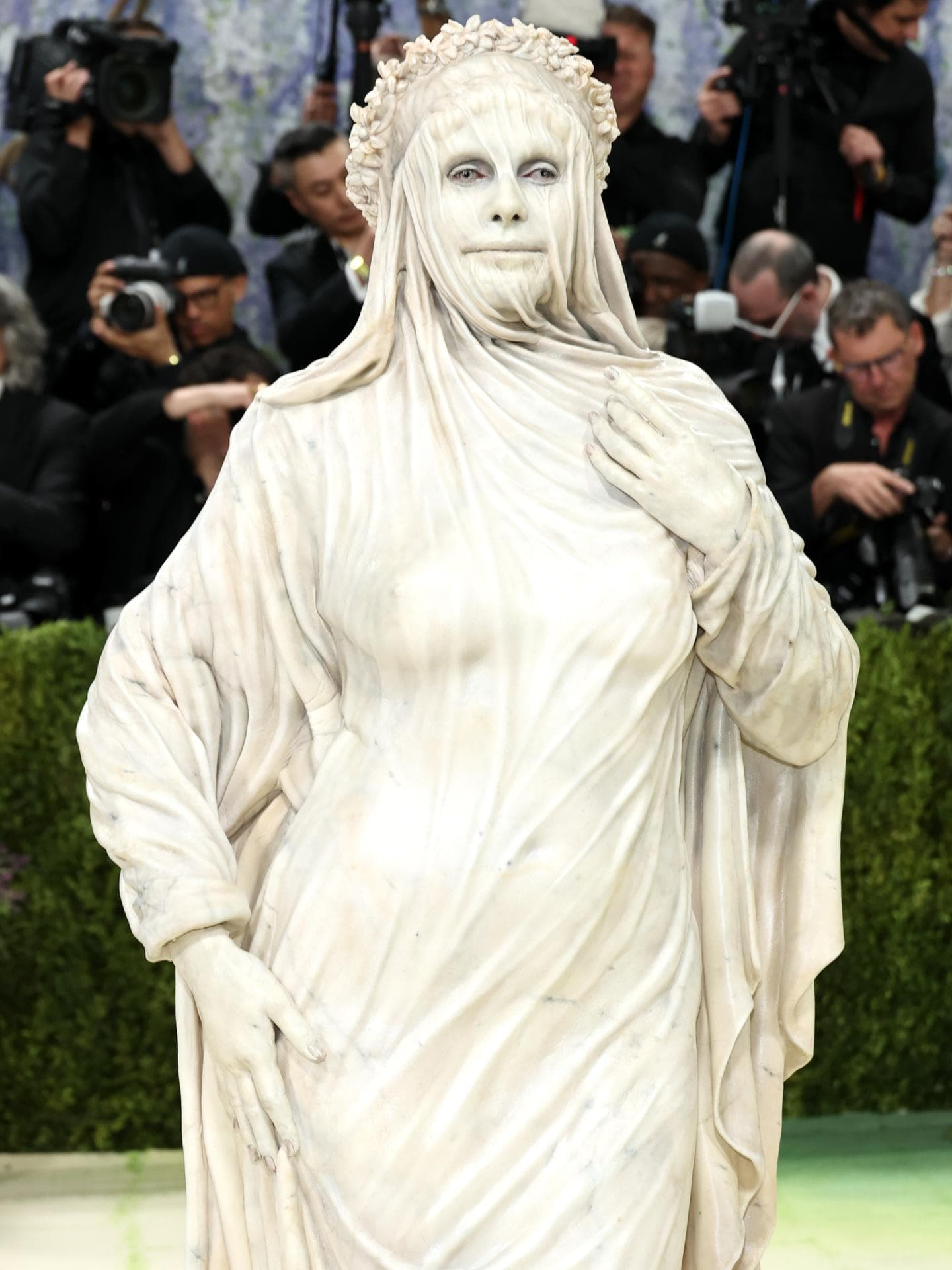
Klum’s look was anything but conventional. She appeared as a marble statue, covered head-to-toe in chalky gray tones, with draped robes sculpted to mimic stone. The ensemble featured intricate prosthetics, including a veil-like effect across her face, creating the illusion of carved marble.


The design drew inspiration from classical sculpture, including works such as The Veiled Vestal and The Veiled Christ, both known for their delicate illusion of fabric carved from stone.
“I look hard, but I’m soft,” Klum said during a red carpet interview—summarizing the paradox at the heart of her transformation.


What made the look particularly striking was its commitment to realism. The textures, tones, and drapery created the effect of a museum artifact brought to life. Observers noted that she resembled everything from the Statue of Liberty to a Renaissance sculpture, underscoring how effectively the concept translated.
The Met Gala 2026: A Night of Artistic Expression
The Met Gala, held annually at the Metropolitan Museum of Art in New York, serves as both a fundraiser and a cultural spectacle. The 2026 edition celebrated the opening of the “Costume Art” exhibition, curated to explore the relationship between clothing and artistic expression.
Celebrities across industries embraced the theme, presenting designs inspired by paintings, sculptures, and conceptual art. From Beyoncé’s sculptural skeleton ensemble to elaborate performance-inspired outfits, the evening emphasized fashion as a medium of storytelling and visual art.
Within this context, Klum’s choice stood out—not just as an outfit, but as a full conceptual execution. Rather than referencing art, she became it.

A Reputation Built on Transformation
Klum’s Met Gala moment did not emerge in isolation. It reflects a long-established reputation for pushing the limits of costume and transformation.
Over the years, she has become synonymous with elaborate, often unrecognizable transformations:
- The viral worm (2022): A full-body costume that dominated social media conversations
- Jessica Rabbit: A prosthetic-heavy interpretation of the animated icon
- An elderly version of herself: A hyper-realistic aging transformation
- Princess Fiona from Shrek: Complete with green skin and full character immersion
These appearances—particularly her annual Halloween costumes—have cemented her identity as a performer who prioritizes immersion over conventional glamour.
At the Met Gala, this same philosophy translated seamlessly. While many attendees interpret themes conservatively, Klum’s approach is rooted in total commitment.
Public Reaction: Praise, Confusion, and Debate
As expected, Klum’s bold look sparked intense reactions online.
Many praised her for fully embracing the theme. Comments ranged from admiration—“Heidi stays winning”—to declarations that her outfit was a “100-out-of-10.”
Others were less convinced. Critics questioned whether the ensemble leaned too far into costume territory, with some remarking that it felt more like Halloween than haute couture.
Some viewers were even momentarily unsure whether the figure on the red carpet was Klum at all, with a few speculating whether the look was artificial or digitally enhanced.
This divide reflects a broader tension in fashion: the balance between artistry and wearability. Klum’s choice deliberately challenged that boundary.
Fashion vs. Costume: Redefining the Line
The debate surrounding Klum’s appearance highlights a recurring question in fashion discourse—where does fashion end and costume begin?
At an event like the Met Gala, which explicitly encourages thematic interpretation, the distinction becomes fluid. Klum’s approach suggests that fashion, when treated as art, need not adhere to traditional expectations of elegance or practicality.
Instead, it can function as:
- Visual storytelling
- Performance art
- Cultural commentary
- Conceptual experimentation
Her look, described by some as resembling a “museum exhibit that came to life,” encapsulated this shift.
Why Heidi Klum Continues to Stand Out
Klum’s enduring relevance on high-profile red carpets stems from a consistent formula:
- Total commitment to the concept
- Willingness to embrace risk
- Prioritizing transformation over convention
In an environment where many celebrities opt for safe interpretations, this approach ensures visibility—and often virality.
Her 2026 Met Gala appearance reinforced this strategy. While others referenced art, Klum embodied it entirely, becoming one of the defining images of the evening.
A Moment That Reflects a Larger Trend
Klum’s transformation also aligns with a broader evolution in fashion events. Increasingly, red carpets are shifting from displays of luxury toward platforms for conceptual expression.
Designers and celebrities are exploring:
- Sculptural silhouettes
- Performance-driven presentations
- Historical and artistic references
- Experimental materials and techniques
The Met Gala, in particular, has become a stage where fashion intersects with art, theater, and cultural commentary.
Klum’s marble statue serves as a clear example of this evolution.
Conclusion: Becoming the Theme
Heidi Klum’s appearance at the 2026 Met Gala was more than a fashion statement—it was a demonstration of what happens when creativity is pushed to its limits.
By transforming herself into a living sculpture, she did not merely interpret the theme “Fashion is art.” She embodied it in its most literal and ambitious form.
In doing so, she reaffirmed her position as one of the most daring and inventive figures on the global fashion stage—someone who does not just follow themes, but fully becomes them.