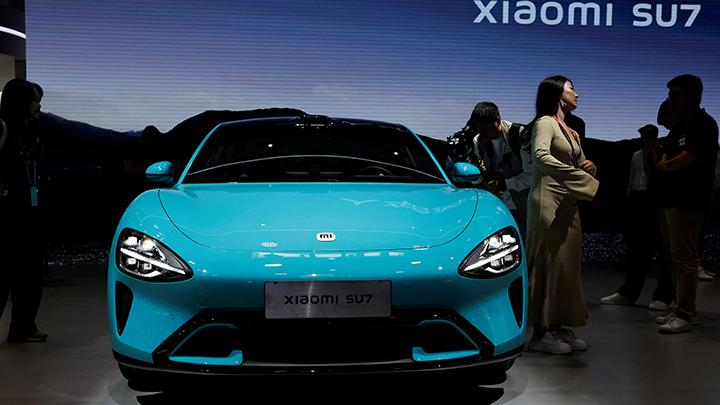
Inside the Tech Giant’s High-Speed Push Into the EV Market
Introduction: From Smartphones to Smart Mobility
Xiaomi’s rapid ascent in the electric vehicle (EV) market is one of the most closely watched developments in the global automotive industry. Known primarily for its smartphones and connected ecosystem, the Chinese tech giant is now executing an aggressive and highly coordinated expansion into electric mobility.
The company’s strategy is not merely about launching vehicles—it is about scaling production, capturing market share, integrating ecosystems, and positioning itself as a serious challenger to established EV leaders. Recent data surrounding its flagship SU7 sedan, production ramp-up plans, and upcoming product launches provide a clear window into how Xiaomi intends to compete.
The Core Engine: SU7 as the Growth Catalyst
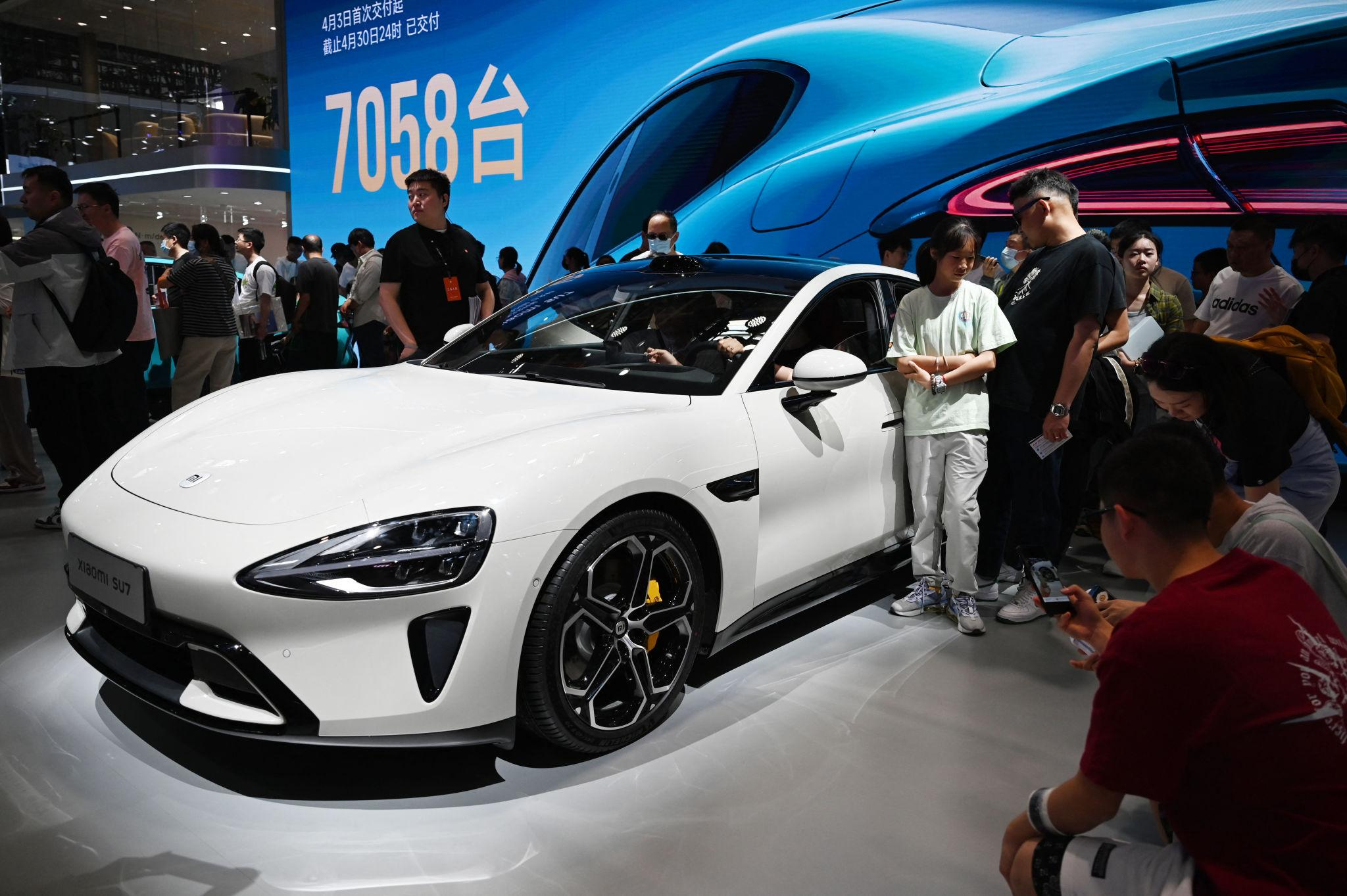
At the center of Xiaomi’s EV strategy is the SU7 electric sedan—a model that has quickly become the backbone of its early success.
The numbers tell a compelling story:
- More than 70,000 locked-in orders within six weeks of launch
- Over 30,000 vehicles delivered in April alone, representing roughly 50% month-on-month growth
- 26,000 cumulative deliveries recorded earlier in April, before the latest surge
The SU7 was officially launched on March 19, with pricing designed to balance competitiveness and premium appeal:
- Standard: 219,900 yuan
- Pro: 249,900 yuan
- Max: 303,900 yuan
This pricing strategy positions the SU7 below many premium EV competitors while still offering high-end features, enabling Xiaomi to capture both mid-range and aspirational buyers.
Strategic Incentives Driving Early Demand
Xiaomi has used time-limited incentives to accelerate adoption:
- Launch-period benefits worth up to 69,000 yuan for premium variants
- Bundled features like zero-gravity seats and ultra-quiet cabins
- Financing incentives and feature packages to encourage early orders
These tactics are designed to create urgency and front-load demand—a classic strategy for scaling quickly in a competitive market.
Scaling Production: The Real Strategic Test
Strong demand is only part of the equation. Xiaomi’s growth strategy hinges on its ability to translate orders into deliveries at scale.
The 550,000-Unit Ambition
Xiaomi has set a bold target:
- 550,000 vehicle deliveries in 2026, up from approximately 410,000 in 2025
To meet this goal, production must increase significantly:
- Required average: over 55,000 vehicles per month for the remainder of the year
This implies a rapid ramp-up in manufacturing capacity—one that will test supply chains, factory efficiency, and operational execution.
Optimizing for Efficiency
To support scaling, Xiaomi is already making tactical adjustments:
- Removing certain optional configurations starting May 6
- Simplifying production lines to improve throughput
- Ensuring after-sales parts availability even for discontinued configurations
This approach reflects a shift from product experimentation to industrial discipline—prioritizing volume and delivery speed over customization.
Expanding the Portfolio: Moving Beyond the Sedan
While the SU7 anchors current growth, Xiaomi is actively broadening its EV lineup.
Enter the YU7 GT
The next major milestone is the launch of the YU7 GT, a high-performance electric SUV expected in late May.
Key strategic implications:
- Targets the premium EV segment, with pricing potentially reaching 500,000 yuan
- Expands Xiaomi’s appeal beyond sedan buyers
- Offers higher-margin opportunities compared to mass-market models
By entering the SUV category—one of the fastest-growing segments globally—Xiaomi is positioning itself for sustained volume growth and improved profitability over time.
Ecosystem Advantage: Where Xiaomi Differs
One of Xiaomi’s most distinctive strategic advantages lies in its ecosystem integration.
Vehicles as Part of a Connected Platform
Unlike traditional automakers, Xiaomi is building EVs as an extension of its broader digital ecosystem:
- Integration with smartphones and operating systems
- Vehicles acting as connected hubs for devices and services
- Future products designed to deepen cross-device connectivity
This creates a unified user experience—something competitors like Tesla have pioneered, but Xiaomi is adapting within its own extensive consumer electronics ecosystem.
Market Response: Strong Momentum, Lingering Questions
Investor Reaction
The market has responded positively to Xiaomi’s EV momentum:
- Shares rose 6.75% to HK$30.98 following strong delivery data
- Trading activity surged, reflecting heightened investor interest
However, the broader picture is more complex.
Profitability Concerns
Despite strong volume growth, analysts remain cautious:
- EV profitability may lag due to subsidies and production ramp-up costs
- Smartphone business margins are under pressure from rising component costs
- Overall revenue may face short-term declines despite EV growth
This highlights a critical tension in Xiaomi’s strategy: rapid expansion versus sustainable profitability.
Talent and Execution: Building Automotive Expertise
Recognizing the complexity of automotive manufacturing, Xiaomi has strengthened its leadership team by recruiting industry veterans:
- Former Tesla China general manager Kong Yanshuang joined Xiaomi EV
- Additional executives with Giga Shanghai experience are being brought in
This move underscores Xiaomi’s awareness that scaling EV production requires deep operational expertise—not just technological innovation.
The Strategic Playbook: Key Pillars of Xiaomi’s EV Growth
From the available data, Xiaomi’s EV strategy can be distilled into five core pillars:
1. Demand Acceleration
Aggressive pricing, incentives, and feature bundling to drive rapid order growth.
2. Manufacturing Scale
Streamlining production and targeting high-volume output to meet ambitious delivery goals.
3. Product Expansion
Launching new models like the YU7 GT to capture additional segments and improve margins.
4. Ecosystem Integration
Leveraging its existing tech ecosystem to create a differentiated user experience.
5. Talent Acquisition
Recruiting experienced automotive executives to support execution at scale.
Future Outlook: Can Xiaomi Sustain the Momentum?
Looking ahead, several factors will determine whether Xiaomi’s EV strategy succeeds:
- Execution of production ramp-up to meet the 550,000-unit target
- Market reception of new models like the YU7 GT
- Ability to improve margins as scale increases
- Integration of ecosystem features to enhance user loyalty
Additional product launches in the second half of 2026 could further strengthen momentum and provide new growth catalysts .
Conclusion: A High-Stakes Transition
Xiaomi’s electric vehicle push represents a bold transformation—from consumer electronics leader to full-scale automotive contender.
The company has demonstrated that it can generate strong demand and rapidly scale deliveries. However, the next phase will be more challenging: sustaining growth while improving profitability and operational efficiency.
If Xiaomi can successfully execute its strategy, it may not only secure a foothold in the EV market but also redefine how technology companies compete in the automotive sector.