

Ann Li’s Comeback Statement: A Turning Point at the 2026 Open de Rouen
A Resilient Performance Under Pressure
In a tournament defined by patience and tactical discipline, Ann Li delivered one of the most compelling performances of the early rounds at the Open de Rouen in April 2026.
Facing Daria Kasatkina, Li found herself under immediate pressure. She lost a tightly contested first-set tiebreak and fell behind 2-0 in the second set—an early deficit that could have dictated the match. Instead, what followed was a display of composure and endurance.
Li recovered to win 6-7 (6), 6-2, 6-4, completing a comeback victory that lasted over two hours and nine minutes at the Kindarena venue.
This result was not just a win; it marked a shift in momentum for a player seeking consistency after a difficult run of results earlier in the season.
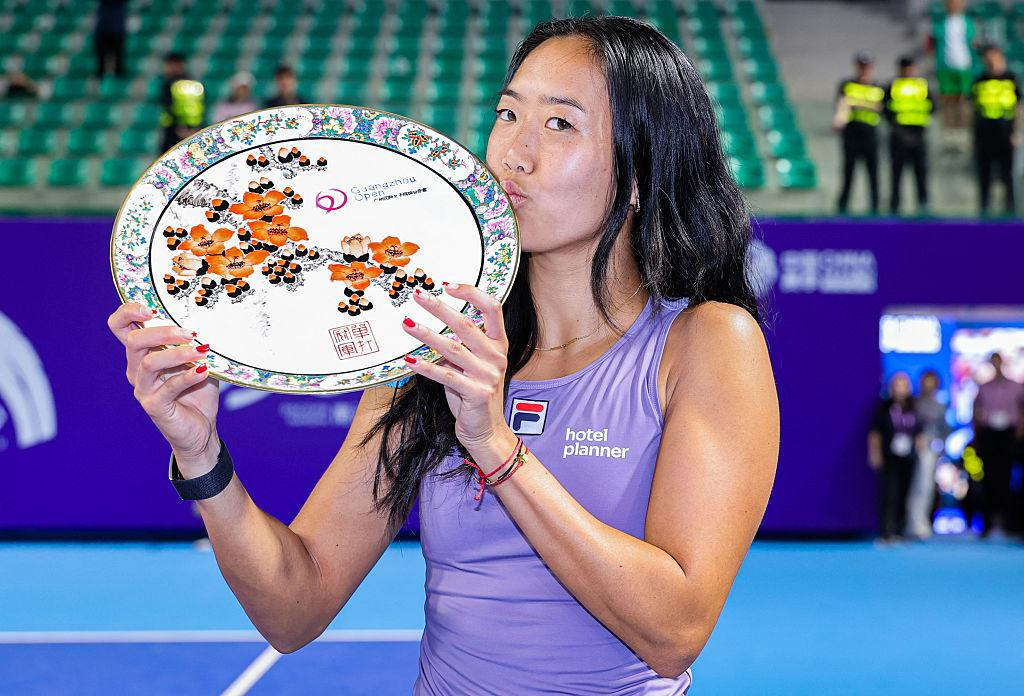
Breaking Down the Match: Turning Defense into Control
The match itself evolved in distinct phases, each highlighting a different aspect of Li’s game.
Early Struggles and Kasatkina’s Control
Kasatkina entered the match with renewed focus after returning from a two-month injury layoff. She capitalized on Li’s slow start, edging the first set in a tense tiebreak after saving multiple set points.
Her early 2-0 lead in the second set suggested a straight-sets victory was within reach.
Momentum Shift
However, the turning point came when Li adjusted her baseline strategy. She began extending rallies, forcing Kasatkina into longer exchanges—an approach that proved decisive.
Li won six consecutive games in the second set, flipping the match dynamic entirely.
Closing the Match
In the third set, both players traded games evenly before Li secured a critical break at 3-3. From there, she maintained control, closing out the match with disciplined serving and controlled aggression.
Her ability to execute under pressure—especially after losing the first set—highlighted a level of maturity that has become increasingly evident in her game.
Context: A Much-Needed Win
This victory comes at a critical stage in Li’s 2026 campaign.
Prior to Rouen, she had struggled for rhythm, losing five of her previous six matches, including a clay-court defeat to Dayana Yastremska and tough encounters against higher-ranked opponents such as Aryna Sabalenka.
Against this backdrop, the win over Kasatkina serves as both a confidence boost and a tactical validation—particularly on clay, a surface that demands patience and physical resilience.
Next Challenge: Kamilla Rakhimova
Li’s progression sets up a second-round clash with Kamilla Rakhimova, currently ranked world No. 74.
Rakhimova secured her place in the round of 16 with a 6-3, 7-6 (1) victory over Elvina Kalieva, demonstrating strong composure in a second-set tiebreak.
This matchup presents a contrasting stylistic battle:
- Li: Relies on resilience, rally tolerance, and late-match execution
- Rakhimova: Brings structured baseline play and composure in key moments
The indoor clay surface at Rouen further amplifies these dynamics. The slower conditions reward movement, endurance, and the ability to construct points carefully—qualities both players have shown in their opening matches.
A Broader Tournament Narrative
Li’s performance is part of a wider competitive field at the WTA 250 event, where several intriguing matchups are shaping the tournament narrative.
- Harmony Tan vs. Anna Bondar
A clash of styles between Tan’s variety and Bondar’s heavy topspin. - Katie Boulter vs. Jaqueline Cristian
A test of Boulter’s aggressive baseline play against Cristian’s clay-court resilience.
These matches reinforce a central theme of the Rouen tournament: adaptability. On indoor clay, success is less about raw power and more about strategic patience.
Tactical Implications: What Li’s Win Reveals
From a performance-analysis standpoint, Li’s victory offers several insights:
1. Physical Endurance as a Competitive Edge
Li outlasted Kasatkina in extended rallies, particularly in the second and third sets.
2. Mid-Match Adjustments
Her ability to shift tactics—from reactive defense to controlled baseline aggression—was decisive.
3. Mental Resilience
Recovering from a set deficit and an early break requires composure under pressure, a trait that often separates consistent performers from inconsistent ones.
What Comes Next
Li’s progression to the round of 16 positions her at a pivotal juncture in the tournament. A win against Rakhimova would not only secure a quarterfinal berth but also reinforce her trajectory heading into the European clay season.
For Kasatkina, the loss highlights ongoing challenges in regaining consistency after injury, with her 2026 record now reflecting intermittent form.
Conclusion: A Defining Moment in Rouen
Ann Li’s comeback victory at the 2026 Open de Rouen is more than a single match result—it is a statement about adaptability, resilience, and competitive growth.
In a tournament environment that rewards patience and precision, Li demonstrated both. Her ability to recover from adversity and impose her game under pressure suggests that this run in Rouen could mark the beginning of a more stable phase in her season.
As she prepares to face Kamilla Rakhimova, the next match will test whether this performance was an isolated surge or the foundation of a sustained resurgence.


