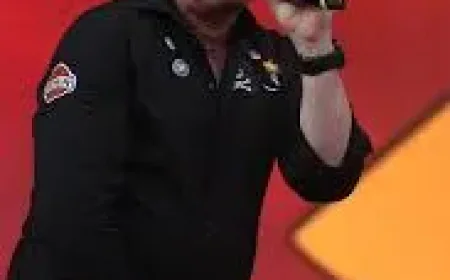
Zlatko Buric Net Worth, Relationships, Age/Birthdate & Birthday
Overview of Zlatko Buric — net worth, relationships, age/birthdate, and birthday.
 loveness92
A Quiet Ascent: Zlatko Burić — From Osijek to International Film Stature
Born on May 13, 1953, in Osijek — then part of former Yugoslavia — Zlatko Burić’s story is one of steady transformation. Raised in a working-class family, he found early solace and identity in the arts. After training at the Dramski Studio in Osijek in 1972, he immersed himself in the world of theatre through the experimental group Kugla Glumište, which pushed boundaries in Yugoslav dramaturgy.
That formative period grounded Burić in a blend of raw emotion, improvisation, and realism — traits that would later mark his screen performances.
Reinvention in Denmark — A Leap of Faith
In the early 1980s, Burić relocated to Denmark, integrating himself into a new cultural reality. Driven partly by personal ties — at the time married to his first wife, Sonja Hindkjær — he gradually transitioned from theatre to screen.
The move could’ve derailed a fledgling acting career, but for Burić it signalled reinvention. Embracing the challenge of a foreign language and unfamiliar film industry, he carved out a niche — aided by his striking presence: tall, commanding, and with a deeply textured voice that resonated with intensity.
Breakthrough: The Man Behind Milo — From Gritty Beginnings to Cult Status
The pivotal moment came in 1996 when Burić took on the role of Milo in Pusher, directed by Nicolas Winding Refn. The film — raw, uncompromising, and steeped in the underworld of Copenhagen — thrust him into the spotlight. His portrayal was so compelling that he became the only actor to appear in all three films of the trilogy (1996–2005).
For his first turn as Milo, Burić earned the prestigious Bodil Award for Best Supporting Actor in 1997 — cementing his status as a rising force in Danish cinema.
From there, his career began to bridge languages, industries, and continents.
A Global Presence: From Blockbusters to Award-Winning Art Cinema
While many European actors remain regionally celebrated, Burić’s versatility pulled him into international spotlight. He appeared as the ruthless Russian billionaire Yuri Karpov in the disaster epic 2012 (2009), bringing gravitas to the film’s global narrative.
Yet, his most acclaimed resurgence came decades into his career. In Triangle of Sadness (2022), a satirical class-war comedy from Swedish director Ruben Östlund, Burić portrayed the unscrupulous oligarch Dmitry — a role that resonated deeply in an era of global inequality debates. His performance won him the European Film Award for Best Actor and the Guldbagge Award for Best Supporting Actor.
This late-career triumph reaffirms what Burić had long embodied: enduring talent, adaptability, and a refusal to be typecast.
Matters of the Heart: Relationships Anchoring a Nomadic Life
Burić’s personal life reflects the dualities that have shaped his career. After moving to Denmark with Sonja Hindkjær in the early ’80s, the couple had three children. Their life in Copenhagen marked the start of Burić’s integration into Danish society.
Following their divorce, Burić found companionship again. On October 7, 1998, he married Dragana Milutinović — a Danish-Serbian actress.
While public attention centers on his work, it’s clear that family and stable relationships have anchored him through decades of cross-cultural navigation and artistic upheaval.
On Wealth: What Do We Know (and What We Don’t)
Unlike Hollywood megastars, Burić’s fortune isn’t splashed across glossy tabloids or celebrity-rich lists. In fact — as of now — there is no widely accepted public estimate of Zlatko Burić’s net worth from major financial or entertainment outlets such as Forbes, Bloomberg, or People. A search across credible sources yields no verified valuation.
This absence — while not unusual for character actors — speaks to his career's nature: steady, respected, but not defined by blockbuster-level salaries or tabloid visibility. His longevity suggests a comfortable living, but attempts to attach a precise figure would be speculative.
Given this ambiguity, any “net worth” attributed to Burić online should be treated with caution — especially if derived from unsourced fan sites or guesswork.
The Legacy of a Chameleon: Why Burić Matters
What makes Zlatko Burić’s journey compelling is not flashy fame or box-office domination, but resilience and reinvention. From the gritty experimental theatres of Yugoslavia to mainstream Danish cinema, from Hollywood blockbusters to Palme d’Or–winning European art films — his career arcs across borders, languages, styles, and decades.
His performance as Milo in the Pusher series helped shape the tone of modern Danish crime cinema and contributed to a wave of raw, realistic storytelling in Scandinavian film. Decades later, as Dmitry in Triangle of Sadness, he became the face of biting social satire — reminding audiences that he remains relevant, incisive, and provocative.
In a time when actors often burn bright and fade fast, Burić’s quiet consistency stands out. His story underscores that acting — at its most powerful — is less about fame and much more about presence, transformation, and the courage to evolve.
What We Still Don’t Know — And Why It Matters
-
Net worth remains unverified. Without data from credible financial publications, any number is speculation.
-
Privacy about personal finances and lifestyle, which gives him a kind of professional dignity absent from many celebrity narratives.
-
Upcoming roles and projects beyond 2025 remain under wraps — as is common for actors who avoid over-exposure.
Because of this, Burić’s story continues as it began: quietly — but with the undeniable weight of performance, history, and reinvention.