



Jasveen Sangha: The Rise and Fall of the “Ketamine Queen”
A Case That Captured Global Attention
In April 2026, a Los Angeles courtroom delivered a decisive moment in one of the most high-profile drug-related cases in recent years. Jasveen Sangha—a woman once known for her jet-set lifestyle and elite social connections—was sentenced to 15 years in federal prison for her role in supplying the ketamine that led to the death of Matthew Perry.
- A Case That Captured Global Attention
- From Privileged Beginnings to Criminal Enterprise
- The Matthew Perry Connection
- The Expansion of a Dangerous Network
- The Courtroom: Remorse, Responsibility, and Judgment
- A Wider Web of Accountability
- The Human Cost Behind the Headlines
- The Role of Ketamine in Modern Society
- Cultural and Legal Implications
- What Comes Next?
- Conclusion: A Defining Case of Consequence
The case is not just about a single conviction. It exposes a complex network of addiction, exploitation, and illegal drug distribution operating beneath the surface of celebrity culture. It also raises broader questions about accountability, medical ethics, and the growing misuse of substances like ketamine.

From Privileged Beginnings to Criminal Enterprise
Jasveen Sangha’s story begins far from the courtroom. A dual US-British citizen of Punjabi origin, she grew up in California after her family relocated from London. She completed her high school education in Calabasas in 2001 before earning a degree in social sciences from the University of California, Irvine, followed by an MBA from Hult International Business School in London in 2010 .
On the surface, her life reflected success and mobility. Social media portrayed her as a global traveler attending exclusive events, moving between Los Angeles and London, and mingling with celebrities. But beneath that image, prosecutors later argued, a different reality was taking shape.
Authorities described her North Hollywood residence as a hub for illegal drug distribution—what prosecutors called a “drug-selling emporium” . Over time, she became known in certain circles as the “Ketamine Queen,” a nickname that would later define her public identity.
The Matthew Perry Connection
The turning point in Sangha’s story came through her connection to Matthew Perry, best known for his role as Chandler Bing on Friends. Perry had long struggled with substance abuse, a battle he openly documented in his memoir and interviews.
In 2023, he was found dead in the hot tub of his Los Angeles home. An autopsy concluded that his death resulted from the “acute effects of ketamine,” which caused him to lose consciousness and drown .
Investigators later uncovered how Perry obtained the drug. According to court documents, Sangha supplied ketamine through intermediaries, including a dealer named Erik Fleming and Perry’s personal assistant, Kenneth Iwamasa. She admitted to selling 51 vials of ketamine that ultimately reached the actor .
Prosecutors stated that Iwamasa administered multiple injections to Perry, with one of those doses proving fatal.
The Expansion of a Dangerous Network
The case revealed that Perry was not the only victim linked to Sangha’s activities. Prosecutors presented evidence that she had been distributing drugs for years, including an earlier case in 2019 where a man died hours after receiving ketamine she supplied .
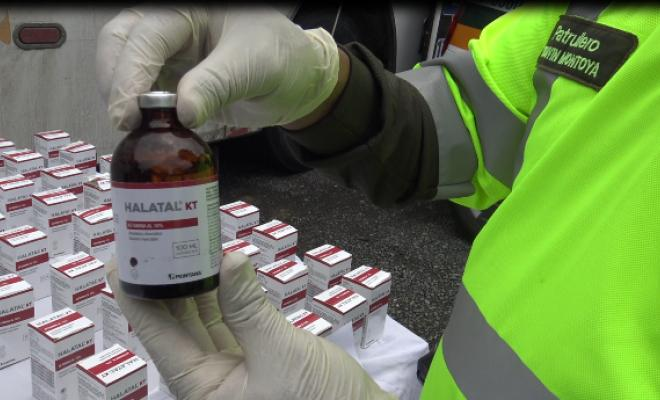
During a raid on her apartment in March 2024, authorities discovered:
- 79–80 vials of ketamine
- Cocaine and methamphetamine
- Thousands of pills, including Xanax
These findings reinforced the prosecution’s claim that Sangha operated a sustained and large-scale drug distribution network.
Court documents also suggested that she continued selling drugs even after becoming aware of Perry’s death—an action that weighed heavily in sentencing decisions.
The Courtroom: Remorse, Responsibility, and Judgment
In court, Sangha expressed remorse, stating:
“I take full responsibility for my actions. These were horrible choices that ultimately proved tragic.”
She also acknowledged the broader consequences of her actions, saying her conduct was “reckless, dangerous, and wrong” .
However, the judge took a stricter view. US District Judge Sherilyn Garnett emphasized that Sangha’s continued drug sales after Perry’s death indicated a lack of genuine remorse at the time. Prosecutors also argued that she attempted to destroy evidence once she learned of the actor’s death .
Ultimately, the court imposed a 15-year prison sentence—the maximum recommended by prosecutors, though far below the potential 65-year maximum she faced.
A Wider Web of Accountability
Sangha was not the only individual implicated in the case. The investigation identified five defendants, including:
- Two physicians who supplied ketamine
- A dealer who acted as an intermediary
- Perry’s personal assistant
Several have already been sentenced, with penalties ranging from home confinement to multiple years in prison .
The disparity in sentencing became a point of contention. Sangha’s defense argued that she was being punished more severely than others directly involved in administering the drug.
The Human Cost Behind the Headlines
Beyond legal arguments, the case carried a profound emotional weight. During sentencing, members of Perry’s family delivered victim-impact statements that underscored the personal loss behind the legal proceedings.
His stepfather, Keith Morrison, reflected on the actor’s potential:
“All those possibilities died with him. He should have had another act, two more acts.”
His stepmother described the damage as “irreversible,” urging the court to impose the maximum sentence .
These statements shifted the narrative from a legal case to a human tragedy—one that extended far beyond the individuals directly involved.
The Role of Ketamine in Modern Society
The case also highlights the complex role of ketamine itself. Originally developed as a medical anesthetic, ketamine is now used in controlled settings to treat depression and other mental health conditions.
However, its growing presence as a recreational drug has created new risks. Its dissociative effects can impair consciousness, and in high doses, it can be fatal—particularly when combined with other substances or unsafe environments .
Perry’s case illustrates how quickly medical use can cross into dangerous misuse, especially when access is facilitated by illegal networks.
Cultural and Legal Implications
The sentencing of Jasveen Sangha carries broader implications:
1. Accountability in Drug Supply Chains
The case reinforces that responsibility extends beyond direct users to those who supply and profit from addiction.
2. Scrutiny of Medical and Illicit Overlap
The involvement of licensed physicians highlights vulnerabilities in the regulation of controlled substances.
3. Celebrity Culture and Exploitation
High-profile individuals may be particularly vulnerable to exploitation due to wealth, access, and existing struggles with addiction.
What Comes Next?
While Sangha’s sentencing marks a significant milestone, the case is not fully closed. Remaining defendants still face sentencing, and legal discussions around liability and sentencing fairness are likely to continue.
More broadly, the case may influence future enforcement strategies targeting illegal drug networks, particularly those intersecting with medical supply chains.
Conclusion: A Defining Case of Consequence
The story of Jasveen Sangha is ultimately one of contrast—between privilege and criminality, image and reality, opportunity and consequence.
Her rise as the so-called “Ketamine Queen” and subsequent fall through the justice system encapsulate a wider societal issue: the intersection of addiction, profit, and accountability.
The death of Matthew Perry brought global attention to these dynamics, transforming a personal tragedy into a landmark legal case. The outcome serves as a warning—about the dangers of unchecked drug distribution, the cost of exploitation, and the lasting impact of choices that ripple far beyond a single moment.