


Warriors vs Spurs: A Statement Win That Signals a Power Shift in the West
A Night That Started Fast—and Never Slowed Down
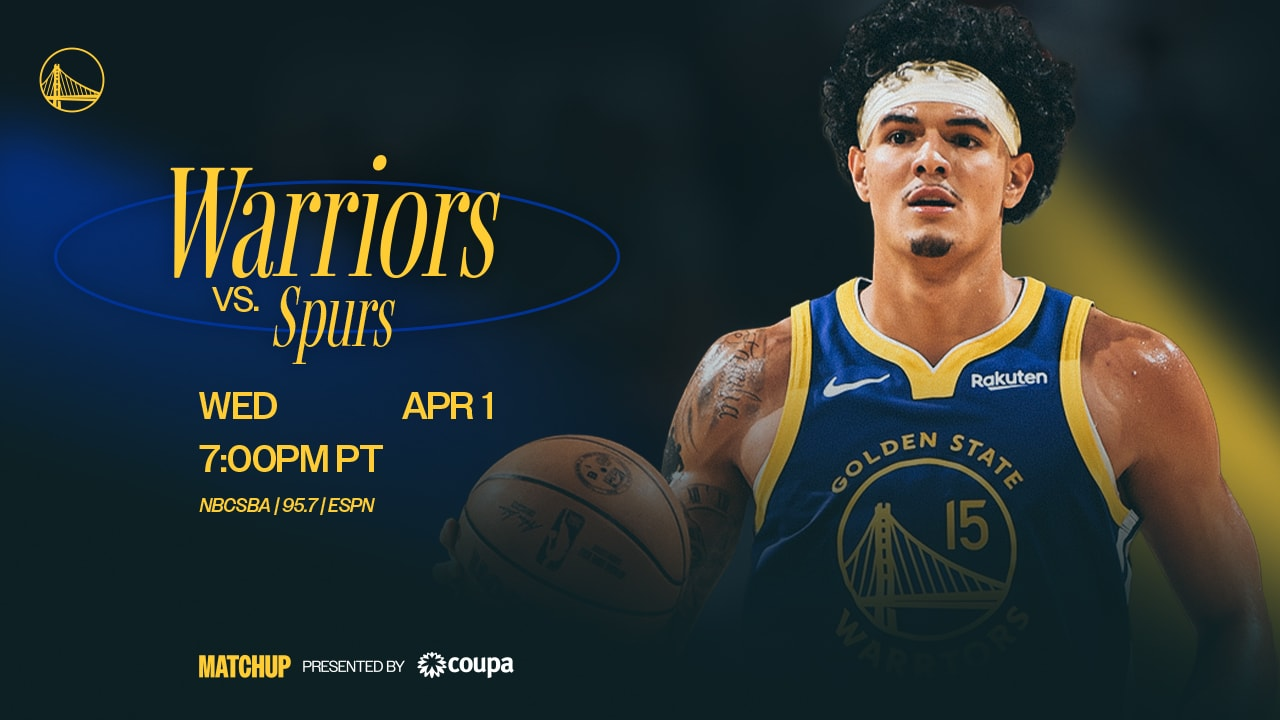
On April 1, 2026, at the Chase Center in San Francisco, the matchup between the Golden State Warriors and the San Antonio Spurs quickly turned into a one-sided showcase of dominance.
- A Night That Started Fast—and Never Slowed Down
- The Wembanyama Effect: Control From the Opening Tip
- Spurs’ System Efficiency: Depth and Ball Movement
- Warriors’ Struggles: Injuries and Inconsistency
- Game Flow: Where It Was Won
- Western Conference Implications: A Tight Race at the Top
- Injury Watch: A Critical Variable for Golden State
- What This Game Represents
- Conclusion: Momentum vs Uncertainty
The final score—127 to 113—only partially captures how firmly San Antonio controlled the game. From the opening minutes, the Spurs dictated pace, rhythm, and intensity, setting the tone for what became their 10th consecutive victory.
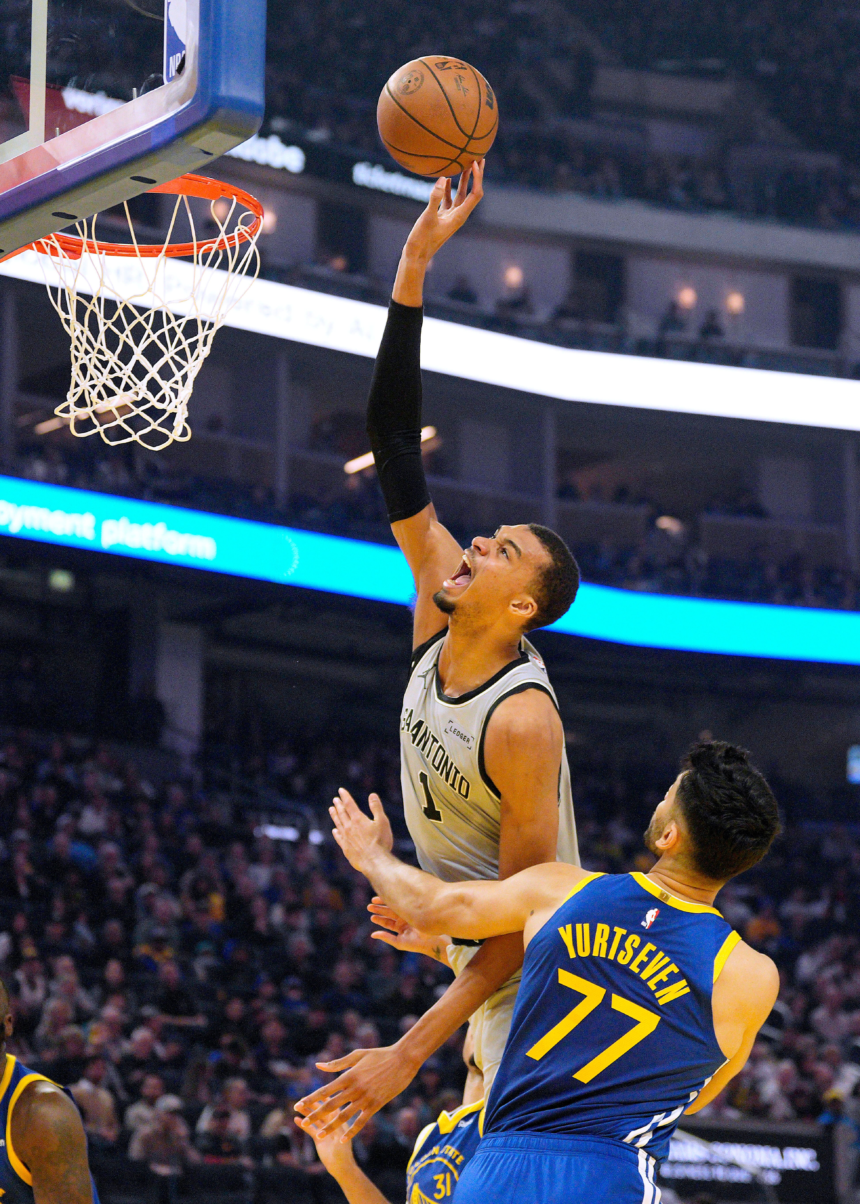
At the center of it all was Victor Wembanyama, whose performance not only defined the game but also reinforced his growing status as one of the league’s most dominant forces.



The Wembanyama Effect: Control From the Opening Tip
San Antonio’s strategy was clear: establish control early through their star center—and it worked immediately.
Wembanyama scored 10 of the team’s first 14 points within the opening 3:36, helping the Spurs surge to a 17–3 lead. That early burst effectively destabilized Golden State’s defensive structure and forced them into reactive basketball for the remainder of the night.


By the final buzzer, his stat line was emphatic:
- 41 points
- 18 rebounds
- 3 blocks
- 16-of-22 shooting (72.7%)
This marked his second consecutive 41-point game and his fourth 40+ point performance of the season, underscoring a level of consistency typically associated with established superstars rather than emerging talents.
Spurs’ System Efficiency: Depth and Ball Movement
While Wembanyama dominated headlines, San Antonio’s overall team execution was equally decisive.
The Spurs finished with:


- 127 total points
- 48 rebounds
- 34 assists
- 44-of-93 field goal shooting
Seven players scored in double figures, highlighting a balanced offensive structure:
- Stephon Castle: 15 points, 11 assists
- De’Aaron Fox: 11 points, +30 plus-minus
- Julian Champagnie: 15 points
- Bench contributions from Harrison Barnes and Dylan Harper added further stability
This level of distribution reflects a mature offensive system—one capable of sustaining high output even beyond its primary scorer.
Warriors’ Struggles: Injuries and Inconsistency
For Golden State, the loss was shaped as much by absence as by execution.
The team entered the game without Stephen Curry, who has now missed 26 consecutive games due to a right knee injury. His absence has had cascading effects on spacing, shot creation, and late-game control.
Despite that, there were notable individual efforts:
- Nate Williams: 18 points
- LJ Cryer: 17 points
- Brandin Podziemski: 14 points, 6 rebounds, 5 assists
- Pat Spencer: 14 points, 8 rebounds, 7 assists
- Seth Curry: 12 points off the bench
However, the Warriors struggled to sustain defensive pressure, particularly in the first half, where they trailed 70–49 at halftime. Their late push—outscoring San Antonio in the third quarter—was insufficient to reverse the momentum.
Game Flow: Where It Was Won
The structure of the game highlights where San Antonio gained its decisive edge:
| Quarter | Spurs | Warriors |
|---|---|---|
| 1st | 35 | 26 |
| 2nd | 35 | 23 |
| 3rd | 26 | 34 |
| 4th | 31 | 30 |
San Antonio’s dominance in the first half (70–49) created a buffer that Golden State never fully threatened.
This early advantage reflects a broader trend: the Spurs are not just winning—they are controlling games from the outset.
Western Conference Implications: A Tight Race at the Top
With this victory, the Spurs improved to 58–18, maintaining pressure on the conference-leading Oklahoma City Thunder (60–16).
More notably:
- Spurs have won 15 of their last 16 games
- They are on a 10-game winning streak
- Their offensive and defensive metrics are trending upward simultaneously
In contrast, the Warriors dropped to 36–40, remaining outside the upper tier of the Western Conference standings and facing increasing urgency as the regular season nears its conclusion.
Injury Watch: A Critical Variable for Golden State
Golden State’s trajectory remains closely tied to the return timeline of Stephen Curry.
Recent updates indicate:
- He participated in full practice sessions
- Engaged in 5-on-5 scrimmages
- Expected to be re-evaluated soon
His eventual return could recalibrate the Warriors’ offensive ceiling—but timing is critical, especially with playoff positioning at stake.
Additional absences—including Kristaps Porzingis and Al Horford—further limited roster stability.
What This Game Represents
This matchup was not simply another regular-season result. It reflects a broader shift:
- San Antonio Spurs: Emerging as a fully realized contender, blending elite individual performance with systemic efficiency
- Golden State Warriors: Navigating a transitional phase shaped by injuries and roster inconsistency
The contrast was visible in execution, energy, and control.
Conclusion: Momentum vs Uncertainty
The Spurs leave San Francisco with more than a win—they leave with reinforced credibility as one of the most dangerous teams in the league heading into the postseason.
The Warriors, meanwhile, face a narrower margin for error. Their ability to stabilize depends heavily on health, particularly the return of Stephen Curry.
In this instance, the difference was clear: one team is accelerating toward peak form, while the other is still searching for it.